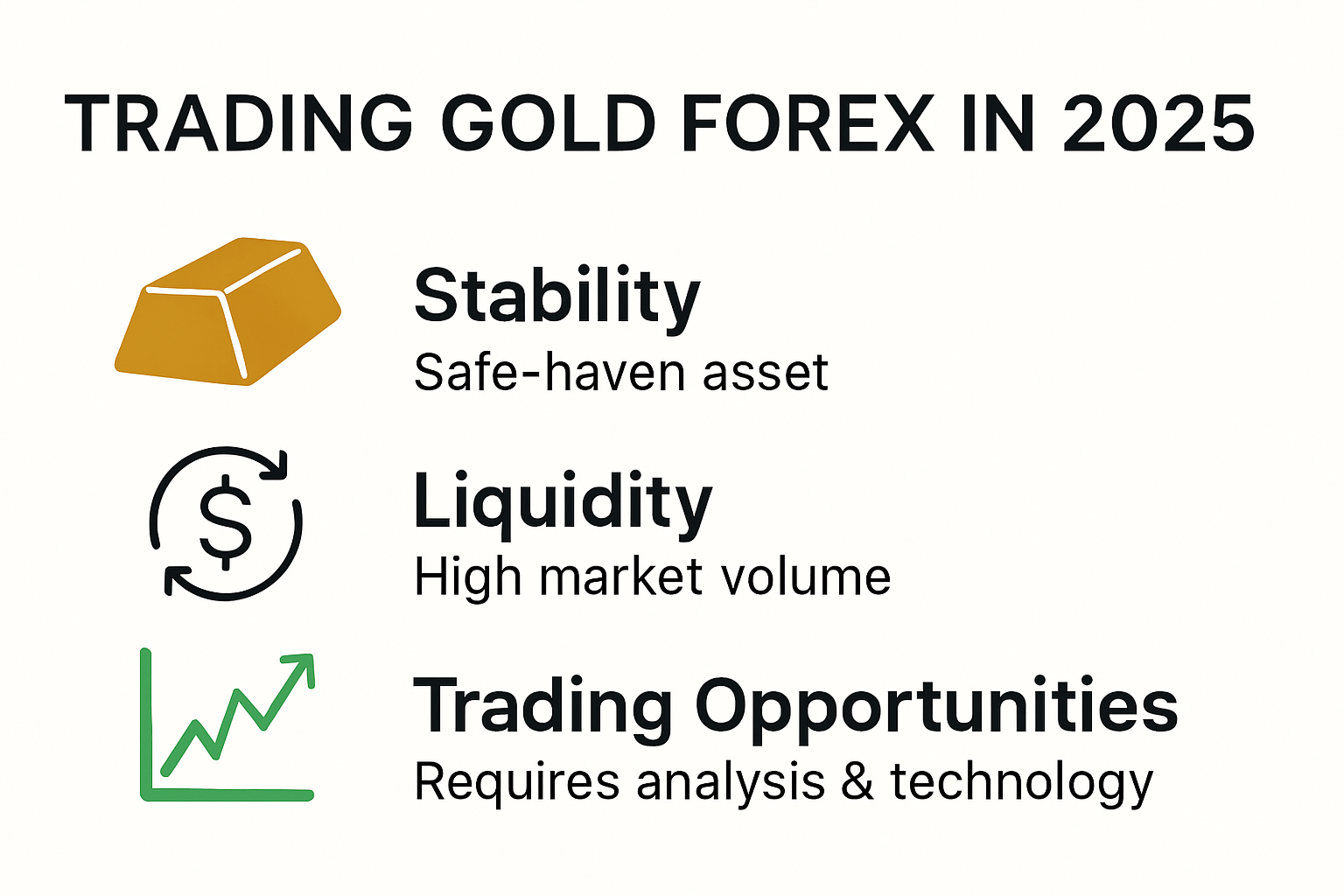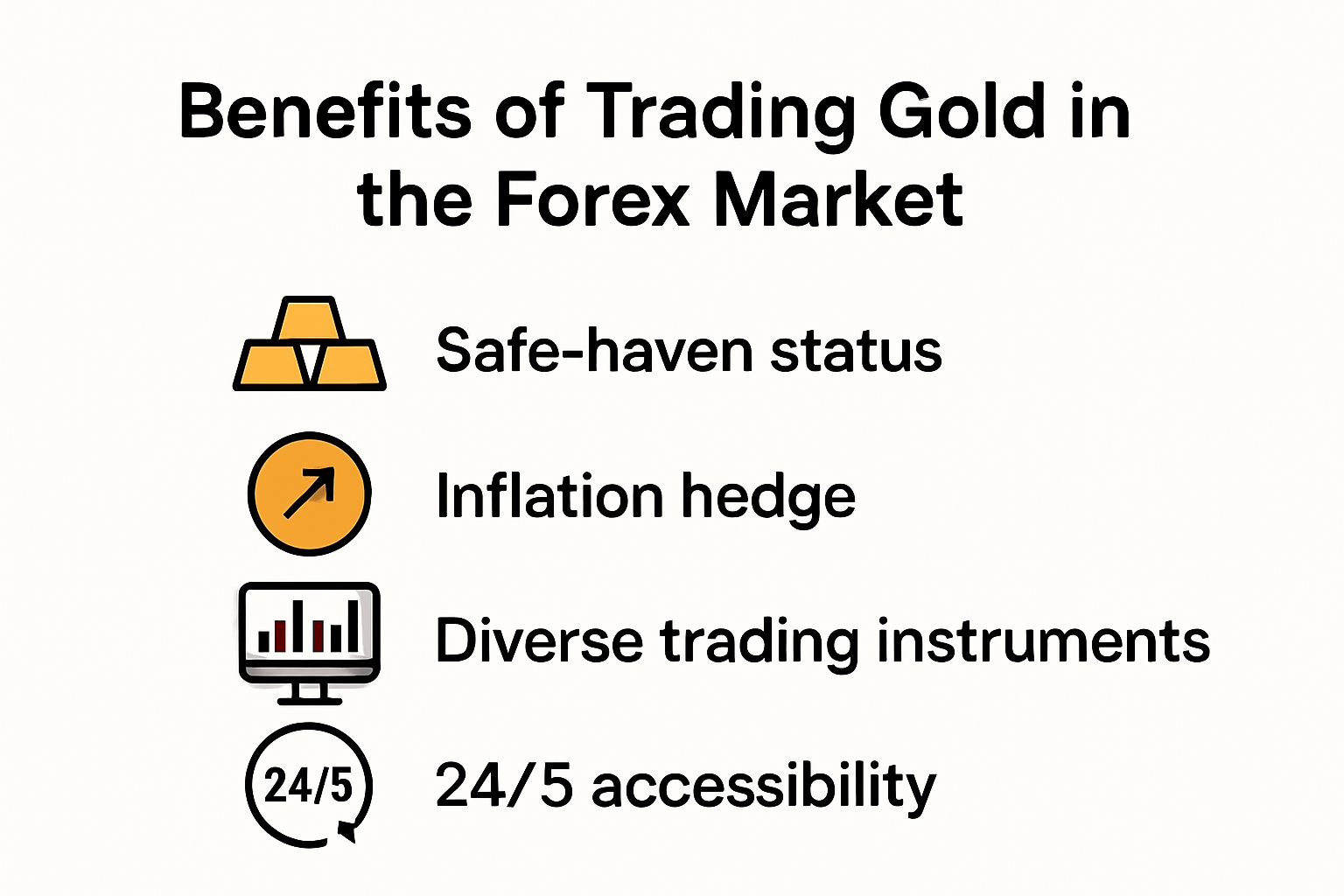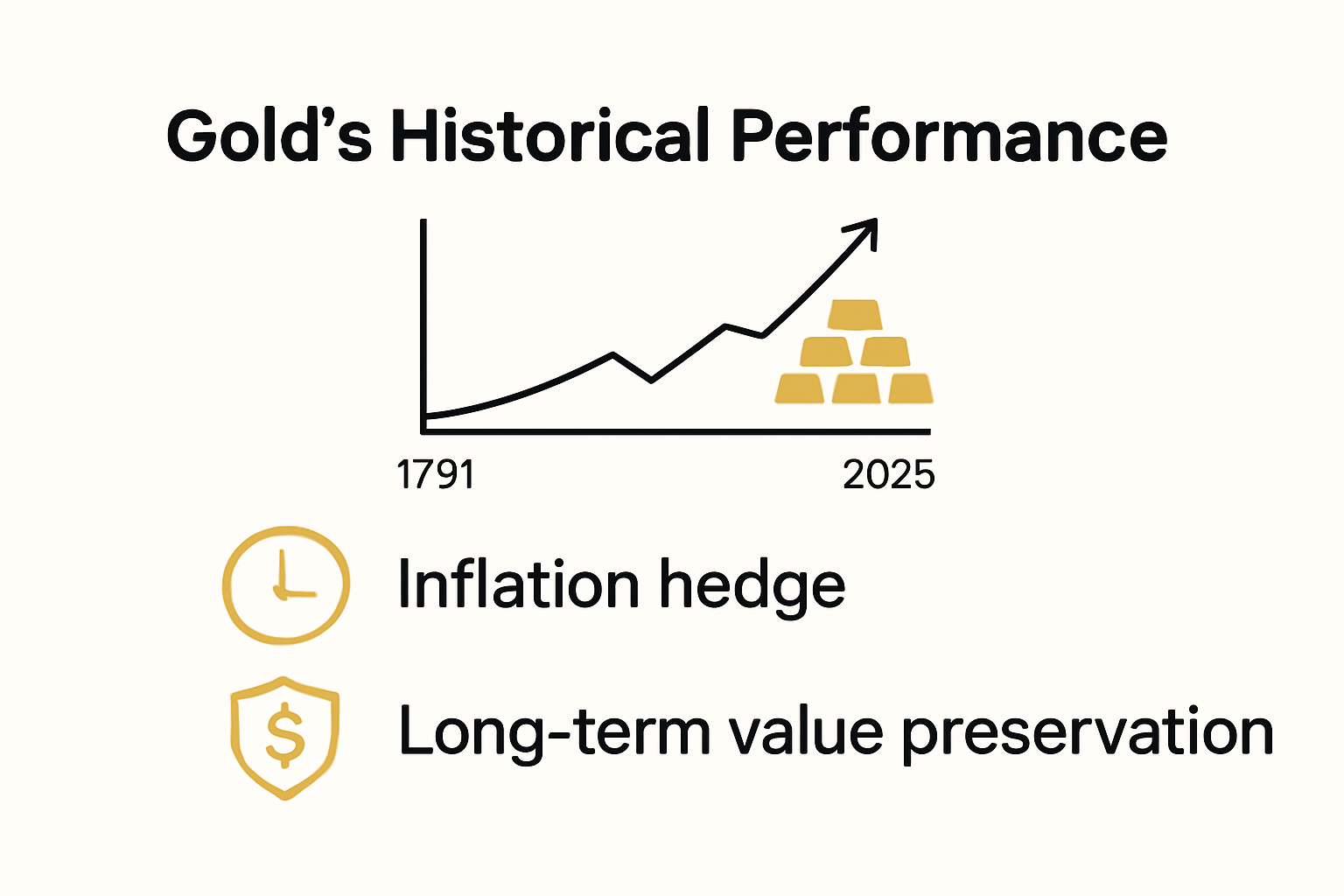
Professional traders analyzing gold price graphs in modern office environment

Is Gold Trading Profitable in 2025? Real Insights for Forex Traders

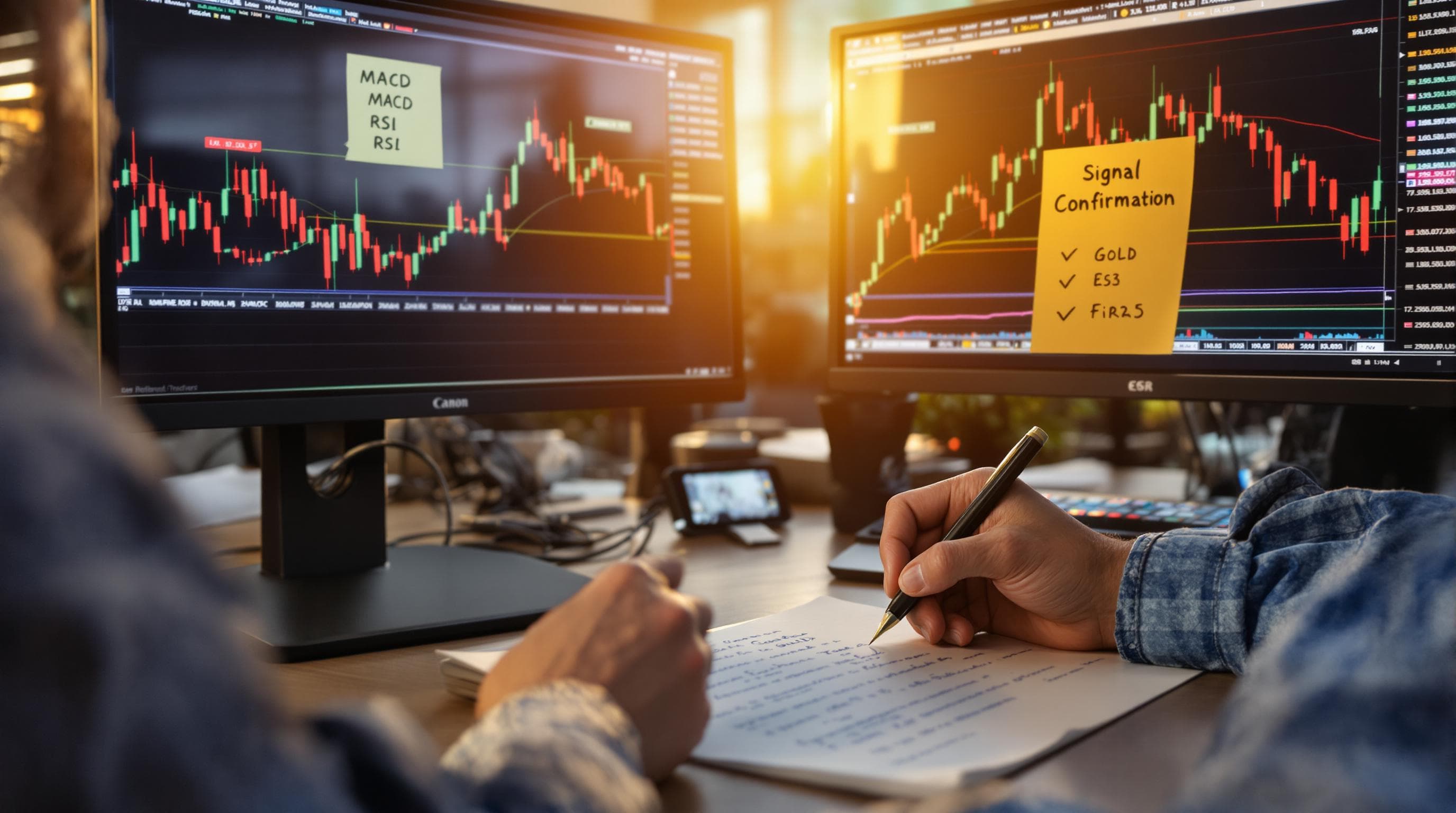
Professional traders analyzing gold price graphs in modern office environment

Gold trading has always drawn attention as markets get shaky and investors hunt for stability. Now get this. In 2024, a new algorithm hit a record 0.9993 in gold price prediction accuracy, blowing past old-school strategies. Most expect the real challenge for 2025 to be market volatility, but deeper data shows the real breakthrough will belong to traders who blend smart tech with old-fashioned discipline. That flips everything you thought you knew about gold trading on its head.

Table of Contents

Quick Summary

Takeaway Explanation
Economic Indicators Impact Gold Prices Low interest rates increase gold’s appeal due to reduced opportunity costs for holding it, highlighting the importance of understanding market sentiment and economic factors for successful trading.
Importance of Robust Risk Management Successful traders implement strict stop-loss orders and diversify portfolios while continuously monitoring global economic indicators to mitigate risks.
Leverage Technology for Trading Success Utilizing advanced prediction technologies and algorithms, such as machine learning and Genetic Programming, can enhance forecasting accuracy and improve trading strategies.
Avoid Common Trading Mistakes Beginners should avoid lack of market awareness, excessive leverage, and emotional trading by maintaining a structured trading plan and emotional discipline to achieve long-term success.
Adopt Multi-Strategy Approaches Integrating multiple trading strategies and employing dynamic risk allocations helps traders adapt to changing market conditions and maximize profitability.

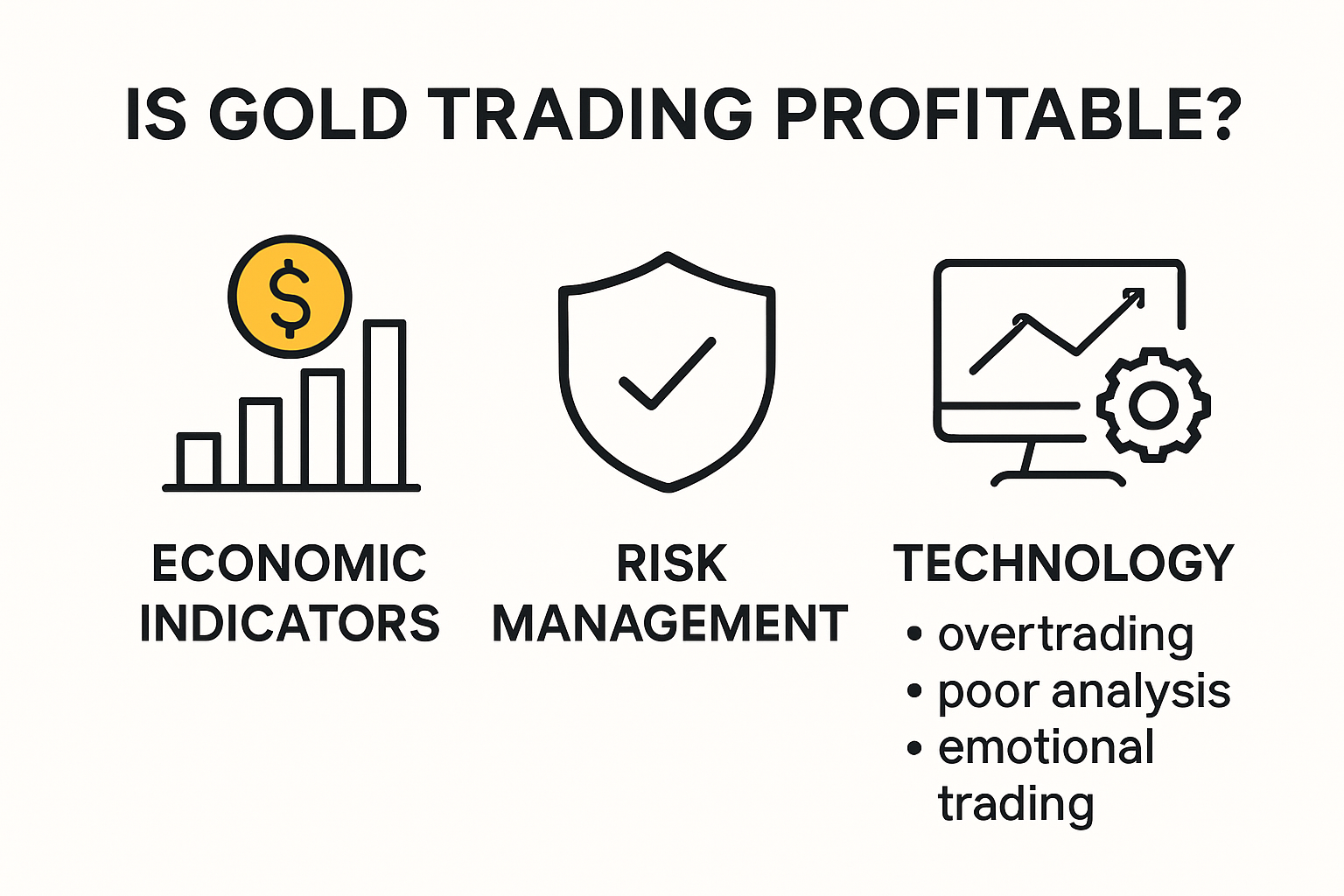
Infographic showing factors for gold trading profitability

Factors That Impact Gold Trading Profitability

Gold trading profitability hinges on understanding complex market dynamics that can dramatically shift investment outcomes. Traders must navigate a sophisticated landscape of economic indicators, global events, and market sentiment to successfully trade gold in 2025.

Economic Indicators and Market Sentiment

Interest rates stand as a critical driver of gold price movements. Research from Investopedia reveals that when interest rates are low, the opportunity cost of holding gold decreases, making it more attractive to investors. This relationship creates a nuanced investment environment where monetary policy directly impacts gold trading potential.

Investor behavior plays an equally significant role in gold market dynamics. Market analysis from NASDAQ highlights that gold is often misunderstood as a simple inflation hedge. In reality, market volatility and interest rate trends provide more reliable indicators of gold’s performance. Traders must look beyond simplistic assumptions and develop sophisticated analytical approaches.

Technical Trading Considerations

The Exchange for Physical (EFP) spread represents a sophisticated metric for understanding gold market profitability. Advanced research from academic sources demonstrates that modeling the EFP spread using complex statistical methods can help traders maximize expected profits while minimizing inventory risks across spot and futures markets.

Traders seeking consistent gold trading success must develop a multifaceted approach. This involves combining technical analysis, understanding global economic trends, and maintaining a flexible strategy that adapts to changing market conditions. Learn more about advanced trading strategies to enhance your gold trading profitability.

Trader analyzing gold price and technical graphs with market notes visible

Risk Management Strategies

Successful gold trading requires robust risk management techniques. Traders must implement strict stop-loss orders, diversify their investment portfolio, and continuously monitor global economic indicators. Understanding the interconnected nature of global financial markets provides traders with a significant advantage in predicting and responding to gold price fluctuations.

The most profitable gold traders recognize that success is not about predicting exact price movements but about developing a comprehensive understanding of market dynamics. They leverage advanced analytical tools, maintain emotional discipline, and remain adaptable in the face of complex and often unpredictable market conditions.

To clarify key risk management tactics mentioned, here’s a summary table highlighting strategies for successful gold trading:

Risk Management Strategy Description
Strict Stop-Loss Orders Predetermine loss thresholds to limit downside risk on each trade
Portfolio Diversification Spread investments across different assets to reduce market risk
Continuous Market Monitoring Regularly track global economic indicators and adjust positions as needed
Advanced Analytical Tools Use data analysis and modeling for better trading decisions
Emotional Discipline Maintain composure and avoid impulse trading decisions

How Forex Traders Succeed With Gold Signals

Forex traders seeking consistent profitability in gold trading must develop a strategic approach that combines advanced technological tools, precise signal interpretation, and disciplined risk management. Successful trading is not about random guesswork but a systematic method of analyzing and responding to market signals.

Advanced Prediction Technologies

Research published in 2024 demonstrates remarkable advancements in gold price forecasting through innovative machine learning techniques. Scientists developed a Genetic Algorithm with a Multi-Layer Perceptron model that achieved an impressive R8 prediction score of 0.9993, highlighting the potential of cutting-edge technologies in gold trading.

Traders can leverage these technological innovations by incorporating sophisticated prediction models into their trading strategies. Explore advanced trading signal strategies to enhance your understanding of how machine learning can improve trading precision and potential profitability.

Technical Analysis and Trading Rules

Academic research from 2022 revealed critical insights into precious metals trading strategies. The study compared multiple technical analysis methods, including linear regression, Darvas boxes, and Bollinger bands, finding that linear regression proved particularly effective for forecasting gold price trends.

Moreover, another study examining market behavior during the COVID-19 period uncovered fascinating patterns. During market distress, certain technical trading rules generated statistically significant profits in the gold market, underscoring the importance of adaptive trading strategies.

Risk Management and Signal Interpretation

Successful gold signal trading requires more than just following recommendations. Traders must develop a comprehensive approach that includes:

  • Rigorous Signal Verification: Cross-reference signals from multiple sources and analysis methods
  • Precise Entry and Exit Points: Utilize strict criteria for trade execution
  • Dynamic Risk Allocation: Adjust position sizes based on market volatility and signal confidence

The most successful forex traders understand that gold signals are tools, not guarantees. They combine signal insights with personal market analysis, maintaining emotional discipline and a flexible approach to trading. Continuous learning, technological adaptation, and a methodical approach separate profitable traders from those who struggle in the complex gold trading landscape.

Common Mistakes Beginners Make in Gold Trading

Gold trading presents an enticing opportunity for forex traders, but novice investors often stumble into costly pitfalls that can decimate their trading accounts. Understanding and avoiding these common mistakes is crucial for sustainable success in the gold market.

Here’s a table summarizing the most common mistakes made by beginner gold traders and ways to avoid them:

Common Mistake Description How to Avoid
Lack of Market Awareness Ignoring global trends and economic indicators Continuously learn and stay updated
Excessive/Risky Leverage Using high leverage (e.g., 10x-20x) without safeguards Limit leverage to 2x-3x and use stop-loss orders
Poor Risk Management Not setting stop-loss or allocating capital wisely Trade smaller lots, never risk large capital
Emotional/Impulse Trading Trading without a plan or emotional discipline Follow a structured trading plan and journal
Absence of Strategy Entering trades without analysis or preparation Develop and stick to a comprehensive strategy

Lack of Market Awareness and Strategic Planning

Research from trading experts emphasizes that ignoring critical market trends is a fundamental error for beginners. Gold prices are influenced by complex factors including geopolitical events, economic indicators, and global supply-demand dynamics. Traders who fail to develop a comprehensive understanding of these interconnected elements risk making uninformed trading decisions.

Successful gold traders must cultivate a holistic approach to market analysis. This involves continuous learning, staying updated on global economic conditions, and understanding how factors like interest rates and inflation impact gold prices. Learn more about developing robust trading strategies to build a strong foundation for gold trading success.

Risky Leverage and Poor Risk Management

Technical analysis from trading platforms reveals that overleveraging is perhaps the most destructive mistake for new traders. Beginners often get seduced by the potential for massive gains, using excessive leverage like 10x or 20x without understanding the corresponding risks. This approach can quickly lead to margin calls and complete account destruction.

Expert recommendations suggest limiting leverage to 2x or 3x and implementing strict risk management tools. Traders should:

  • Use automatic stop-loss features
  • Trade smaller lot sizes initially
  • Gradually scale up as experience and confidence grow
  • Never risk more than a small percentage of total trading capital on a single trade

Emotional Trading and Lack of Discipline

Professional trading guides highlight the critical importance of having a structured trading plan. Many beginners trade based on emotions, impulse, or unsubstantiated tips, which is a recipe for consistent losses. A comprehensive trading plan should outline:

  • Precise entry and exit points
  • Maximum acceptable loss per trade
  • Total investment amount
  • Trading schedule and frequency
  • Detailed record-keeping through a trading journal

Maintaining emotional discipline is perhaps the most challenging yet essential skill for gold traders. The most successful traders approach the market with a systematic, analytical mindset. They treat trading as a disciplined profession, not a gambling activity.

Beginners must recognize that gold trading is a skill that requires continuous learning, patience, and self-improvement. By avoiding these common mistakes, developing a robust strategy, and maintaining emotional control, new traders can significantly improve their chances of long-term success in the gold trading market.

Top Strategies for Profitable Gold Trading in 2025

As the gold trading landscape evolves in 2025, traders must adapt sophisticated strategies that leverage cutting-edge technological approaches and robust analytical techniques. Success requires a dynamic blend of advanced algorithmic methods, precise market understanding, and strategic risk management.

To better compare the advanced strategies highlighted in this section, the following table summarizes their technologies and key advantages for gold traders in 2025:

Strategy/Technology Key Features Potential Benefits
Vectorial Genetic Programming (VGP) Strongly-typed genetic programming for trading rule development Outperforms standard GP, flexible
Deep Reinforcement Learning (DRL) AI-based adaptation to real-time market structure Captures trends, adapts quickly
cGANs (Conditional GANs) Fine-tunes and combines multiple trading strategies Superior adaptability, alpha gen.
Multi-Strategy Integration Simultaneous calibration of several methods Reduces risk, maximizes returns
Adaptive Risk Management Dynamic sizing, real-time monitoring, flexible allocation Mitigates losses, boosts stability

Advanced Algorithmic Trading Techniques

Innovative research from 2025 introduces groundbreaking approaches to gold trading through Vectorial Genetic Programming (VGP). Scientists demonstrated that strongly-typed VGP consistently outperforms standard Genetic Programming, offering traders a sophisticated tool for developing profitable trading strategies.

Parallel advancements in artificial intelligence provide traders with unprecedented analytical capabilities. Deep Reinforcement Learning (DRL) algorithms have shown remarkable potential in capturing complex market trends, effectively adapting during market consolidation periods and outperforming traditional time series momentum strategies.

Master advanced trading techniques to stay ahead of market dynamics and leverage these cutting-edge technological innovations.

Multi-Strategy Integration Approaches

Emerging research highlights the power of Conditional Generative Adversarial Networks (cGANs) in fine-tuning and combining financial trading strategies. This approach allows traders to:

  • Calibrate multiple trading strategies simultaneously
  • Generate alpha during challenging market conditions
  • Adapt quickly to changing market environments
  • Minimize individual strategy limitations

Successful gold traders in 2025 will increasingly rely on integrated approaches that combine multiple analytical techniques, reducing individual strategy risks and maximizing potential returns.

Risk Management and Adaptive Strategies

Profitable gold trading demands more than technological sophistication. Traders must develop comprehensive strategies that include:

  • Dynamic position sizing
  • Continuous strategy backtesting
  • Real-time market sentiment analysis
  • Flexible risk allocation mechanisms

The most successful traders will view gold trading as a holistic discipline, combining technological innovation with disciplined risk management. They understand that no single strategy guarantees success, but a well-rounded, adaptive approach can significantly improve trading outcomes.

As we move through 2025, gold traders must remain agile, continuously learning and adapting their strategies to navigate the complex and ever-changing global financial landscape. The integration of advanced technologies, rigorous analysis, and strategic thinking will separate successful traders from those struggling to achieve consistent profitability.

Frequently Asked Questions

Is gold trading still profitable in 2025?

Gold trading can be profitable in 2025, especially for those who blend advanced technologies with disciplined trading strategies. Understanding economic indicators and implementing effective risk management techniques are key to success.

What factors influence gold prices in 2025?

Factors influencing gold prices in 2025 include economic indicators like interest rates, market sentiment, global events, and technical trading considerations. Traders should remain aware of these dynamics to optimize their trading strategies.

How can I use technology to improve my gold trading strategies?

Utilizing advanced prediction technologies, such as machine learning and genetic algorithms, can significantly enhance gold trading strategies. These tools improve forecasting accuracy and help in decision-making.

What common mistakes should beginners avoid in gold trading?

Beginners should avoid common mistakes like lack of market awareness, excessive leverage, poor risk management, emotional trading, and absence of a structured strategy. Learning from these pitfalls is essential for long-term trading success.

Take Control of Gold Trading Profits in 2025

If you are tired of market surprises and second-guessing every trade, you are not alone. The article shows how volatile 2025’s gold market will be. It highlights that true breakthrough comes from blending advanced tools with disciplined trading plans. As a reader, you want to avoid big mistakes like poor risk management, emotional trades, and relying on guesswork. Why leave profits up to chance when you can act with clarity?
https://xau-gold-signals.com

You do not need to face the uncertainty alone. Join our community and start receiving high-accuracy real-time XAU/USD gold signals every day. Our How To Guides show you step-by-step how to use these insights for consistent wins. Experience expert-backed trading strategies and powerful analysis that reduce your risks and amplify your rewards. The future of gold trading favors those who act on real information. You can get started now at xau-gold-signals.com and never miss another opportunity to profit.

Traders analyze gold and USD data in a bright office

Impact of USD on Gold: 2025 Insights for Traders

Traders analyze gold and USD data in a bright office

Gold and the US dollar have a reputation for moving in opposite directions, shaping the decisions of traders across the globe. Here is something that might surprise you. During the COVID-19 pandemic, both gold and the US dollar rose at the same time, flipping old assumptions on their heads. If you think gold always jumps when the dollar drops, get ready to rethink your strategy for 2025.

Table of Contents

Quick Summary

Takeaway Explanation
Inverse Relationship The U.S. dollar and gold prices traditionally show a strong inverse correlation; as the dollar strengthens, gold prices typically decline, and vice versa.
Complex Market Dynamics During extreme market conditions, the usual correlation can break down, requiring traders to consider broader economic indicators and geopolitical events.
Risk Management Strategies Successful trading of gold involves advanced risk management techniques, incorporating predictive modeling and flexibility to adjust strategies based on changing market conditions.
State-Dependent Correlation The inverse relationship between gold and the USD varies depending on economic conditions, indicating that traders should adapt their strategies according to interest rate environments.
Holistic Approach A well-rounded strategy that integrates technical analysis, economic understanding, and nimble decision-making is crucial for navigating the complexities of the gold market in relation to USD fluctuations.

Understanding the intricate relationship between the U.S. dollar and gold prices is crucial for traders seeking to navigate the complex world of international markets. The connection between these two financial instruments represents a fundamental dynamic that can significantly impact investment strategies and trading decisions.

How USD Movements Influence Gold Prices

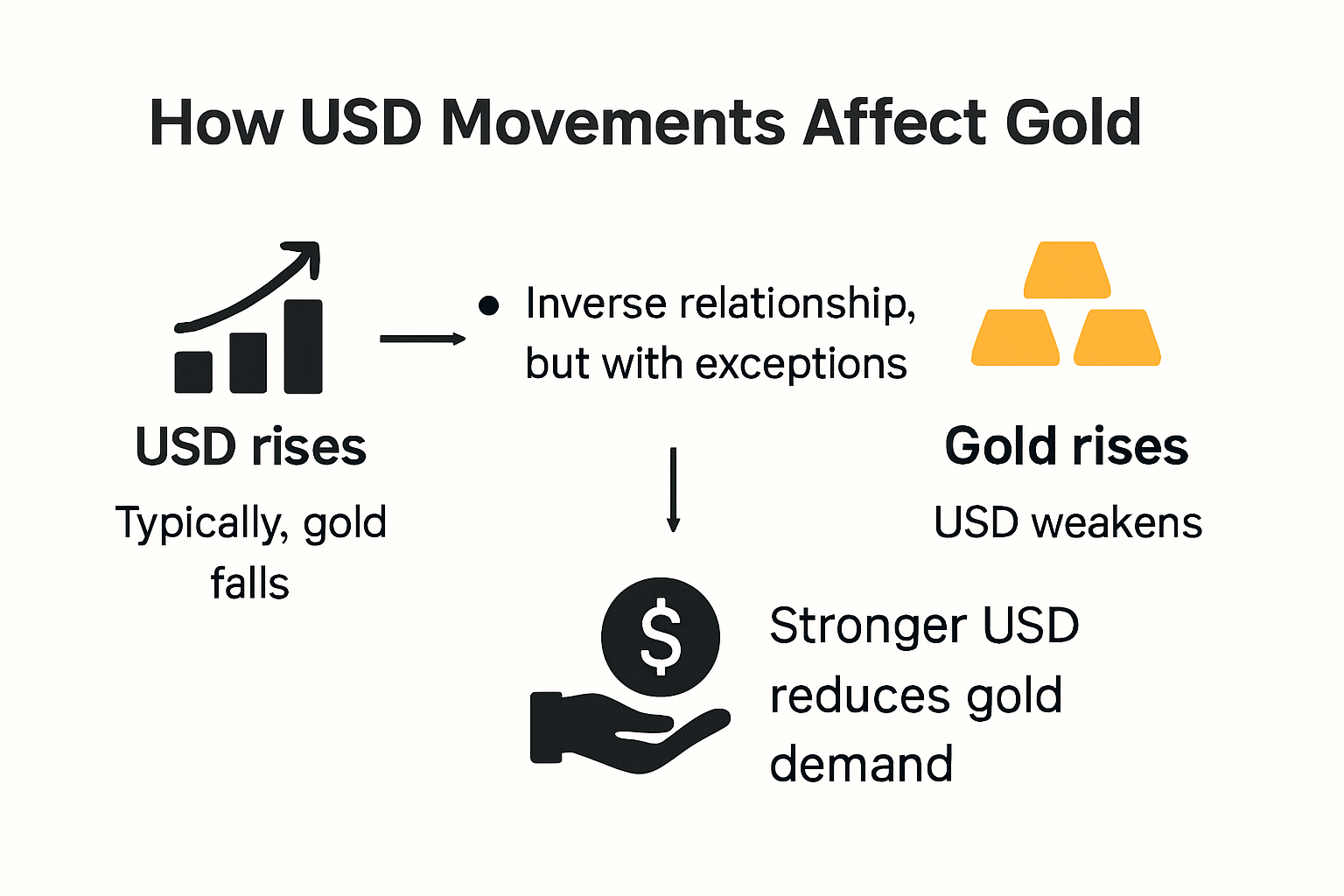
Infographic showing USD impact on gold price trends

Understanding the intricate relationship between the U.S. dollar and gold prices is crucial for traders seeking to navigate the complex world of international markets. The connection between these two financial instruments represents a fundamental dynamic that can significantly impact investment strategies and trading decisions.

The Inverse Correlation Mechanism

The U.S. dollar and gold prices traditionally exhibit a strong inverse relationship. When the dollar strengthens, gold prices typically decline, and when the dollar weakens, gold prices tend to rise. This mechanism stems from the fundamental economic principles of global trade and currency valuation. Investopedia explains that a stronger dollar makes gold more expensive for international buyers, effectively reducing global demand and putting downward pressure on prices.

Traders must recognize that this relationship is not simply a coincidence but a result of complex market dynamics. When the U.S. dollar gains strength, it becomes more expensive for investors holding other currencies to purchase gold. Conversely, a weaker dollar makes gold more affordable and attractive to international investors, potentially driving up demand and price.

Contextual Variations in Currency Gold Dynamics

Interestingly, the relationship between the U.S. dollar and gold is not always straightforward. Scientific research suggests that during extreme market conditions, such as financial crises, the typical inverse correlation can be disrupted. In some instances, both the dollar and gold might move in the same direction, challenging traditional market assumptions.

This nuanced relationship underscores the importance of comprehensive market analysis. Traders cannot rely solely on the dollar-gold correlation but must consider broader economic indicators, geopolitical events, and market sentiment. Factors such as inflation rates, central bank policies, and global economic uncertainty can all influence this delicate balance.

Strategic Implications for Traders

Successful trading requires a deep understanding of these complex interactions. Monitoring the U.S. dollar’s performance becomes crucial for gold traders. Small fluctuations in currency strength can translate into significant price movements in the gold market. Learn more about advanced gold trading strategies.

Professional traders develop sophisticated models that incorporate multiple variables to predict potential gold price movements. They track not just currency movements but also analyze broader economic trends, interest rates, and global economic indicators. This multifaceted approach allows for more accurate predictions and more informed trading decisions.

Understanding the USD-gold relationship is not just about recognizing an inverse correlation. It is about comprehending the underlying economic mechanisms that drive these market dynamics. By developing a nuanced understanding of how currency movements influence gold prices, traders can position themselves to make more strategic and potentially profitable trading decisions in an ever-changing global market.

Key Factors Affecting USD and Gold Relationship

Analysts discuss economic indicators and gold trading in office

The relationship between the U.S. dollar and gold is complex and influenced by multiple interconnected economic factors. Understanding these key drivers helps traders develop more sophisticated strategies for navigating market dynamics.

Economic Indicators and Market Sentiment

Economic indicators play a critical role in shaping the USD-gold relationship. Research published in the Business Administration and Economics Review revealed that inflation and dollar strength are primary determinants of gold price movements. When inflation rises, investors often turn to gold as a hedge against currency devaluation, creating a nuanced interaction between economic indicators and precious metal valuation.

Market sentiment emerges as another crucial factor. During periods of economic uncertainty, traditional market correlations can shift dramatically. Scientific research demonstrates that extreme market conditions can disrupt the typical inverse relationship between gold and the U.S. dollar, highlighting the importance of adaptive trading strategies.

To clarify, here’s a table summarizing the main factors that influence the USD-gold relationship as discussed in this section:

Factor Role/Impact on USD-Gold Relationship Example/Context
Inflation Drives investors to gold as hedge against currency devaluation High inflation increases gold demand
USD Strength Inverse correlation with gold; strong USD makes gold costlier globally Stronger USD tends to lower gold price
Market Sentiment Can override traditional correlations in uncertainty or crisis Crisis may send both USD and gold upward
Central Bank Policy Influences both USD and gold via interest rates and monetary policy Fed rates shifts affect both markets
Geopolitical Tensions Boost safe-haven demand, potentially raising both assets simultaneously COVID-19, international conflicts

Geopolitical Dynamics and Economic Stress

Geopolitical tensions and global economic stress significantly impact the USD-gold relationship. The National reported instances during the COVID-19 pandemic where both gold and the U.S. dollar appreciated simultaneously, challenging conventional market assumptions.

Traders must consider multiple variables beyond simple currency movements. Central bank policies, international trade tensions, and global economic stability all contribute to the complex interplay between the U.S. dollar and gold prices. These factors create a multidimensional landscape that requires continuous monitoring and sophisticated analytical approaches.

Risk Management and Strategic Analysis

Effective trading requires a comprehensive approach to understanding the USD-gold relationship. Professionals develop advanced models that incorporate economic indicators, geopolitical events, and market sentiment. Explore advanced gold trading strategies to enhance your market analysis techniques.

Risk management becomes paramount in this dynamic environment. Traders must remain flexible, recognizing that historical correlations can break down during periods of significant economic disruption. Developing a nuanced understanding of the factors influencing the USD-gold relationship allows for more informed and adaptive trading decisions.

Ultimately, success in trading gold requires a holistic approach. By understanding the intricate interactions between economic indicators, market sentiment, and global dynamics, traders can position themselves to make more strategic and potentially profitable decisions in an increasingly complex global market.

Trading gold effectively requires a sophisticated understanding of USD trends and their complex interactions with precious metal markets. Professional traders develop multifaceted approaches that go beyond simple correlation monitoring.

Advanced Technical Analysis Techniques

Technical analysis emerges as a critical tool for traders navigating gold markets. Research presented at the AI2SD 2022 conference introduced innovative trading strategies combining fractals and Triangular Moving Average Centered Bands to predict gold prices. These advanced techniques demonstrated a higher probability of successful trades by integrating multiple analytical indicators.

Traders can leverage sophisticated models that incorporate moving averages, relative strength indicators, and trend analysis. By examining short-term and long-term USD fluctuations, investors can develop more nuanced trading strategies that anticipate potential gold price movements.

Risk Management and Predictive Modeling

Risk management becomes paramount when trading gold in relation to USD trends. A comprehensive study in Resources Policy developed a multifractal-based model for gold price forecasting, utilizing the Hurst exponent and swarm intelligence optimization. This approach provides traders with more sophisticated tools for understanding market dynamics and potential price trajectories.

Professional traders recognize that no single strategy guarantees success. Diversification and adaptive approaches are crucial. Monitoring economic indicators, geopolitical events, and market sentiment allows for more informed decision-making. The ability to quickly adjust strategies based on changing market conditions separates successful traders from those who rely on rigid, outdated methods.

Safe-Haven Asset Strategies

During periods of economic uncertainty, gold and the U.S. dollar often function as safe-haven assets. A study published in Economies revealed fascinating insights during global crises like the COVID-19 pandemic, where both the U.S. Dollar Index and gold prices increased simultaneously.

Traders can develop hedging strategies that capitalize on these unique market dynamics. Learn more about advanced gold trading techniques to refine your approach to market analysis and risk management.

Below is a table comparing different gold trading strategies covered in this section, showing their core focus and application:

Strategy Type Core Focus Application/Method
Advanced Technical Analysis Price prediction using complex indicators Fractals, Moving Averages, Trend Analysis
Risk Management & Predictive Modeling Managing exposure, forecasting trends Diversification, Multifractal models, Swarm Intelligence
Safe-Haven Asset Strategy Protection during uncertainty/crises Hedging with gold and/or USD when both act as safe-havens

Successful gold trading requires a holistic approach that combines technical analysis, risk management, and a deep understanding of global economic trends. By developing flexible strategies that adapt to changing market conditions, traders can position themselves to capitalize on the complex relationship between the U.S. dollar and gold prices.

Recent USD Fluctuations and Gold Market Outlook 2025

The global financial landscape in 2025 presents a complex environment for gold traders, with USD fluctuations creating both challenges and opportunities for strategic investment. Understanding the nuanced interactions between currency movements and precious metal markets becomes crucial for informed decision-making.

Economic Indicators and Currency Dynamics

Research published in Advances in Economics, Management and Political Sciences emphasizes that the U.S. dollar index remains a significant predictor of gold prices. The study reveals that currency valuation directly influences gold demand and pricing, highlighting the intricate relationship between monetary policy and precious metal markets.

Economic projections suggest a period of measured volatility. The World Gold Council’s 2025 outlook indicates that the U.S. dollar is expected to remain relatively flat or experience slight weakening as global economic conditions gradually normalize. This anticipated stability creates a nuanced environment for gold traders seeking to optimize their investment strategies.

State-Dependent Market Behaviors

A groundbreaking study in Economies journal uncovered fascinating insights into the gold-USD relationship. The research demonstrated that the inverse correlation between gold prices and the U.S. dollar exchange rate is state-dependent, varying across different federal funds rate zones. This finding suggests that gold and the U.S. dollar function as risk-hedging substitutes with complex, context-specific interactions.

Traders must recognize that traditional market assumptions may not always apply. The substitution effect between gold and USD varies significantly, being weaker in low-interest rate environments and more pronounced in higher rate zones. This complexity demands a sophisticated, adaptive approach to market analysis.

Strategic Considerations for 2025

Professional investors are positioning themselves for a potentially volatile yet opportunity-rich market. Global economic factors such as below-trend growth, inflation slightly above target, and elevated geopolitical risks create a multifaceted investment landscape. Explore our latest gold trading insights to develop a more comprehensive understanding of market dynamics.

Key strategic considerations include monitoring central bank policies, tracking geopolitical developments, and maintaining flexibility in investment approaches. The interplay between USD strength, global economic indicators, and gold prices requires continuous analysis and adaptive strategies.

Successful navigation of the 2025 market will demand a holistic approach. Traders who combine rigorous technical analysis, comprehensive economic understanding, and nimble decision-making will be best positioned to capitalize on the complex relationship between the U.S. dollar and gold prices. The ability to interpret nuanced market signals and respond quickly to changing conditions will separate strategic investors from reactive traders.

Frequently Asked Questions

What is the relationship between the USD and gold prices?

The U.S. dollar and gold prices typically have an inverse relationship; when the dollar strengthens, gold prices tend to decline, and when the dollar weakens, gold prices usually rise.

Why did gold and the USD rise together during the COVID-19 pandemic?

During the COVID-19 pandemic, both assets appreciated simultaneously due to heightened market uncertainty, demonstrating that traditional correlations can break down under extreme conditions.

How can traders effectively manage risks when trading gold?

Traders can manage risks by utilizing advanced modeling techniques, diversifying their investments, and adapting strategies based on economic indicators and geopolitical events impacting the USD-gold relationship.

Traders should focus on a holistic approach incorporating advanced technical analysis, understanding economic indicators, and being flexible with their strategies to respond to changing market conditions.

Trade Gold Smarter as USD Dynamics Shift in 2025

Navigating the unpredictable relationship between gold and the US dollar can be overwhelming. This article laid out how sudden shifts in inflation, market sentiment, and global events are breaking old patterns and creating new risks for traders. If you want to move beyond second-guessing the market and start trading with confidence, you need up-to-date support and proven methods. Discover the latest market shifts and actionable tips on our News & Updates page, designed to help you stay a step ahead.

https://xau-gold-signals.com

Join the traders who are turning deep insights into real profits. Our XAU/USD signals at xau-gold-signals.com combine advanced technical and fundamental analysis to deliver the high-accuracy strategies you need. Don’t wait. Start using accurate gold trading signals to secure your edge in 2025 and beyond. Join our private Telegram group today and experience a new level of trading confidence.

Financial analysts reviewing gold price charts and market signals in a busy trading office

Gold Market Fundamentals 2025: Key Signals for Traders

Financial analysts reviewing gold price charts and market signals in a busy trading office

Gold is on every trader’s radar this year and for good reason. Technical indicators like the Relative Strength Index have predicted gold price moves with over 97 percent accuracy, which might sound unbelievable. Most people think gold just rides on old myths and market fear, but in reality, the hidden influences shaping each price jump will surprise even experienced investors.

Table of Contents

Quick Summary

Takeaway Explanation
Monetary Policy Impacts Gold Prices Central banks’ interest rate decisions greatly influence gold’s attractiveness; lower rates boost gold investment as opportunity costs decrease.
Geopolitical Risks Drive Demand Economic instability and global tensions elevate gold’s status as a safe haven, affecting investment behaviors significantly.
Utilize Technical Indicators Tools like the Relative Strength Index (RSI) can help predict gold price movements with high accuracy, allowing traders to identify entry and exit points effectively.
Integrate Multi-faceted Analysis Combining technical analysis, sentiment tracking, and macroeconomic indicators enhances market understanding and decision-making for traders, improving profitability.
Stay Adaptive and Informed Continuous learning, adaptability, and monitoring evolving market dynamics are essential to successful gold trading strategies.

What Drives Gold Market Fundamentals

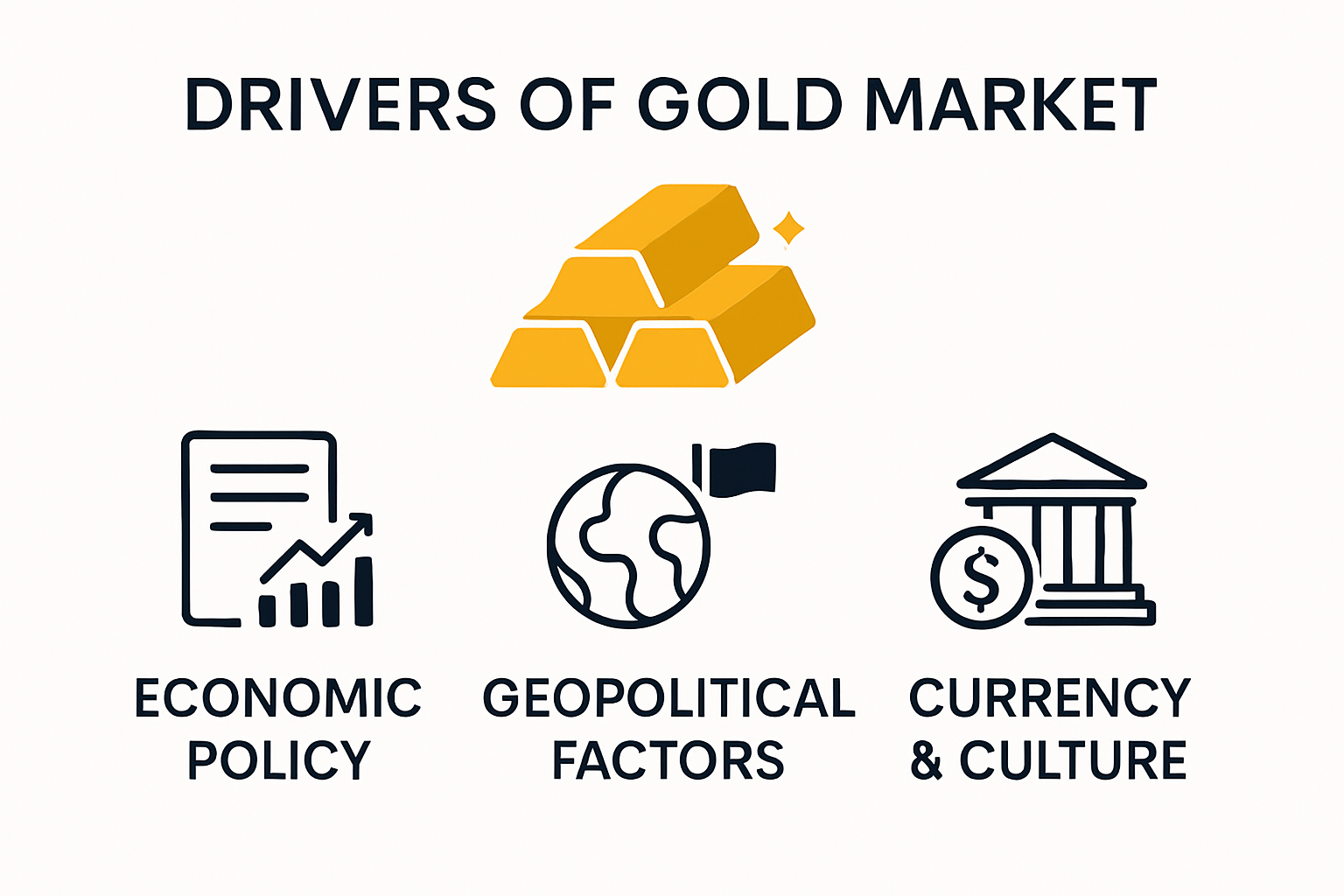
Infographic outlining gold market fundamental drivers and influences

Economic Policy and Monetary Signals

Monetary policies significantly impact gold market fundamentals. Central banks worldwide play a critical role in determining gold’s attractiveness as an investment asset. When central banks implement expansionary monetary policies or maintain low interest rates, gold becomes more appealing. According to a 2022 study analyzing macroeconomic factors, stock markets, trade balances, and consumer confidence are key drivers of gold market volatility.

The federal funds rate and dollar index inversely correlate with gold prices. When interest rates decrease, gold becomes more attractive since its opportunity cost declines. Investors seek gold as a hedge against potential economic uncertainties, making it a preferred safe haven asset during periods of financial instability.

Global Economic and Cultural Dynamics

Interestingly, cultural dimensions also substantially influence gold market fundamentals. Research from 2023 examining 24 global economies revealed that national cultural perspectives significantly impact gold demand. The COVID-19 pandemic, for instance, demonstrated how different cultural contexts can drive gold consumption patterns.

Traders must consider multiple interconnected factors beyond traditional economic metrics. Geopolitical tensions, inflation rates, currency fluctuations, and international trade dynamics all contribute to gold’s market fundamentals. A comprehensive approach requires analyzing these multifaceted influences rather than relying on singular indicators.

Price Determination Mechanisms

Gold prices are determined through a sophisticated mechanism involving multiple variables. A 2019 analysis utilizing response surface methodology identified several crucial factors affecting global gold prices. The study highlighted that the dollar index, federal funds rate, exchange rates, oil prices, and S&P 500 index typically exert negative pressure on gold prices, while the Consumer Price Index demonstrates a positive correlation.

Traders analyzing charts of gold price fundamentals and macroeconomic data in an office setting

Below is a summary table highlighting the fundamental factors mentioned in this section and their typical influence on gold prices:

Factor Type of Impact on Gold Price Notes
Dollar Index Negative Higher dollar index generally lowers gold prices
Federal Funds Rate Negative Interest rate increases decrease gold’s appeal
Exchange Rates Negative Stronger local currencies can put downward pressure on gold
Oil Prices Negative Higher oil costs raise mining costs, but typically suppress gold price
S&P 500 Index Negative Stock market strength can divert investment from gold
Consumer Price Index (Inflation) Positive Higher inflation increases gold’s appeal as a hedge
Stock Markets (General) Negative Strong stock markets often mean reduced demand for gold
Trade Balances Variable Affects currency and, in turn, gold demand
Consumer Confidence Variable Confidence shifts can signal risk-on/off attitudes affecting gold

Understanding these fundamental drivers empowers traders to develop more nuanced strategies. By recognizing how different economic signals interact and influence gold market dynamics, investors can better anticipate potential price movements and make more informed trading decisions. Successful gold trading requires continuous learning, adaptability, and a holistic understanding of global economic ecosystems.

Remember, gold market fundamentals are not static. They evolve continuously, reflecting complex global economic interactions. Staying informed, maintaining analytical flexibility, and understanding these intricate relationships will be crucial for traders seeking consistent success in the gold market.

Top Economic Factors Affecting Gold Prices


Gold prices are influenced by a complex network of economic factors that create intricate market dynamics. Understanding these drivers is crucial for traders seeking to navigate the gold market effectively and make informed investment decisions.

Monetary Policy and Interest Rate Dynamics

Monetary policy represents a critical determinant of gold prices. Central banks worldwide significantly impact gold’s attractiveness through their interest rate decisions. Research published in Resources Policy demonstrates that federal funds rates and the U.S. dollar index typically exert negative pressure on gold prices.

When interest rates decline, gold becomes more appealing as an investment. Lower opportunity costs mean investors can hold gold without sacrificing potential returns from other financial instruments. This relationship underscores why traders closely monitor central bank policies and economic indicators that might signal potential rate changes.

Global Economic Indicators and Market Sentiment

Multiple economic indicators play pivotal roles in gold price determination. According to a study in Advances in Economics, Management and Political Sciences, oil prices emerge as particularly significant, influencing gold prices through their impact on mining and transportation costs.

Key economic factors that traders must monitor include:

  • Exchange rates: Currency value fluctuations directly impact gold pricing
  • Inflation rates: Higher inflation typically increases gold’s appeal as a hedge
  • GDP growth: Economic expansion or contraction influences investor sentiment

Traders can explore our gold price forecast to gain deeper insights into these complex market interactions.

Geopolitical Risk and Investment Behavior

Geopolitical uncertainties significantly influence gold prices. During periods of global tension, economic instability, or financial market volatility, investors often shift towards gold as a safe-haven asset. Research from the Journal of Commerce and Accounting Research highlights how macroeconomic variables like unemployment rates and stock market indices can impact gold investment behaviors.

The interplay between these factors creates a dynamic environment where gold prices constantly adjust. Successful traders recognize that no single indicator provides a complete picture. Instead, a holistic approach considering multiple economic signals enables more accurate market predictions.

Understanding these economic factors requires continuous learning and adaptability. Gold market fundamentals are not static but evolve with global economic shifts, technological changes, and emerging market trends. Traders who develop a nuanced, comprehensive view of these interconnected dynamics position themselves for more strategic and potentially profitable investment decisions.

Using Gold Market Fundamentals for Trading Signals

Trading gold requires a sophisticated approach that integrates multiple analytical techniques to generate reliable trading signals. By leveraging gold market fundamentals, traders can develop more robust and strategic investment strategies that capitalize on complex market dynamics.

Technical Indicators and Price Analysis

Technical analysis plays a crucial role in generating gold trading signals. Research from technical forecasting studies reveals remarkable precision in predicting gold price movements. The Relative Strength Index (RSI) demonstrated an impressive 97.345% accuracy rate over a 226-day period, highlighting the potential of technical indicators in signal generation.

Key technical indicators traders should consider include moving averages, Bollinger Bands, and momentum oscillators. These tools help identify potential entry and exit points by analyzing price patterns, market momentum, and potential trend reversals. Explore our guide on effective trading strategies to understand how to apply these indicators more effectively.

Below is a table summarizing key technical indicators mentioned and their roles in gold trading signal generation:

Indicator Function/Role Accuracy/Notes
Relative Strength Index (RSI) Identifies overbought/oversold levels 97.345% accuracy over 226 days (per cited study)
Moving Averages Detect trends and trend reversals Helps filter out short-term volatility
Bollinger Bands Measures price volatility and range Useful for identifying potential breakout conditions
Momentum Oscillators Tracks speed/strength of price movement Assists in spotting trend changes and entry/exit points

Sentiment and News-Based Analysis

News sentiment has emerged as a powerful tool in gold market analysis. A comprehensive study examining news headlines from 2000 to 2019 demonstrated that information extracted from news flow significantly impacts future gold prices. Traders can leverage this insight by monitoring global economic news, geopolitical developments, and central bank announcements.

Understanding market sentiment requires a multifaceted approach. Economic indicators, geopolitical tensions, and global market conditions all contribute to gold price fluctuations. Successful traders develop a holistic view that combines technical analysis with fundamental economic insights.

Risk Management and Uncertainty Signals

Gold’s unique position as a safe-haven asset provides critical insights for traders. Research analyzing gold’s performance during uncertain periods reveals a strong positive relationship between gold returns and market uncertainty. This relationship is particularly pronounced during high-uncertainty scenarios, making gold an essential component of risk management strategies.

Traders should focus on:

  • Volatility indicators: Measuring market uncertainty
  • Correlation analysis: Understanding gold’s relationship with other assets
  • Economic cycle tracking: Identifying optimal investment periods

Successful gold trading is not about predicting exact price movements but understanding the complex ecosystem that drives gold market fundamentals. It requires continuous learning, adaptability, and a nuanced approach to market analysis.

Remember that no single indicator provides a complete picture. Advanced gold trading signals combine multiple analytical techniques, providing traders with a more comprehensive view of potential market opportunities. By integrating technical analysis, sentiment tracking, and fundamental economic understanding, traders can develop more sophisticated and potentially profitable gold trading strategies.

Tips for Profitable Gold Market Analysis

Profitable gold market analysis requires a strategic approach that combines multiple analytical techniques, deep market understanding, and continuous learning. Traders who develop comprehensive analysis skills can significantly improve their potential for successful gold trading.

Understanding Dollar Dynamics and Price Relationships

Gold pricing is intrinsically linked to the U.S. dollar, creating a complex inverse relationship that traders must carefully monitor. Research from economic analysis platforms reveals that a stronger dollar typically suppresses gold prices, while a weaker dollar can boost them.

Key dollar-related considerations include:

  • Exchange rate fluctuations: Direct impact on gold valuation
  • Federal Reserve monetary policies: Influence dollar strength and gold attractiveness
  • Global economic stability: Affects currency and gold market movements

Macroeconomic Indicator Analysis

Successful gold market analysis demands a holistic view of macroeconomic factors. According to economic outlook research, critical indicators include inflation rates, consumer spending patterns, and global economic stability.

Traders should pay special attention to:

  • Interest rate trends: Historically, rising interest rates negatively correlate with gold prices
  • Inflation indicators: Gold often serves as a hedge against inflationary pressures
  • Geopolitical tensions: Impact investment sentiment and gold demand

Learn advanced scalping techniques to enhance your market analysis and trading performance.

Advanced Analysis Techniques

Profitable gold market analysis goes beyond traditional indicators. Developing a multi-dimensional approach involves combining technical analysis, fundamental research, and sentiment tracking. This comprehensive strategy allows traders to identify nuanced market opportunities that single-method approaches might miss.

Essential advanced analysis techniques include:

  • Correlation analysis: Understanding gold’s relationship with other assets
  • Sentiment tracking: Monitoring news and market perception
  • Risk assessment: Evaluating potential market volatility

Successful traders recognize that gold market analysis is an ongoing learning process. Markets evolve continuously, and adaptability becomes a crucial skill. Continuous education, staying updated with global economic trends, and maintaining a disciplined approach are fundamental to developing profitable gold trading strategies.

Remember, no single analysis method guarantees success. The most effective approach combines multiple analytical tools, maintains flexibility, and adapts to changing market conditions. By developing a comprehensive understanding of gold market fundamentals and maintaining a strategic, informed perspective, traders can improve their potential for consistent and profitable trading outcomes.

Frequently Asked Questions

What factors drive gold prices in 2025?

Gold prices are primarily influenced by monetary policy, interest rates, geopolitical risks, and economic indicators such as inflation and GDP growth. Understanding these factors can help traders make informed decisions.

How do technical indicators help in gold trading?

Technical indicators like the Relative Strength Index (RSI) can predict gold price movements with high accuracy, helping traders identify entry and exit points for optimal trading strategies.

Why is gold considered a safe-haven asset?

Gold is viewed as a safe-haven asset during times of economic instability and geopolitical tension. Investors often turn to gold to protect their assets when markets are volatile.

How can I integrate fundamental analysis into my gold trading strategy?

Traders can enhance their strategies by combining fundamental analysis, such as macroeconomic indicators, with technical analysis and sentiment tracking. This multi-faceted approach allows for a more comprehensive understanding of market dynamics.

Transform Gold Market Insights Into Real Profits

Struggling to keep up with shifting gold fundamentals, complex signals, and unpredictable market moves? You are not alone. The journey from understanding core indicators like monetary policy, the dollar index, and technical tools such as RSI, to actually making winning trades can feel overwhelming. If you want to turn breakthrough market knowledge from our News & Updates into actionable results, there is a smarter path forward.

https://xau-gold-signals.com

Cut through the noise and start trading with confidence. Our expert-driven signals combine deep gold market analysis with real-time trade alerts, ensuring you never miss a key opportunity. Join our private Telegram group via xau-gold-signals.com and receive unbeatable daily guidance. Take the next step and explore our How To Guides for practical strategies you can trust. Do not wait on the sidelines. Access the tools and analysis that help you grow your portfolio now.

Traders examining gold market trend charts in a modern office analysis setting

Gold Trend Following Strategies for Successful Trading 2025

Traders examining gold market trend charts in a modern office analysis setting

Gold trading seems like a safe bet, but trends in this market can flip faster than most traders realize. Here is something most people miss. Recent studies show that trend-following strategies in gold have outperformed traditional buy-and-hold approaches for over two centuries. The real secret is not just chasing shiny moves, but applying disciplined risk management and technical analysis to stay ahead of market swings. Ready to see how the numbers actually work in your favor?

Table of Contents

Quick Summary

Takeaway Explanation
Momentum Detection is Key Identifying clear upward or downward price trends is essential for successful gold trading, enabling traders to capitalize on established market movements.
Use Multiple Technical Indicators Combining indicators like MACD, RSI, and Bollinger Bands can provide robust trading signals for confirming market trends, enhancing decision-making in gold trading.
Implement Strict Risk Management Effective risk management strategies, including position sizing and stop-losses, help protect capital and minimize potential losses while navigating the volatile gold market.
Continuous Market Analysis is Crucial Regularly reassessing market conditions and adapting strategies prevent emotional decision-making, fostering disciplined trading practices.
View Risk Management as an Ongoing Process Successful risk management involves ongoing learning and adaptation, focusing on capital preservation alongside trading opportunities.

What Are Gold Trend Following Strategies

Gold trend following strategies are sophisticated trading approaches designed to capture sustained price movements in the gold market by identifying and riding established directional trends. These strategies leverage technical analysis, market momentum, and statistical indicators to help traders make informed decisions about entering and exiting gold trades.

Core Principles of Trend Following in Gold Trading

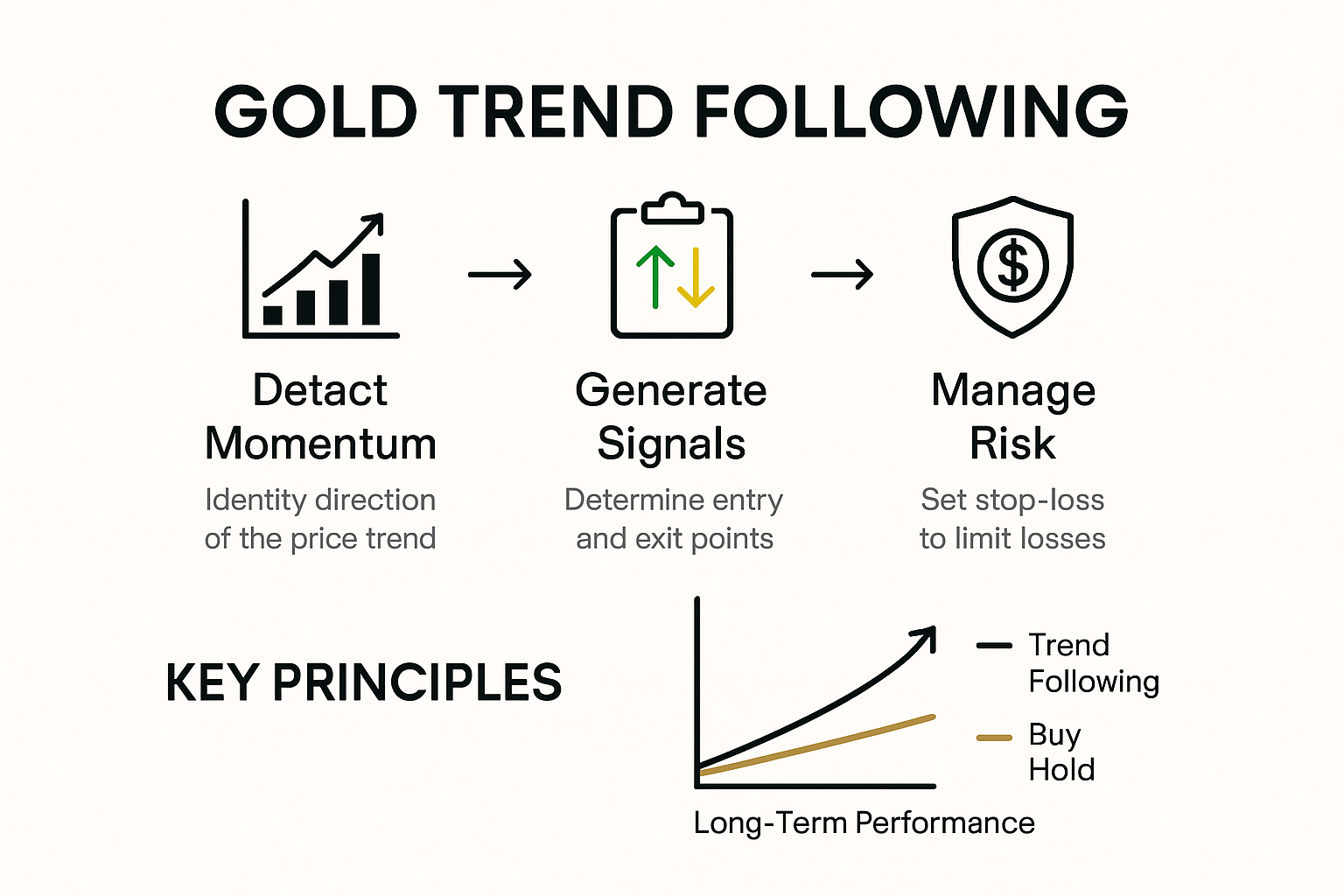
Trend following in gold trading is fundamentally about understanding and capitalizing on the market’s directional momentum. A comprehensive study analyzing market timing strategies revealed that technical trading strategies can significantly outperform traditional buy-and-hold approaches. The key principles involve:

  • Momentum Detection: Identifying clear upward or downward price trends in gold markets
  • Entry and Exit Signals: Using technical indicators to determine optimal trade entry and exit points
  • Risk Management: Implementing systematic approaches to limit potential losses

Traders utilizing trend following strategies recognize that gold markets often exhibit prolonged price movements driven by global economic conditions, geopolitical events, and investor sentiment. Research spanning two centuries of financial markets demonstrates that trend-following strategies have consistently generated excess returns across multiple asset classes, including commodities like gold.

Infographic explaining gold trend following strategies process and benefits

Technical Indicators and Trend Confirmation Methods

Successful gold trend following strategies rely on multiple technical indicators to confirm market trends. These might include moving averages, Bollinger Bands, relative strength index (RSI), and other momentum oscillators. An intraday trading study on gold futures highlighted that strategies initiating long positions when prices break above specific technical indicators can yield consistent equity growth.

The most effective trend following approaches combine multiple confirmation signals. Traders typically look for:

  • Convergence of different technical indicators
  • Sustained price movements beyond key resistance or support levels
  • Volume confirmation of price trends

Trend following is not about predicting exact market tops or bottoms but about identifying and participating in sustained price movements. This approach requires discipline, systematic risk management, and a deep understanding of market dynamics.

Learn more about advanced gold trading techniques to enhance your trend following strategy and maximize potential trading opportunities in the gold market.

Identifying the most effective indicators and signals is crucial for successful gold trend following strategies. Traders rely on a sophisticated array of technical tools to detect and confirm potential market movements, helping them make informed trading decisions with higher probability outcomes.

A comprehensive study analyzing precious metals futures data revealed that linear regression techniques provide exceptional accuracy in forecasting gold price trends. Professional traders typically combine multiple indicators to create robust trading signals:

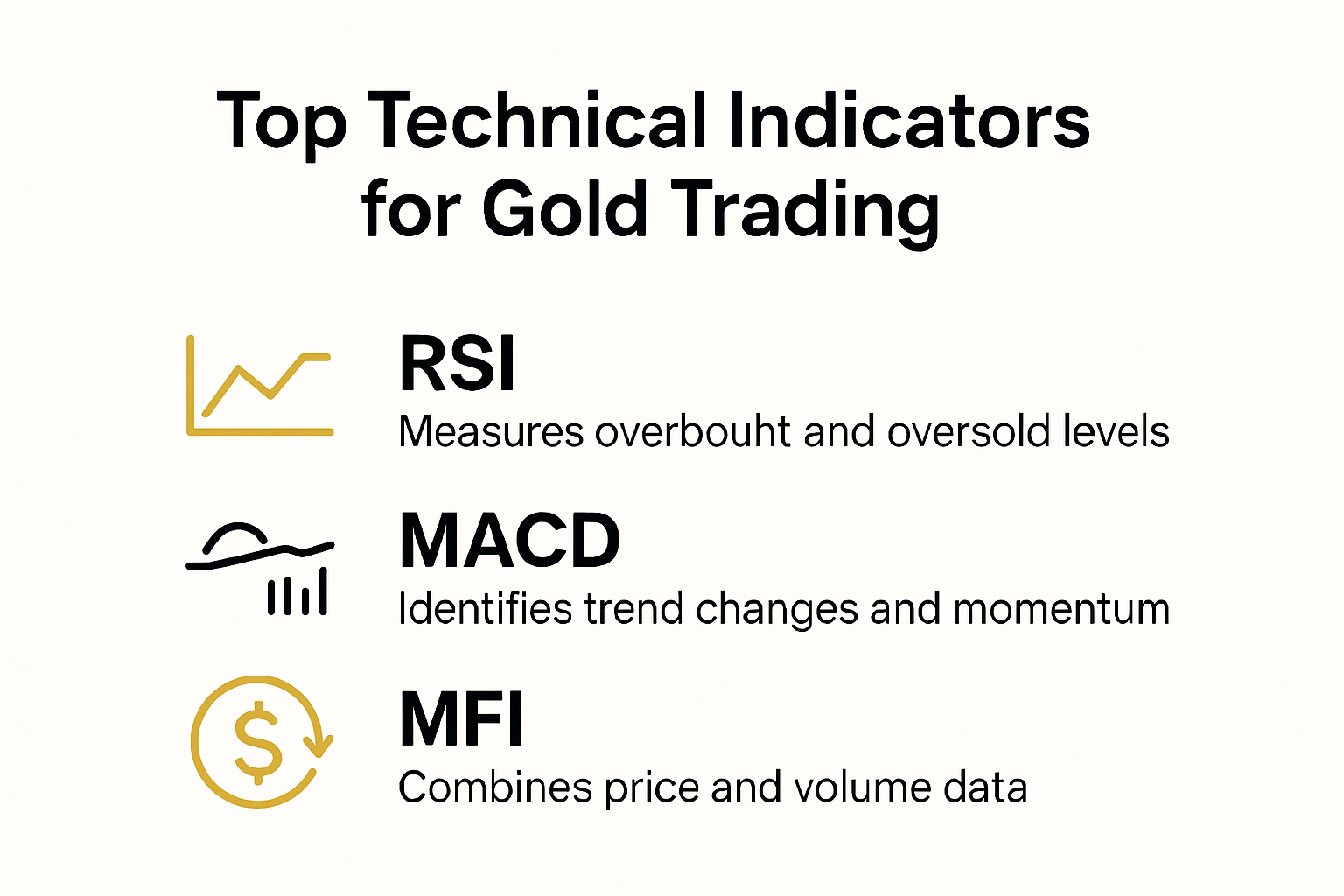
  • Moving Average Convergence Divergence (MACD): Research in commodity markets demonstrates MACD’s superior performance in identifying trading opportunities
  • Relative Strength Index (RSI): Measures momentum and potential trend reversals
  • Bollinger Bands: Indicates price volatility and potential breakout points

Understanding these indicators requires nuanced interpretation. Professional traders do not simply rely on single indicator signals but cross-reference multiple technical tools to confirm potential market movements.

Below is a table summarizing key technical indicators and their roles in gold trend following strategies:

Indicator Main Function Role in Gold Trend Following
Moving Average Convergence Divergence (MACD) Identifies trend direction and momentum shifts Detects trading opportunities and trend changes
Relative Strength Index (RSI) Measures speed and change of price movements Spots overbought/oversold conditions, signals possible reversals
Bollinger Bands Gauges price volatility and breakout levels Highlights potential entries/exits on volatility expansion
Moving Averages Smooths out price data to show trend direction Helps confirm sustained uptrends or downtrends
Volume Analysis Measures trading activity Confirms strength and reliability of trend

Dynamic Momentum and Signal Generation

Advanced research on dynamic momentum learning suggests incorporating econometric models can significantly enhance trading signal accuracy. The most sophisticated trend following strategies adaptively adjust look-back periods and signal generation methods based on current market conditions.

Key considerations for generating high-quality gold trading signals include:

  • Analyzing multiple timeframes simultaneously
  • Considering global economic indicators
  • Implementing rigorous risk management protocols

Multiple monitors displaying gold chart signals with trader analyzing data
Successful gold trend following is not about predicting exact price points but understanding probabilistic market movements. Traders must remain flexible and ready to adjust strategies as market dynamics evolve.

Discover advanced techniques for interpreting gold trading signals to refine your trend following approach and improve trading performance.

How to Apply Trend Following in Gold Trading

Applying trend following strategies in gold trading requires a systematic approach that combines technical analysis, risk management, and strategic decision-making. Successful traders understand that implementing these strategies goes beyond simple indicator readings and demands a comprehensive understanding of market dynamics.

Strategic Implementation of Trend Following Techniques

A comprehensive market timing study revealed that technical trading strategies can significantly outperform traditional approaches when applied methodically. Traders seeking to implement trend following strategies should focus on several critical components:

  • Position Sizing: Carefully determine the appropriate trade volume based on market volatility and personal risk tolerance
  • Entry and Exit Rules: Establish clear, predefined criteria for initiating and closing trades
  • Continuous Market Analysis: Regularly reassess market conditions and strategy effectiveness

The key to successful trend following lies in developing a disciplined approach that removes emotional decision-making from trading. This means creating a robust framework that can adapt to changing market conditions while maintaining a consistent methodology.

The following table summarizes essential steps for applying trend following techniques in gold trading:

Step Description
Develop Trading Plan Outline your goals, risk tolerance, and methodology
Define Entry/Exit Criteria Set clear rules for when to enter and exit trades
Position Sizing Allocate trade size according to risk management principles
Use Multiple Indicators Combine tools like MACD, RSI, and Bollinger Bands for signal confirmation
Monitor and Adapt Continuously review results and adjust strategies as market changes

Risk Management and Strategy Optimization

Global futures trend-following research emphasizes the critical importance of implementing sophisticated risk controls. Traders should focus on:

  • Developing feedback and feed-forward risk management mechanisms
  • Broadening the operational domain of trading strategies
  • Creating adaptive systems that perform across different market conditions

Understand the nuanced techniques for support and resistance in gold trading to enhance your trend following approach. The most successful traders recognize that trend following is not about predicting exact market movements but about capturing sustained price trends while managing potential risks.

Research suggests that trend-following strategies in financial markets demonstrate comparable performance to momentum strategies, with optimal results achieved through consistent application and continuous refinement.

Practical application requires traders to:

  • Develop a clear trading plan
  • Use multiple technical indicators for confirmation
  • Implement strict risk management protocols
  • Remain flexible and willing to adapt strategies

Ultimately, successful trend following in gold trading is about creating a systematic approach that balances technical analysis, risk management, and disciplined execution. Traders must continuously learn, adapt, and refine their strategies to navigate the complex gold market effectively.

Risk Management Tips for Trend Following

Risk management is the cornerstone of successful gold trend following strategies. Professional traders understand that protecting capital is equally important as generating profits. Implementing robust risk management techniques can help traders navigate the volatile gold market while minimizing potential losses.

Strategic Portfolio Protection Techniques

Research on hedging techniques demonstrates multiple approaches to protecting trading capital. Traders can utilize several sophisticated risk management strategies:

  • Position Sizing: Limiting individual trade exposure to 1-2% of total portfolio value
  • Stop Loss Implementation: Establishing predetermined exit points to prevent catastrophic losses
  • Diversification: Spreading risk across multiple trading instruments and asset classes

Dynamic momentum learning models suggest that adaptive trading strategies can significantly enhance risk management by dynamically adjusting momentum speeds during market transitions. This approach allows traders to respond more effectively to changing market conditions.

Advanced Risk Mitigation Strategies

Portfolio diversification research highlights the importance of including negatively correlated assets to reduce overall portfolio volatility. Effective risk management in gold trend following involves:

  • Implementing hedging instruments like options and futures contracts
  • Creating correlation matrices to understand asset interactions
  • Developing systematic risk assessment protocols

Professional traders recognize that risk management is not about eliminating risk entirely but about understanding and controlling potential downside scenarios. This requires a disciplined approach to trading that prioritizes capital preservation.

Explore comprehensive guides on managing trading risks to develop a more sophisticated approach to trend following strategies. The most successful traders view risk management as an ongoing process of learning, adaptation, and continuous improvement.

Key considerations for effective risk management include:

  • Regular performance review and strategy adjustment
  • Maintaining emotional discipline
  • Continuously educating yourself about market dynamics
  • Using technology and analytical tools to support decision-making

Ultimately, successful trend following in gold trading requires a holistic approach that balances potential returns with comprehensive risk management. Traders must develop a mindset that values consistent performance over high-risk, high-reward strategies.

Frequently Asked Questions

What are gold trend following strategies?

Gold trend following strategies involve using technical analysis and market momentum to capture sustained price movements in the gold market, allowing traders to make informed decisions about when to buy and sell.

Which technical indicators are best for following gold trends?

Some of the best technical indicators include Moving Average Convergence Divergence (MACD), Relative Strength Index (RSI), and Bollinger Bands, among others. These tools help traders confirm market trends and identify potential entry and exit points.

How can I apply trend following strategies in gold trading?

To apply trend following strategies, traders should develop a solid trading plan, define clear entry and exit criteria, utilize multiple technical indicators, and regularly analyze market conditions to adapt strategies accordingly.

What are essential risk management techniques for gold trading?

Key risk management techniques include proper position sizing, implementing stop-loss orders, diversifying investments, and continuously reviewing and adjusting strategies to protect trading capital while navigating the volatile gold market.

Turn Gold Trend Insights into Real Trading Success

Have you ever struggled to turn trend signals into reliable profits, even after reading up on strategies, indicators, and risk management methods? You are not alone. Many traders find it difficult to act on momentum detection and technical setups without expert guidance or a proven system. That is where proven, real-time signals and hands-on support can make all the difference. For easy, step-by-step tutorials and proven gold trading tactics, check out our curated collection at How To Guides | XAU/USDT Gold Trading Signals.

https://xau-gold-signals.com

Why leave your gold trend following strategy to uncertainty? Join our Private Telegram Group now for daily, highly accurate XAU/USD gold signals backed by expert analysis, strict risk control, and easy-to-follow trade setups. Visit XAU Gold Signals to level up your trading and start seeing steady, reliable results today. Consistent profit is possible. Do not wait—turn knowledge into action and secure your spot now.

Financial trading team analyzes gold price charts in a modern office

Understanding Gold Price: Key Insights for Trading in 2025

Financial trading team analyzes gold price charts in a modern office

Gold is about to shake up the trading world in a big way. Analysts expect gold could surge to an average of $3,675 per ounce by the end of 2025, a jump of around 35 percent according to the World Bank. You might think political drama or economic downturns are the main drivers everyone talks about, but here’s the twist. The smartest traders are now watching market correlations, advanced risk strategies, and those overlooked technical signals that can make or break fortunes before the big headlines even hit.

Table of Contents

Quick Summary

Takeaway Explanation
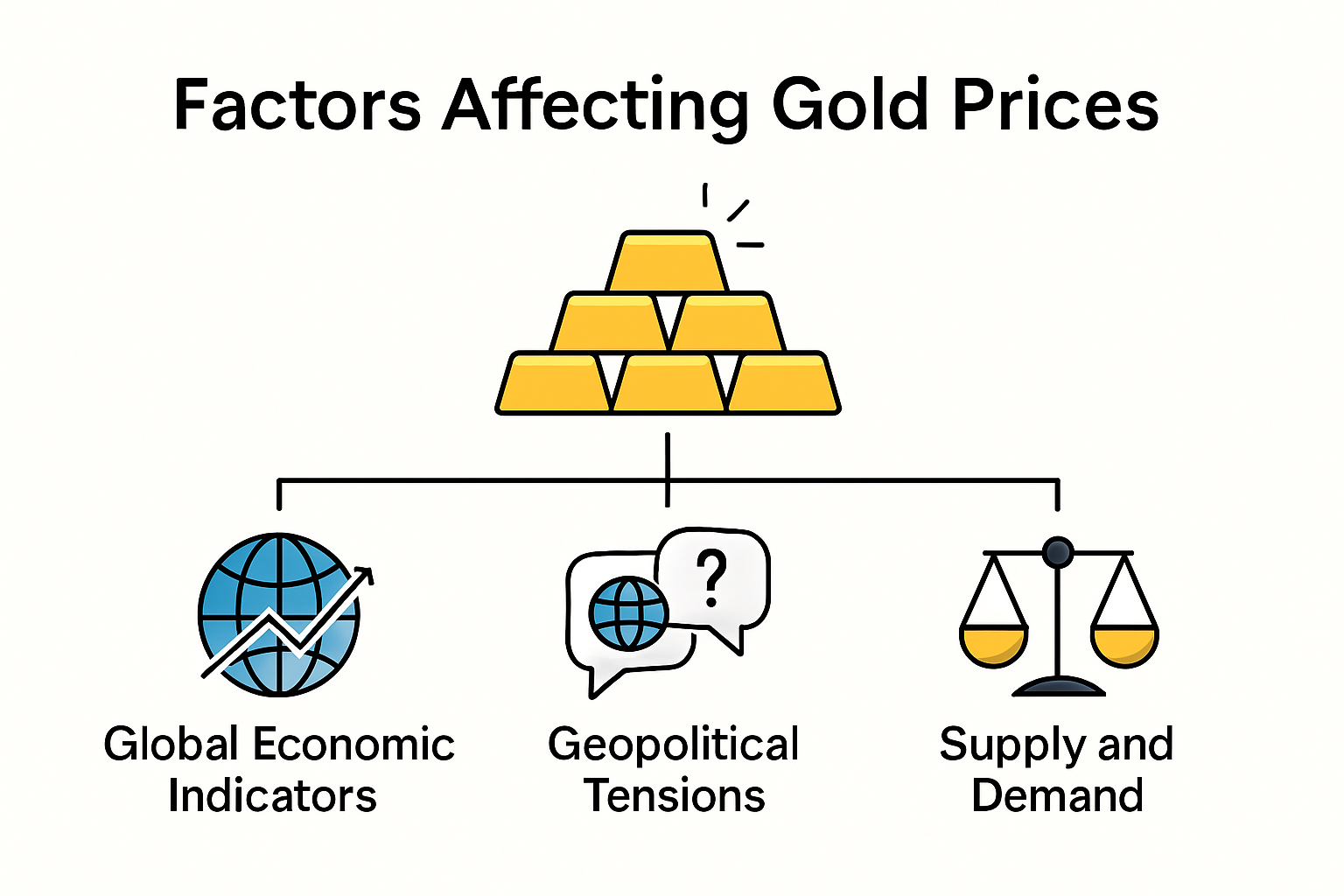
Global Economic Indicators Matter Currency fluctuations, interest rates, and inflation significantly impact gold’s value; understanding these factors is crucial for informed trading decisions.
Geopolitical Events Drive Demand Political uncertainties and conflicts often lead investors to seek gold as a safe-haven asset, impacting price movements during times of global tension.
Supply and Demand Dynamics are Key Gold prices are shaped by mining production, jewelry consumption, and investment demand, necessitating a comprehensive understanding of these factors for successful trading.
Robust Risk Management is Essential Effective risk strategies, such as diversification and stop-loss mechanisms, are vital for managing potential losses and navigating market volatility in gold trading.
Future Projections are Positive Anticipated price increases, influenced by global economic uncertainties and central bank policies, suggest that gold may reach an average of $3,675 per ounce by late 2025, urging investors to adopt strategic approaches.

Factors Influencing Gold Price Movements

Infographic explaining factors affecting gold price

Understanding gold price movements requires a comprehensive analysis of multiple interconnected factors that drive market dynamics. Traders and investors must recognize the complex ecosystem influencing gold valuation to make informed trading decisions.

Global Economic Indicators and Monetary Policy

Economic indicators play a crucial role in determining gold prices. Currency fluctuations, interest rates, and inflation significantly impact gold’s perceived value. Explore our advanced gold price forecasting techniques to understand these nuanced relationships.

According to Federal Reserve Economic Data, when central banks adjust monetary policies, gold prices experience substantial volatility. Low interest rates typically make gold more attractive as an investment, since the opportunity cost of holding non-yielding assets decreases. Investors often view gold as a hedge against inflation, moving capital into the precious metal when traditional currency values become unstable.

Geopolitical Tensions and Market Sentiment

Geopolitical events create significant ripple effects in gold markets. International conflicts, political uncertainties, and economic disruptions can trigger rapid shifts in gold pricing. Research from the World Gold Council demonstrates that during periods of global tension, investors frequently migrate towards gold as a safe-haven asset.

For instance, economic sanctions, trade disputes, and regional conflicts can prompt investors to seek financial protection through gold investments. These events create market uncertainty, driving demand and subsequently influencing price movements. Traders must remain vigilant and monitor global political landscapes to anticipate potential gold market reactions.

Supply and Demand Dynamics

The fundamental economic principle of supply and demand remains paramount in gold price determination. Mining production, industrial demand, jewelry consumption, and investment appetites collectively shape gold’s market value. According to Bloomberg’s commodity analysis, annual gold production and emerging market consumption patterns directly impact pricing.

Key factors influencing supply include:

  • Mining output: Global gold extraction rates
  • Exploration investments: New mining project developments
  • Recycling volumes: Gold recovered from existing sources

Demand drivers encompass:

  • Investment sectors: ETFs, futures markets
  • Jewelry manufacturing: Consumer preferences
  • Industrial applications: Technology and medical sectors

Traders who comprehensively understand these multifaceted influences can develop more strategic approaches to gold trading. By integrating technical analysis, fundamental research, and market sentiment evaluation, investors can navigate the complex gold market with greater confidence and precision.

To clarify the main drivers of gold’s supply and demand outlined above, here’s a summary table:

Supply Factors Demand Drivers
Mining output Investment sectors (ETFs, futures)
Exploration investments Jewelry manufacturing
Recycling volumes Industrial applications

Gold Price Analysis for Forex Traders

Forex traders must develop sophisticated strategies for analyzing gold prices, recognizing the unique characteristics that distinguish gold trading from other financial instruments. Understanding these nuanced analytical approaches can significantly enhance trading performance and risk management.

Technical Analysis Fundamentals

Technical analysis serves as a cornerstone of gold price evaluation for forex traders. Learn advanced support and resistance techniques to refine your trading precision. According to research from the Journal of Forecasting, historical price patterns provide critical insights into potential future movements.

Traders should focus on key technical indicators specific to gold trading:

  • Moving Averages: Tracking short and long-term price trends
  • Relative Strength Index (RSI): Measuring momentum and potential reversal points
  • Fibonacci Retracement: Identifying potential support and resistance levels

Currency Correlation and Market Efficiency

A comprehensive analysis reveals intricate relationships between gold prices and currency markets. Research from arXiv demonstrates significant variations in gold price efficiency across different currencies. The study highlights that gold prices in major currencies exhibit unique behavioral patterns that traders must carefully interpret.

Key correlation factors include:

  • USD Inverse Relationship: Gold typically moves inversely to the US dollar
  • Cross-Currency Impact: Price variations across different monetary systems
  • Economic Indicator Interactions: Inflation rates, interest rates, and monetary policies

Risk Management and Strategic Approaches

Forex trader's desk with gold price charts and risk strategy note

Research published in the International Review of Financial Analysis emphasizes the importance of advanced risk management in gold trading. Forex traders must develop multi-dimensional strategies that account for market uncertainty and volatility.

Effective risk management techniques include:

  • Diversification: Spreading investments across multiple gold trading instruments
  • Hedging Strategies: Using options and futures to mitigate potential losses
  • Volatility Assessment: Continuously monitoring market conditions and adjustment potential

Successful gold trading requires a holistic approach that combines technical analysis, market sentiment, and robust risk management. Traders who develop comprehensive strategies and remain adaptable to changing market conditions will be best positioned to capitalize on gold price movements in the forex market.

Effective XAU Gold Trading Strategies

Navigating the complex world of gold trading requires sophisticated strategies that adapt to dynamic market conditions. Successful traders understand that XAU/USD trading demands a nuanced approach combining technical analysis, risk management, and strategic decision-making.

Technical Trading Approaches

Technical strategies form the backbone of effective gold trading. Discover our proven trading signal techniques to enhance your trading precision. According to Quantpedia’s extensive market analysis, certain technical trading strategies can outperform traditional buy-and-hold approaches.

Key technical strategies include:

  • Trend Following: Identifying and riding dominant market trends
  • Momentum Trading: Capitalizing on strong price movements
  • Mean Reversion: Trading based on price returning to average levels

Research from MDPI suggests that linear regression techniques can be particularly effective in forecasting gold price trends. Traders should pay special attention to lagged interdependencies, recognizing that daily returns often exhibit complex correlational patterns.

Risk Management and Position Sizing

Effective risk management is crucial in gold trading. An analysis from the International Journal of Financial Studies emphasizes the importance of systematic position sizing and risk allocation strategies.

Critical risk management techniques include:

  • Stop-Loss Mechanisms: Limiting potential losses
  • Position Scaling: Adjusting trade sizes based on market volatility
  • Diversification: Spreading risk across multiple trading instruments

Traders should implement a disciplined approach to risk, typically risking no more than 1-2% of total trading capital on a single trade. This approach helps preserve capital during market uncertainties.

Advanced Trading Methodologies

Research from the Indian gold futures market reveals that futures markets often provide more efficient price discovery mechanisms. Sophisticated traders can leverage this insight by:

  • Futures Market Analysis: Monitoring futures pricing
  • Comparative Market Tracking: Analyzing cross-market price movements
  • Sentiment Indicator Integration: Incorporating market sentiment metrics

Advanced traders develop multi-dimensional strategies that combine technical analysis, fundamental research, and adaptive risk management. Understanding the nuanced dynamics of gold trading requires continuous learning and a flexible approach.

Ultimately, successful XAU/USD trading is about developing a comprehensive strategy that balances analytical precision with disciplined risk management. Traders who consistently refine their approach and remain adaptable to market changes will be best positioned to achieve sustainable trading success.

For quick comparison, here’s a table summarizing key gold trading strategy types and their core features:

Strategy Type Core Feature Primary Benefit
Trend Following Riding dominant price trends Captures large directional moves
Momentum Trading Capitalizing on strong price action Maximizes short-term gains
Mean Reversion Trading returns to average levels Profits from price corrections
Linear Regression Using historical patterns/statistics Enhances forecasting accuracy
Futures Analysis Analyzing derivatives market prices Improves price discovery

2025 Gold Market Outlook and Investment Tips

The gold market in 2025 presents a complex landscape of opportunities and challenges for investors and traders. Understanding the nuanced market dynamics and implementing strategic approaches will be crucial for capitalizing on potential gold market developments.

Market Projections and Price Expectations

According to J.P. Morgan Research, gold prices are forecasted to average $3,675 per ounce by the fourth quarter of 2025, with potential to reach $4,000 by mid-2026. Explore our comprehensive gold price forecast to gain deeper insights into these projections.

Key market projection factors include:

  • Global Economic Uncertainty: Ongoing recession probabilities
  • Geopolitical Tensions: International trade and political risks
  • Central Bank Policies: Monetary interventions and interest rate strategies

The World Bank projects a potential rise of approximately 35% in gold prices, driven by strong demand and elevated policy uncertainties. Investors should carefully analyze these macroeconomic indicators when developing investment strategies.

Here’s a summary table outlining the key gold price forecasts and projection factors for 2025:

Source 2025 Avg Price Forecast Notable Projection Factors
J.P. Morgan Research $3,675/oz (Q4 2025) Economic uncertainty, central bank policy
World Bank 35% increase predicted Policy uncertainty, strong demand
J.P. Morgan (2026) $4,000/oz (mid-2026) Continuation of current trends

Strategic Investment Approaches

The London Bullion Market Association (LBMA) identifies three primary drivers influencing gold prices in 2025:

  • U.S. Federal Reserve Policy: Monetary decision impacts
  • Central Bank Demand: Institutional investment trends
  • Geopolitical Risks: Global conflict and economic instability

Investment strategies for navigating the 2025 gold market should focus on:

  • Diversification: Spreading investments across different gold instruments
  • Long-Term Positioning: Maintaining flexible investment portfolios
  • Risk Management: Implementing robust hedging techniques

Investors should pay close attention to emerging trends that could significantly impact gold market dynamics. Our latest market analysis suggests several key considerations for 2025:

  • Digital Gold Platforms: Increasing accessibility through technology
  • Sustainable Investment: Growing interest in environmentally responsible mining
  • Geopolitical Hedge: Gold as a protection against economic uncertainties

Successful gold investment in 2025 will require a multifaceted approach that combines comprehensive market research, adaptive strategies, and a nuanced understanding of global economic trends. Investors who remain informed, flexible, and strategic will be best positioned to capitalize on the potential opportunities in the gold market.

Remember that while projections provide valuable insights, the gold market remains inherently dynamic. Continuous learning, real-time analysis, and a disciplined approach to risk management will be critical for navigating the complex investment landscape of 2025.

Frequently Asked Questions

What factors influence gold prices in 2025?

Gold prices in 2025 will be influenced by global economic indicators, geopolitical tensions, and supply and demand dynamics. Currency fluctuations, interest rates, and inflation will also play crucial roles in determining gold’s value.

How can traders analyze gold price movements effectively?

Traders can analyze gold price movements using technical analysis, understanding currency correlation, and implementing robust risk management strategies. Key indicators like moving averages, RSI, and Fibonacci retracement levels are essential for accurate analysis.

Effective trading strategies for XAU/USD include trend following, momentum trading, and mean reversion. Additionally, employing position sizing, stop-loss mechanisms, and diversification are vital for managing risks and enhancing trading performance.

What are the gold price forecasts for the end of 2025?

Analysts project that gold may reach an average price of $3,675 per ounce by the end of 2025, driven by global economic uncertainties and central bank policies. Additionally, prices may reach $4,000 by mid-2026 based on current trends.

Turn Market Insights Into Real Gold Trading Profits

Struggling to stay ahead of fast-moving gold prices and unpredictable market shifts? If this article helped you break down the factors influencing gold movements for 2025, it’s time to turn those insights into real returns. Many traders know about economic indicators, risk management, and technical analysis, but most find it hard to act confidently and profitably in a volatile market. Discover practical strategies and fresh updates by diving into our News & Updates section.

https://xau-gold-signals.com

Ready to apply these gold trading insights to your own portfolio? Act now and join our exclusive community at https://xau-gold-signals.com for daily, high-accuracy XAU/USD signals. Our expert analysis empowers you to trade smarter and minimize risk while others are still wondering what comes next. Don’t just read about gold trends—turn them into consistent profits with our real-time support.

Trader at desk analyzing gold price charts and market trends

Gold Market Trends 2025: What Forex Traders Must Know

Trader at desk analyzing gold price charts and market trends

Gold prices are on track to hit new records in 2025, with some analysts forecasting an average of $3,675 per ounce. Think you already know why this matters for forex traders? Think again. The biggest moves are being driven not by speculators, but by central banks and geopolitical risks that are rewriting the rules of gold trading faster than most traders can react.

Table of Contents

Quick Summary

Takeaway Explanation
Central banks are increasing gold reserves 95% of financial institutions expect a rise in global central bank gold reserves due to geopolitical tensions and currency volatility, impacting gold prices significantly.
Geopolitical risks drive gold investment Ongoing political instability and trade tensions encourage investors to view gold as a safe-haven asset, highlighting the importance of monitoring global events.
Monetary policy affects gold attractiveness The U.S. Federal Reserve’s interest rate decisions directly influence gold’s investment appeal; lower rates boost attraction while higher rates diminish it.
Advanced trading strategies are essential Successful traders are employing machine learning, predictive modeling, and advanced technical analyses to adapt to the increasingly complex gold market dynamics.
Flexibility in risk management is crucial Traders should implement dynamic portfolio allocation and adaptive position sizing to navigate the market’s volatility and changing economic conditions effectively.

Key Gold Market Drivers in 2025

Forex traders navigating the gold market in 2025 must understand the complex web of factors driving gold prices. Multiple interconnected global dynamics are reshaping gold’s investment landscape, presenting both challenges and opportunities for strategic traders.

Gold market trends 2025 infographic with key drivers

Central Bank Gold Reserves Strategy

Central banks worldwide are fundamentally transforming their gold reserve strategies. According to World Gold Council, 95% of surveyed financial institutions expect global central bank gold reserves to increase over the next 12 months. This unprecedented trend stems from gold’s proven performance during economic uncertainties and its critical role in portfolio diversification.

The strategic shift reflects growing geopolitical tensions and a desire to reduce dependence on traditional currency reserves. Emerging economies are particularly aggressive in gold accumulation, viewing it as a hedge against potential currency volatilities. Forex traders must closely monitor these institutional movements, as large-scale central bank purchases can significantly impact gold pricing dynamics.

Geopolitical Risks and Economic Uncertainty

Geopolitical instability continues to be a primary driver of gold market trends in 2025. London Bullion Market Association research highlights escalating trade tensions and policy uncertainties as key factors pushing investors toward gold as a safe-haven asset. The intricate global political landscape creates an environment where gold maintains its reputation as a reliable store of value.

Traders should pay special attention to potential conflict zones, international trade negotiations, and systemic economic challenges. Regions experiencing political turbulence or economic restructuring often see increased gold investment as investors seek protection against potential market disruptions. The interconnected nature of global financial markets means that a significant event in one region can trigger substantial gold price movements worldwide.

Federal Reserve and Monetary Policy Implications

The U.S. Federal Reserve’s monetary policy remains a critical determinant of gold market trends. Interest rate decisions and inflation control measures directly influence gold’s investment attractiveness. Federal Reserve Economic Projections suggest a nuanced approach to monetary policy that could create both challenges and opportunities for gold traders.

When interest rates rise, gold becomes relatively less attractive compared to yield-generating assets. Conversely, dovish monetary stances and lower interest rates can enhance gold’s appeal as an alternative investment. Forex traders must develop sophisticated strategies that anticipate and respond to these policy shifts, understanding how each Federal Reserve decision can potentially recalibrate gold market dynamics.

To stay ahead of these complex market trends, explore our comprehensive gold trading signals for real-time insights and expert analysis. Understanding these key drivers will empower traders to make informed decisions in the dynamic 2025 gold market landscape.

To help you quickly compare the key drivers impacting gold prices in 2025, the following table summarizes the main influences and their effects on the market:

Market Driver Influence on Gold Price Key Considerations
Central Bank Reserve Buying Drives prices higher 95% expect increased reserves, led by emerging economies
Geopolitical Risks Increases safe-haven demand Trade tensions, conflicts, policy uncertainty
Monetary Policy (Fed) Alters gold’s relative appeal Rising rates decrease appeal; lower rates increase value
Currency Volatility Boosts demand for gold Hedge against unstable fiat currencies
Institutional Movements Shifts price dynamics rapidly Large-scale purchases/sales reshape market landscape

Impact on Forex and Gold Trading Signals

The gold market in 2025 presents a complex landscape for forex traders, with trading signals becoming increasingly sophisticated and data-driven. Navigating this intricate environment requires a deep understanding of how global economic shifts translate into actionable trading strategies.

Volatility and Signal Precision

Gold prices have demonstrated remarkable volatility, with Sucden Financial reporting a 27% increase in 2024, reaching an all-time high of $2,790 per ounce in October. This unprecedented movement underscores the critical importance of precision in gold trading signals. Traders must now rely on more nuanced analysis that goes beyond traditional technical indicators.

The emerging signal ecosystem demands a multi-layered approach. Successful traders are integrating advanced machine learning algorithms with real-time geopolitical analysis to generate more accurate predictions. These sophisticated signals can detect subtle market shifts that traditional methods might miss, providing a competitive edge in an increasingly complex trading environment.

Central Bank Impact on Trading Strategies

Central bank activities are dramatically reshaping gold trading signals. According to research from Sucden Financial, countries like Poland, Turkey, and India accounted for 70% of total reported net gold purchases in 2024. Poland’s gold holdings reached an impressive 448.2 tons by year-end, signaling a significant shift in national investment strategies.

Forex traders must now incorporate central bank movement analysis into their signal interpretation. This means tracking not just price movements, but also geopolitical decisions, monetary policies, and institutional investment patterns. Learn more about crafting effective trading strategies that can adapt to these complex market dynamics.

The following table provides a snapshot of central bank gold accumulation activities referenced in 2024 and their market impact:

Country Gold Holdings End 2024 (tons) Share of Net Global Purchases (2024) Strategic Implication
Poland 448.2 Major (out of 70% total by 3 nations) Signals aggressive accumulation
Turkey Not specified Major (part of 70%) Influences regional stability
India Not specified Major (part of 70%) Hedge against currency risk

Market Volatility and Signal Adaptation

In April 2025, gold prices dramatically surpassed $3,500 per ounce, driven by a significantly weaker US dollar and heightened market volatility, as reported by World Gold Council. This unprecedented movement highlights the need for adaptive trading signals that can respond to rapid market changes.

Traders are increasingly turning to real-time signal services that offer:

  • Instant market sentiment analysis
  • Machine learning-powered predictive models
  • Comprehensive risk management recommendations

The most successful forex traders in 2025 will be those who can quickly interpret complex signal data, understanding that gold trading is no longer about simple price predictions but about comprehending a global economic narrative. By combining technological sophistication with strategic insight, traders can transform market volatility from a challenge into a significant opportunity.

Analyst team reviews gold price volatility and trading signals

Effective Strategies for Gold Traders

In the dynamic gold trading landscape of 2025, successful traders must employ sophisticated, data-driven strategies that go beyond traditional market analysis. The complexity of global economic interactions demands a nuanced approach that integrates multiple analytical techniques and risk management protocols.

Advanced Technical Analysis Techniques

Cutting-edge technical analysis has become crucial for gold traders. Quantpedia research reveals that strategic market timing approaches can significantly outperform traditional buy-and-hold strategies. Traders are now leveraging advanced algorithmic techniques that identify subtle market trends and potential price movements.

Research suggests that behavioral biases can induce predictable patterns in gold markets. By understanding these psychological factors, traders can develop strategies that anticipate market reactions. Master gold scalping techniques that exploit these short-term market inefficiencies can provide traders with a competitive edge.

Machine Learning and Predictive Modeling

Machine learning has revolutionized gold trading strategies in 2025. According to empirical research using Long Short-Term Memory (LSTM) neural networks, sophisticated predictive models can now accurately forecast price trends. These advanced algorithms process vast amounts of historical and real-time data to generate high-probability trading signals.

Traders are increasingly adopting multi-dimensional approaches that combine:

  • Technical price analysis
  • Geopolitical sentiment tracking
  • Machine learning predictive models
  • Automated risk management protocols

The integration of these techniques allows for more precise decision-making and risk mitigation. By leveraging algorithmic insights, traders can develop more robust strategies that adapt quickly to market changes.

Risk Management and Diversification

Research from MDPI highlights the importance of understanding interdependencies between different precious metals. Linear regression techniques have proven particularly effective in forecasting price trends, revealing that daily returns are often negatively correlated with previous days’ performance.

Successful gold traders in 2025 recognize that risk management extends beyond simple stop-loss strategies. They implement comprehensive approaches that include:

  • Dynamic portfolio allocation
  • Continuous strategy backtesting
  • Real-time risk assessment
  • Adaptive position sizing

By unlocking the power of support and resistance techniques, traders can develop more sophisticated entry and exit strategies. The key is maintaining flexibility and continuously refining analytical approaches in response to evolving market conditions.

The gold trading landscape of 2025 demands a holistic approach that combines technological sophistication, deep market understanding, and adaptive strategic thinking. Traders who embrace these multifaceted methodologies will be best positioned to navigate the complex and dynamic global gold market.

Expert Analysis and Price Forecasts

The gold market in 2025 presents a complex landscape of diverse expert perspectives and nuanced price projections. Forex traders must navigate a multifaceted environment where institutional forecasts, geopolitical dynamics, and economic indicators converge to shape potential market trajectories.

Global Financial Institutions’ Perspectives

J.P. Morgan Research projects an ambitious forecast, anticipating gold prices to average $3,675 per ounce by the fourth quarter of 2025, with potential to approach $4,000 by mid-2026. This projection stems from ongoing global trade uncertainties and persistent geopolitical tensions that continue to drive investor interest in safe-haven assets.

HSBC’s analysis further reinforces this bullish outlook, raising their average gold price forecast to $3,215 per ounce. The institution attributes this increased projection to sustained economic risks and escalating government debt levels worldwide. These institutional forecasts underscore the complex interplay of global economic factors influencing gold’s valuation.

Macroeconomic Drivers and Price Dynamics

The World Bank’s commodity market outlook reveals a critical perspective on gold’s trajectory. Their forecast suggests gold prices will reach a new record in 2025 before potentially stabilizing in 2026. This projection reflects the intricate balance between global economic uncertainties, monetary policies, and investor sentiment.

Key macroeconomic factors driving these forecasts include:

  • Persistent global trade tensions
  • Fluctuating currency valuations
  • Ongoing geopolitical uncertainties
  • Central bank monetary policies
  • Emerging market economic strategies

Traders seeking deeper insights can explore our comprehensive gold price forecast to understand the nuanced factors influencing market movements.

Risk Assessment and Strategic Implications

Expert analyses consistently highlight the importance of adaptive strategies in navigating the 2025 gold market. The forecasts suggest a market characterized by significant volatility and potential for substantial price movements. Successful traders will need to develop flexible approaches that can quickly respond to rapidly changing global economic conditions.

Risk management becomes paramount in this environment. Traders must integrate multiple analytical perspectives, considering not just price projections but also the underlying economic and geopolitical drivers. This requires a holistic approach that combines technical analysis, fundamental research, and real-time market sentiment tracking.

The convergence of expert perspectives suggests that while gold presents significant opportunities, it also demands sophisticated, data-driven trading strategies. Forex traders who can effectively interpret these complex market signals will be best positioned to capitalize on the dynamic gold market landscape of 2025.

Frequently Asked Questions

What are the main drivers of gold prices in 2025?

Gold prices in 2025 are primarily driven by central bank reserve strategies, geopolitical risks, and the U.S. Federal Reserve’s monetary policies. Central banks are increasing their gold reserves due to economic uncertainties, while geopolitical instability encourages investment in gold as a safe-haven asset.

How can Forex traders adapt to the changes in the gold market?

Forex traders can adapt by utilizing advanced trading strategies, such as machine learning and predictive modeling. They should also incorporate real-time geopolitical analysis and adapt their risk management techniques to navigate the increased volatility in gold prices.

What impact does central bank activity have on gold trading?

Central bank activities significantly impact gold trading by influencing price dynamics. Large-scale purchases or sales by central banks can lead to rapid shifts in gold prices, making it essential for traders to monitor these movements and incorporate them into their trading strategies.

What are the forecasts for gold prices in 2025?

Analysts forecast that gold prices could average around $3,675 per ounce in 2025, with some projections suggesting they may approach $4,000 by mid-2026 due to ongoing economic risks and geopolitical tensions.

Accelerate Your Gold Trading Success in 2025

Staying ahead of gold volatility and central bank moves can be overwhelming, especially when market drivers shift fast. As discussed in our article, the 2025 gold market demands more than simple predictions. You face real challenges: sudden price swings, complex signals, and the growing influence of major global institutions. The competition is tougher than ever, so you need actionable insights that cut through the noise right now. For the latest shifts and opportunities, see our News & Updates for real-time trade ideas and trends.

https://xau-gold-signals.com

Why settle for uncertainty when you can trade with precision? Our XAU/USD gold trading signals offer more than just alerts. Tap into strategies proven to maximize profits and minimize risks. Join our private group and start receiving accurate, high-probability signals every day. Give yourself a better chance to profit today—visit xau-gold-signals.com and take control of your gold trading journey before the next price surge.

Two traders analyzing gold charts with technical indicators in modern office

Top Technical Indicators for Gold Trading in 2025

Two traders analyzing gold charts with technical indicators in modern office

Gold trading is grabbing headlines as price swings reach new highs and traders hunt for that next big move. Here’s something that catches most people off guard. Research shows that when traders combine indicators like RSI and MACD, accuracy in forecasting gold prices can jump by over 30 percent compared to using a single tool. But relying on just one indicator could leave traders exposed to sudden reversals and missed signals. The real edge comes from blending multiple strategies and reading the signals that others overlook.

Table of Contents

Quick Summary

Takeaway Explanation
Utilize Key Technical Indicators The Relative Strength Index (RSI), Moving Average Convergence Divergence (MACD), and Money Flow Index (MFI) are essential tools for analyzing gold market trends and making informed trading decisions.
Implement Robust Signal Generation Strategies Combining multiple indicators, such as RSI and MACD, enhances the reliability of trading signals by identifying convergence and divergence patterns for strategic entry and exit points.
Prioritize Risk Management Set strict stop-loss orders and ensure that risks on individual trades do not exceed 1-2% of total capital to protect against significant losses in the volatile gold market.
Adopt a Continuous Learning Approach Beginners should practice on demo accounts, keep a trading journal, and stay informed about global economic events to refine their trading strategies and enhance confidence.
Focus on Trend Reversal Techniques Identifying bullish and bearish divergences between price action and RSI can signal potential trend changes, allowing traders to prepare for significant movements in the gold market.

Key Technical Indicators for Gold Prices

Trading gold requires sophisticated analytical tools that help traders make informed decisions in a complex and volatile market. Technical indicators serve as critical navigational instruments for understanding price movements, market sentiment, and potential trading opportunities in the gold market.

Understanding Technical Indicator Fundamentals

Technical indicators are mathematical calculations based on historical price, volume, and open interest data that provide traders with insights into potential market trends and price movements. In gold trading, these indicators help traders identify entry and exit points, assess market momentum, and predict potential price reversals.

A groundbreaking research study from 2024 emphasized the critical role of specific technical indicators in gold price forecasting. The study highlighted key indicators that consistently demonstrate high predictive accuracy and reliability for XAU/USD trading.

Infographic summarizing top technical indicators for gold trading

Top Technical Indicators for Gold Trading

Traders rely on several powerful technical indicators to navigate the gold market effectively. According to the machine learning framework developed in 2025, integrating multiple financial indicators can significantly enhance predictive capabilities.

Relative Strength Index (RSI)
The RSI is a momentum oscillator that measures the speed and change of price movements. For gold trading, RSI helps identify overbought and oversold conditions. When the RSI moves above 70, it suggests the gold market might be overbought, indicating a potential price correction. Conversely, an RSI below 30 suggests the market might be oversold, presenting a potential buying opportunity.

Moving Average Convergence Divergence (MACD)
MACD is a trend-following momentum indicator that shows the relationship between two moving averages of a security’s price. In gold trading, MACD helps traders identify trend changes and momentum shifts. When the MACD line crosses above the signal line, it generates a bullish signal, suggesting potential price increases. When it crosses below, it indicates a bearish trend.

Money Flow Index (MFI)
The MFI combines price and volume data to measure buying and selling pressure. For gold traders, this indicator helps assess the strength of price trends and potential trend reversals. A high MFI indicates strong buying pressure, while a low MFI suggests selling pressure.

Learn more about advanced gold trading strategies that can help you maximize your trading potential.

A 2023 research publication introduced innovative approaches like fractals and Triangular Moving Average Centered Bands, demonstrating the continuous evolution of technical analysis in gold trading.

Successful gold trading requires a comprehensive approach that combines multiple technical indicators, fundamental analysis, and a deep understanding of market dynamics. By mastering these tools, traders can develop more robust and informed trading strategies.

To help you quickly compare the main technical indicators described above, here’s a summary table outlining their features and primary uses.

Indicator Type Main Purpose Key Signal
RSI Momentum Oscillator Identifies overbought/oversold conditions RSI > 70: Overbought, RSI < 30: Oversold
MACD Trend-Following Momentum Detects trend changes/momentum shifts Bullish when MACD > Signal; Bearish when MACD < Signal
MFI Volume-Based Oscillator Assesses buying/selling pressure, trend strength High MFI: strong buying, Low MFI: strong selling

How to Use Indicators for Gold Signals

Navigating the gold trading landscape requires more than just knowing technical indicators. Traders must understand how to strategically apply these tools to generate reliable trading signals and make informed decisions in the dynamic XAU/USD market.

Signal Generation Strategies

Effective signal generation involves combining multiple technical indicators to create a robust trading approach. As research from Wikipedia suggests, oscillators like the Commodity Channel Index (CCI) play a critical role in identifying potential market entry and exit points.

Traders should focus on convergence and divergence between different indicators. For instance, when the Relative Strength Index (RSI) shows an oversold condition simultaneously with the Moving Average Convergence Divergence (MACD) indicating a bullish trend, it creates a stronger signal for potential trading opportunities.

Trading desk showing gold indicator chart and handwritten strategies

Advanced Indicator Confirmation Techniques

Confirmation is key in reducing false signals. Research from ArXiv highlights the importance of combining momentum indicators to improve trading performance. Traders can implement a multi-step verification process:

  • Cross-Indicator Validation: Compare signals from different indicators to ensure consistency
  • Timeframe Analysis: Verify signals across multiple timeframes for increased reliability
  • Volume Confirmation: Use volume indicators to support price movement signals

Explore advanced gold trading signal strategies to enhance your trading approach.

Bollinger Bands and Volatility Tracking

Wikipedia’s analysis of Bollinger Bands provides insights into tracking market volatility. These bands help traders identify potential price breakouts and consolidation periods. When the price moves close to the upper or lower bands, it indicates potential trend reversals or continuation patterns.

Successful gold trading requires a nuanced approach that combines technical analysis, risk management, and continuous learning. Traders should practice using indicators in simulated environments, continuously refine their strategies, and remain adaptable to changing market conditions.

Remember that no single indicator guarantees success. The key is to develop a comprehensive trading system that incorporates multiple technical tools, fundamental analysis, and a disciplined approach to risk management.

Trading gold successfully requires more than just understanding individual technical indicators. Traders must develop sophisticated strategies that leverage multiple indicators to maximize potential profits and minimize risks in the volatile XAU/USD market.

Momentum-Based Trading Strategies

Momentum trading strategies focus on identifying and capitalizing on strong price trends in gold markets. According to research from ArXiv, combining momentum indicators can significantly improve trading performance. Traders typically use a multi-indicator approach that includes the Relative Strength Index (RSI), Moving Average Convergence Divergence (MACD), and Money Flow Index (MFI).

A powerful momentum strategy involves looking for confluence between different indicators. For instance, when the MACD shows a bullish crossover, the RSI indicates an oversold condition below 30, and the MFI suggests strong buying pressure, traders can identify a high-probability trading opportunity.

To clarify how different strategies leverage various indicator combinations and signal types, the table below summarizes the three most popular gold trading strategies and their key characteristics.

Strategy Type Indicator Combination Primary Signal Focus Example Setup
Momentum-Based RSI + MACD + MFI Trend strength & direction Bullish MACD cross & RSI < 30 with rising MFI
Volatility-Based Breakout Bollinger Bands + Volume Breakouts & volatility changes Price breaks above upper band with volume spike
Trend Reversal/Confirmation RSI Divergence + Price Action Early reversal detection Price lower lows + RSI higher lows (bullish divergence)

Volatility-Based Breakout Strategies

Analysis from GoldSniper VIP highlights the effectiveness of Bollinger Bands in identifying market volatility and potential breakout opportunities. Traders can develop strategies around these volatility bands by:

  • Identifying price movements outside the upper or lower Bollinger Bands
  • Confirming breakouts with volume and other momentum indicators
  • Setting precise entry and exit points based on band expansions and contractions

Explore advanced gold scalping techniques to enhance your trading approach.

Trend Reversal and Confirmation Techniques

Successful gold trading requires a nuanced approach to identifying potential trend reversals. Traders can use divergence techniques between price action and technical indicators. The RSI analysis from GoldSniper VIP demonstrates how divergences can signal potential trend changes:

  • Bullish Divergence: When price makes lower lows, but the RSI makes higher lows
  • Bearish Divergence: When price makes higher highs, but the RSI makes lower highs

These divergences provide early warning signs of potential trend reversals, allowing traders to prepare for significant market movements.

Advanced traders often combine multiple strategies, adapting their approach based on market conditions. The key is to develop a flexible trading system that incorporates:

  • Multiple technical indicators
  • Rigorous risk management
  • Continuous market analysis
  • Psychological discipline

Remember that no single strategy guarantees success. Continuous learning, practice, and adaptability are crucial in navigating the complex gold trading landscape. Traders should always use stop-loss orders, manage their risk carefully, and avoid overcommitting to any single trading approach.

Tips for Beginners in Gold Trading

Entering the world of gold trading can be both exciting and challenging for newcomers. Success requires a strategic approach, continuous learning, and a solid understanding of technical indicators and market dynamics.

Essential Technical Indicator Knowledge

For beginners, mastering fundamental technical indicators is crucial. According to Investopedia, several key indicators can help traders make informed decisions:

Relative Strength Index (RSI)
The RSI is a momentum oscillator that ranges from 0 to 100. When the RSI moves above 70, it suggests an overbought market condition, indicating potential price correction. Conversely, an RSI below 30 suggests an oversold market, presenting potential buying opportunities.

Moving Averages
Simple Moving Averages (SMA) and Exponential Moving Averages (EMA) help smooth price data and identify market trends. Beginners can use these indicators to understand price momentum and potential trend directions. Crossovers between short-term and long-term moving averages can signal potential trading opportunities.

Risk Management Strategies

Successful gold trading goes beyond understanding technical indicators. Effective risk management is paramount for beginners. Key strategies include:

  • Setting strict stop-loss orders
  • Never risking more than 1-2% of total trading capital on a single trade
  • Diversifying trading approaches
  • Maintaining emotional discipline

Discover advanced support and resistance techniques to enhance your trading skills.

Practical Learning and Continuous Improvement

The Moving Average Convergence Divergence (MACD) is another critical indicator for beginners. Investopedia research highlights its importance in identifying potential trend changes. A bullish signal occurs when the MACD line crosses above the signal line, while a bearish signal is indicated when it crosses below.

Beginners should focus on:

  • Practicing with demo trading accounts
  • Studying market trends and historical price movements
  • Learning from experienced traders
  • Keeping a trading journal to track and analyze performance

Additionally, staying informed about global economic events, geopolitical situations, and market sentiment can significantly impact gold prices. Continuous education and adaptability are key to long-term success in gold trading.

Remember, no single strategy guarantees success. Trading is a skill developed through patience, practice, and a willingness to learn from both successes and failures. Start small, manage your risks carefully, and gradually build your trading confidence and expertise.

Frequently Asked Questions

What are the top technical indicators for gold trading?

The top technical indicators for gold trading include the Relative Strength Index (RSI), Moving Average Convergence Divergence (MACD), and Money Flow Index (MFI). These tools help traders analyze market trends and make informed decisions.

How can traders effectively combine multiple indicators for gold trading?

Traders can effectively combine multiple indicators by looking for convergence and divergence between signals. For example, using RSI and MACD together can enhance the accuracy of entry and exit points, allowing for more reliable trading signals.

What is the significance of the RSI in gold trading?

The Relative Strength Index (RSI) is significant in gold trading as it measures momentum, identifying whether the market is overbought (RSI above 70) or oversold (RSI below 30). This helps traders make informed decisions regarding potential market reversals.

How important is risk management in gold trading?

Risk management is crucial in gold trading. Traders should set strict stop-loss orders and ensure they only risk 1-2% of their total capital on any single trade. This approach helps protect against significant losses in a volatile market.

Turn Gold Trading Knowledge Into Profitable Signals with Proven Tools

You have learned how powerful technical indicators like RSI, MACD, and MFI can transform your gold trading accuracy in 2025. But recognizing the best setups is only half the battle. Many traders struggle to filter out false signals and often miss out on high-probability trades. If you are determined to improve your results and want confident decision-making, it is time to use signals powered by deep market analysis and real-time strategies.

Explore expert-driven guidance in our How To Guides

https://xau-gold-signals.com

Join our Private Telegram Group for access to daily, real-time XAU/USD gold trading signals that integrate technical indicators and market context, all designed to help you maximize profits and reduce costly mistakes. Our signals consistently deliver a 90 percent plus win rate, no matter your experience level. Do not wait until the next trend passes you by. Sign up at https://xau-gold-signals.com and start capitalizing on gold trading opportunities today.

Forex traders analyzing gold prices with 'Gold Forex' handwritten on whiteboard

Why Trade Gold Forex in 2025: Key Benefits for Traders

Forex traders analyzing gold prices with 'Gold Forex' handwritten on whiteboard

Gold trading is catching the attention of forex traders everywhere. Gold has shown a positive correlation with global uncertainty and offers a unique shield against market chaos according to recent research. Most people would expect that means gold trading is slow and predictable. Actually, it is one of the most dynamic and opportunity-rich markets you can trade in 2025.

Table of Contents

Quick Summary

Takeaway Explanation
Unparalleled Stability Gold acts as a safe haven during economic uncertainties, providing traders with a resilient asset class for risk management and portfolio diversification.
Advanced Trading Opportunities The gold forex market offers 24-hour access, high liquidity, and low transaction costs, ideal for implementing various trading strategies.
Sophisticated Analysis Required Successful gold trading demands a blend of technical and fundamental analysis, monitoring geopolitical events and economic indicators to inform decisions.
Utilization of Trading Signals Gold forex signals enhance trading precision through data-driven recommendations, aiding in risk management and strategic optimization.
Integration of Technology Traders should leverage advanced algorithmic strategies and machine learning techniques to refine their trading approaches and improve performance.

Infographic visualizing top reasons to trade gold forex in 2025

Top Reasons to Trade Gold Forex


Trading gold in the forex market represents a strategic opportunity for investors seeking stability and potential profit in an increasingly complex financial landscape. The XAU/USD market offers unique advantages that set it apart from traditional trading instruments.

Unparalleled Market Stability and Risk Management

Gold stands out as a remarkable asset class with exceptional resilience during economic uncertainties. Research from the World Gold Council reveals that gold consistently performs as a critical hedge against market volatility. Traders recognize gold’s intrinsic value as a safe-haven asset that maintains purchasing power during periods of economic turbulence.

The forex gold market provides traders with multiple strategic approaches. Investors can leverage gold’s low correlation with other financial instruments, creating a robust portfolio diversification strategy. By integrating gold trades, traders can potentially mitigate overall investment risk while maintaining exposure to a globally recognized store of value.

Advanced Trading Opportunities in Gold Forex

Modern forex platforms have revolutionized gold trading, offering unprecedented accessibility and sophisticated trading mechanisms. Analysis from Investopedia demonstrates that gold forex trading provides several unique advantages:

  • 24-Hour Market Access: Gold trades continuously across global exchanges, enabling traders to capitalize on international market movements.
  • High Liquidity: Exceptional market depth ensures rapid trade execution and minimal slippage.
  • Low Transaction Costs: Competitive spreads make gold forex an attractive option for both novice and experienced traders.

Traders can implement various strategies, from short-term scalping to long-term position trading. The XAU/USD market’s inherent volatility creates multiple entry and exit opportunities, allowing skilled traders to generate consistent returns.

Technical and Fundamental Analysis Potential

Gold forex trading demands a sophisticated approach combining technical and fundamental analysis. Successful traders monitor geopolitical events, economic indicators, and market sentiment to make informed trading decisions. Research from Reuters indicates that gold prices are influenced by complex global factors, including:

  • Geopolitical tensions
  • Central bank monetary policies
  • Global economic stability
  • Currency fluctuations

By understanding these dynamics, traders can develop nuanced trading strategies that capitalize on gold’s unique market characteristics. For traders seeking to enhance their understanding of gold trading strategies, our comprehensive guide on trading techniques provides in-depth insights into advanced trading methodologies.

Trading gold forex in 2025 represents more than just a financial opportunity. It’s a strategic approach to navigating an increasingly complex global economic environment, offering traders a powerful tool for wealth preservation and growth.

To clarify and summarize the unique advantages of gold forex trading mentioned above, the following table organizes these benefits for quick comparison:

Advantage Description
24-Hour Market Access Trade gold at any time, capitalizing on global market movements
High Liquidity Ensures rapid execution and minimal slippage
Low Transaction Costs Competitive spreads favor both new and experienced traders
Portfolio Diversification Gold’s low correlation with other assets reduces overall investment risk
Hedge Against Volatility Maintains value during economic uncertainty and market turbulence
Variety of Strategies Supports scalping, swing trading, and long-term investing

How Gold Forex Signals Help Traders

Trader desk with gold forex signal dashboard and 'Trading Signals' note

Gold forex signals represent a sophisticated tool designed to empower traders with precise, timely trading recommendations in the complex XAU/USD market. These signals provide traders with strategic insights that can transform their trading approach and potentially enhance overall performance.

Precision Trading Through Expert Analysis

Research from Financial Times indicates that professional gold trading signals can significantly improve traders’ decision-making processes. These signals are generated through comprehensive technical and fundamental analysis, combining advanced algorithmic tools with expert market interpretation.

Trading signals offer traders a structured approach to market entry and exit points. By leveraging professional analysis, traders can minimize emotional decision-making and rely on data-driven strategies. According to Bloomberg, traders using high-quality signals can potentially reduce risk exposure and improve trade consistency.

The most effective gold forex signals incorporate multiple analytical perspectives, including:

  • Technical Indicator Analysis: Utilizing chart patterns, moving averages, and oscillators
  • Fundamental Economic Indicators: Tracking global economic trends and geopolitical events
  • Price Action Evaluation: Analyzing historical and current market movements

Risk Management and Strategic Optimization

Gold forex signals serve as a critical risk management tool for traders across experience levels. Investment Research from Morgan Stanley demonstrates that structured trading signals can help traders implement more disciplined trading approaches.

These signals provide crucial information about potential market movements, including:

  • Entry and exit price recommendations
  • Stop-loss and take-profit levels
  • Probability assessments for specific trading scenarios

For traders seeking to refine their gold trading strategy, our comprehensive guide to trading signals offers advanced insights into maximizing signal effectiveness.

Technology and Expertise Convergence

Modern gold forex signals represent the convergence of advanced technology and deep market expertise. Sophisticated algorithms analyze massive datasets in real-time, processing complex market information faster than traditional manual analysis.

Research from Forex Analytics reveals that professional trading signals can process over 100 market indicators simultaneously, providing traders with a comprehensive market perspective. This technological approach enables traders to:

  • Receive instantaneous market insights
  • Reduce individual analysis time
  • Access professional-grade market interpretation
  • Maintain consistent trading discipline

Trading gold forex signals in 2025 is not just about receiving recommendations. It’s about accessing a sophisticated ecosystem of market intelligence that empowers traders to make more informed, strategic decisions in an increasingly complex global financial landscape.

Effective Gold Forex Strategies for 2025

As the global financial landscape continues to evolve, traders must adapt their gold forex strategies to remain competitive and profitable in 2025. Successful trading demands a sophisticated approach that combines technological innovation, comprehensive market analysis, and strategic risk management.

Advanced Algorithmic Trading Approaches

Research from the Journal of Financial Technologies reveals that emerging algorithmic strategies are transforming gold forex trading. Cutting-edge Deep Reinforcement Learning (DRL) algorithms are proving particularly effective in identifying market trends and optimizing trade execution.

A groundbreaking study demonstrates that DRL algorithms can significantly enhance trading performance by:

  • Precise Trend Identification: Analyzing complex market patterns with unprecedented accuracy
  • Dynamic Risk Management: Adapting trading strategies in real-time based on market conditions
  • Predictive Market Analysis: Processing multiple economic indicators simultaneously

Traders can leverage these advanced technologies to develop more nuanced and responsive trading strategies. The integration of artificial intelligence with traditional market analysis creates a powerful approach to gold forex trading.

Risk Mitigation and Strategic Positioning

Effective gold forex strategies in 2025 demand a multifaceted approach to risk management. Analysis from Morgan Stanley highlights the importance of defensive positioning in volatile market conditions.

Key strategic considerations include:

  • Implementing robust stop-loss mechanisms
  • Diversifying trading approaches
  • Maintaining flexible position sizing
  • Continuously monitoring global economic indicators

Traders seeking to refine their approach can explore our advanced scalping techniques to enhance their trading precision and potential profitability.

Holistic Market Analysis Techniques

Research from the International Monetary Fund emphasizes the critical importance of comprehensive market analysis in gold forex trading. Successful traders in 2025 will need to integrate multiple analytical approaches:

  • Technical analysis using advanced charting techniques
  • Fundamental economic indicator tracking
  • Geopolitical sentiment analysis
  • Artificial intelligence-driven predictive modeling

A groundbreaking study from Springer introduced an innovative indicator model combining fractals and Triangular Moving Average Centered Bands. This approach demonstrated superior predictive capabilities, offering traders a more sophisticated method of market analysis.

The landscape of gold forex trading in 2025 is characterized by technological innovation, complex market dynamics, and unprecedented analytical capabilities. Traders who embrace advanced strategies, leverage cutting-edge technologies, and maintain a disciplined approach will be best positioned to navigate the evolving financial landscape.

Success in gold forex trading requires continuous learning, adaptability, and a willingness to integrate new technologies and analytical approaches. By staying informed and strategic, traders can transform market challenges into profitable opportunities.

To help traders quickly compare different gold forex trading strategies and their approaches, the following table summarizes the main methods described above:

Strategy Type Key Features Advantages
Algorithmic / DRL Trading AI-driven trend analysis, real-time adaptability High precision, automation, scalability
Defensive Risk Management Stop-losses, diversification, flexible sizing Reduces risk in volatile markets
Holistic Market Analysis Technical, fundamental, sentiment, AI integration Nuanced predictions, deeper insights
Advanced Scalping Rapid trades, small price movements Quick gains, frequent opportunities

Navigating the complex landscape of gold forex trading requires a sophisticated understanding of market trends and analytical methodologies. In 2025, successful traders will need to develop a multifaceted approach that integrates advanced technological tools with comprehensive market insights.

Complexity of Gold Market Dynamics

Research from the International Journal of Financial Economics reveals that gold prices are influenced by an intricate network of financial indicators, macroeconomic variables, and sentiment-driven factors. The gold market demonstrates remarkable complexity, characterized by long-range memory and multifractality that challenge traditional analytical approaches.

A groundbreaking study from ArXiv highlights gold’s unique response to market uncertainty. The research demonstrates that gold prices exhibit positive correlation with uncertainty levels, particularly under normal market conditions. This characteristic positions gold as a critical hedge against economic volatility, making trend analysis crucial for strategic trading.

Key factors influencing gold market trends include:

  • Global geopolitical tensions
  • Monetary policy shifts
  • Currency value fluctuations
  • International economic indicators
  • Investor sentiment and risk appetite

Advanced Analytical Methodologies

Modern gold market analysis transcends traditional technical analysis, incorporating sophisticated predictive models and machine learning techniques. Research from Financial Technology Quarterly suggests that integrated forecasting frameworks can significantly improve gold price prediction accuracy.

Traders can leverage multiple analytical approaches:

  • Quantitative Analysis: Utilizing mathematical models and statistical techniques
  • Sentiment Analysis: Tracking global economic and geopolitical sentiment
  • Machine Learning Predictive Models: Employing artificial intelligence to identify complex market patterns

For traders seeking deeper insights, our comprehensive gold price forecast guide provides advanced strategies for interpreting market trends.

Analysis from the World Economic Forum indicates that gold market trends in 2025 will be increasingly influenced by technological innovation and global economic shifts. Traders must remain adaptable, integrating emerging analytical tools and understanding the evolving market landscape.

Critical emerging trends include:

  • Increased integration of artificial intelligence in market analysis
  • Growing importance of digital asset correlations
  • Enhanced real-time global economic monitoring
  • Sophisticated risk management technologies

Successful gold forex trading in 2025 demands more than traditional market analysis. It requires a holistic approach that combines technological innovation, deep market understanding, and strategic adaptability. Traders who can effectively navigate these complex dynamics will be best positioned to capitalize on gold market opportunities.

The future of gold forex trading lies in continuous learning, technological integration, and a nuanced understanding of global economic interactions. By embracing advanced analytical methodologies and maintaining a forward-looking perspective, traders can transform market complexity into strategic advantage.

Frequently Asked Questions

What are the benefits of trading gold in the forex market in 2025?

Trading gold in forex offers unparalleled market stability, advanced trading opportunities, and the potential for effective risk management. Gold acts as a hedge against economic uncertainty, allowing traders to diversify their portfolios and capitalize on market volatility.

How do gold forex signals improve trading performance?

Gold forex signals enhance trading performance by providing data-driven recommendations based on expert analysis. These signals help traders identify precise entry and exit points, facilitating better decision-making and risk management.

What strategies should traders employ for gold forex trading?

Traders can utilize advanced algorithmic trading approaches, implement risk mitigation techniques, and adopt holistic market analysis to enhance their gold forex trading strategies in 2025. This multifaceted approach can lead to improved trading outcomes.

Why is technical and fundamental analysis important in gold trading?

Technical and fundamental analysis are crucial in gold trading as they help traders understand market dynamics, identify trends, and make informed decisions. Monitoring geopolitical events and economic indicators play a key role in determining gold price movements.

Ready to Unlock the Real Power of Gold Forex Trading in 2025?

Many traders know gold offers stability, advanced opportunities, and protection during market uncertainty. Yet, one challenge stands out. How do you consistently catch XAU/USD moves, manage risk, and truly benefit from gold’s unique market dynamics? If constant market noise, complex analysis, and the risk of missing winning trades have been your struggle, you are not alone. Our How To Guides provide step-by-step solutions, bridging everything you learned in this article with actionable strategies and real market results.

https://xau-gold-signals.com

Take control today. Join our private Telegram group at https://xau-gold-signals.com and get daily gold trading signals with 90%+ accuracy. You get expert insights, clear entry and exit points, and the support you need to turn market volatility into steady wins. Don’t wait. Start maximizing your potential in the gold forex market right now.

Traders analyzing gold forex price charts in bright office with Gold Forex on screen

Why Trade Gold Forex in 2025? Key Benefits for Traders

Traders analyzing gold forex price charts in bright office with Gold Forex on screen

Gold trading in the forex market is grabbing more attention than ever as global uncertainty climbs. Here is something that might surprise you. Gold trading volume in forex surpassed 30 trillion dollars globally in 2023. Most traders believe that complex stocks or cryptocurrencies offer the best moves, but gold often gives more consistent opportunities with far less drama. Turns out, the oldest asset on the planet is paving the way for smart traders in 2025.

Table of Contents

Quick Summary

Takeaway Explanation
Gold is a safe-haven asset Traders favor gold during economic uncertainty, as it often retains or increases in value when other markets decline, providing a hedge against instability.
Gold as an inflation hedge Gold historically protects wealth during periods of high inflation, making it an appealing alternative to volatile fiat currencies.
Diverse trading instruments available Traders can engage with gold through various instruments like spot contracts, futures, options, and ETFs, each offering unique risk management opportunities.
24/5 market accessibility Gold trading occurs continuously, allowing traders to develop strategies that respond to global economic shifts and real-time market dynamics.
Utilize trading signals effectively Trading signals provide actionable insights based on market analysis, enhancing decision-making when trading gold; however, they should be used in conjunction with personal market knowledge.

Infographic showing why trade gold forex: safe-haven, inflation hedge, more.

Gold has established itself as a cornerstone asset in forex trading, attracting traders with its unique characteristics and strategic value. Understanding why gold remains a compelling investment requires exploring its fundamental attributes and market dynamics.

Economic Stability and Safe-Haven Appeal

Traders are drawn to gold primarily because of its reputation as a safe-haven asset. During periods of economic uncertainty, geopolitical tensions, or financial market volatility, gold consistently demonstrates remarkable resilience. According to BabyPips, gold serves as a critical financial instrument that investors turn to when traditional markets experience turbulence.

The metal’s intrinsic value transcends typical currency fluctuations. When stock markets decline or currencies weaken, gold typically maintains or increases its value, providing traders with a reliable hedge against economic instability. This characteristic makes gold an essential component of diversified trading strategies.

Inflation Protection and Monetary Value

Another significant reason for gold’s popularity in forex trading is its historical role as an inflation hedge. As fiat currencies potentially lose purchasing power during high inflation periods, gold has consistently preserved wealth. Research from financial analysts demonstrates that gold prices often rise during inflationary environments, protecting investors from monetary devaluation.

Traders recognize that gold’s value is not tied to any single government’s monetary policy. This independence makes it an attractive alternative to traditional currency trades, especially in regions experiencing economic instability or aggressive monetary interventions.

Strategic Trading Opportunities

Gold trading offers unique strategic advantages that appeal to both novice and experienced forex traders. The inverse correlation with the U.S. dollar creates fascinating trading dynamics. When the dollar weakens, gold prices typically strengthen, providing sophisticated traders multiple entry and exit points.

Moreover, gold’s global recognition means it trades 24 hours a day across multiple international markets. This continuous trading environment enables traders to develop comprehensive trading strategies that capitalize on global economic shifts and market sentiments.

For traders seeking a blend of stability, potential appreciation, and strategic flexibility, gold forex trading represents a compelling investment avenue. Its multifaceted nature ensures continued relevance in an ever-changing global financial landscape.

To help you compare the main reasons gold is popular in forex trading, the following table summarizes the unique advantages gold offers traders:

Reason Key Benefit Supporting Factors
Safe-Haven Appeal Acts as a hedge during market volatility Resilience, investor trust, intrinsic value
Inflation Protection Preserves wealth in high inflation periods Price often rises as fiat loses purchasing power
Independence from Monetary Policy Not tied to any single government or policy Remains attractive during monetary intervention
Strategic Trading Opportunities Multiple entry/exit points with global trading hours 24-hour markets, inverse dollar correlation
Global Recognition and Accessibility Easily traded worldwide, high liquidity Accepted in all major forex markets

How Gold Trading Works in Forex Markets

Gold trading in forex markets represents a sophisticated financial mechanism that allows traders to speculate on gold price movements using various financial instruments and trading strategies. Unlike traditional commodity trading, forex gold trading offers unique opportunities for investors to engage with this precious metal through flexible and dynamic approaches.

Trading Instruments and Mechanisms

Forex gold trading primarily occurs through several key instruments. Traders can engage with gold using spot contracts, futures, options, and exchange-traded funds (ETFs). According to FX Leaders, these instruments provide different levels of complexity and risk management for traders.

Spot trading represents the most direct method, where traders exchange gold at current market prices. Futures contracts allow traders to agree on a specific gold price for future delivery, enabling strategic hedging and speculation. Options provide additional flexibility by giving traders the right, but not the obligation, to buy or sell gold at a predetermined price.

Market Dynamics and Price Influencers

Gold prices in forex markets are influenced by a complex web of global economic factors. Research from financial analysts indicates that currency strength, particularly the U.S. dollar, geopolitical tensions, and macroeconomic indicators significantly impact gold valuations.

The most common trading pair involves XAU/USD, representing gold priced in U.S. dollars. Traders closely monitor economic indicators such as inflation rates, central bank policies, and global political events to predict potential price movements. This dynamic environment requires continuous market analysis and strategic decision-making.

Trading Strategies and Market Access

Forex gold trading operates 24 hours a day, five days a week, providing unprecedented market accessibility. Traders can develop comprehensive trading strategies that capitalize on global market fluctuations and economic shifts.

Home forex traders examining gold price charts and planning strategies for 24/5 market

Successful gold forex trading demands a nuanced understanding of technical analysis, fundamental economic principles, and risk management. Traders utilize various tools such as charts, indicators, and real-time market data to make informed trading decisions. Advanced traders often employ techniques like scalping, swing trading, and long-term position trading to maximize potential returns.

Understanding these intricate mechanisms and developing a robust trading approach can transform gold forex trading from a complex financial activity into a potentially lucrative investment strategy. Continuous learning, disciplined risk management, and adaptability remain key to navigating the dynamic gold forex market.

Below is an overview table of key gold trading instruments available in the forex market, highlighting their main characteristics and benefits:

Instrument Description Main Benefit Complexity/Risk Level
Spot Contracts Immediate purchase/sale at current market price Direct exposure to gold Low
Futures Agreement to buy/sell at set price in the future Hedging, speculation Moderate
Options Right (not obligation) to buy/sell at set price Flexibility, limited loss Moderate to high
ETFs Exchange-traded fund representing gold exposure Diversification, liquidity Low to moderate

Gold Trading Strategies for Every Trader

Trading gold in forex markets requires a strategic approach tailored to individual risk tolerance, market knowledge, and trading objectives. Different trading strategies offer unique advantages, enabling traders to navigate the complex gold market with precision and confidence.

Scalping and Short-Term Trading Techniques

Scalping represents an aggressive trading strategy designed for traders seeking rapid, small gains. According to research in financial markets, short-term trading requires meticulous analysis and quick decision-making. Master gold scalping strategies enable traders to capitalize on minute price fluctuations, typically holding positions for seconds to minutes.

Successful scalpers utilize advanced technical indicators, real-time charts, and high-speed execution platforms. They focus on minimal profit targets while managing transaction costs carefully. This approach demands exceptional discipline, rapid market interpretation skills, and robust risk management protocols.

Long-Term Position Trading Strategies

Position trading offers a contrasting approach, emphasizing fundamental analysis and extended investment horizons. Academic research from Asian markets reveals that optimal hedging strategies can provide significant protection during market volatility. Traders employing this method analyze macroeconomic indicators, geopolitical trends, and long-term monetary policies to make informed trading decisions.

Position traders typically maintain gold positions for weeks, months, or even years. They prioritize comprehensive market understanding over short-term price movements. This strategy requires patience, thorough research, and a deep comprehension of global economic dynamics.

Risk Management and Diversification Approaches

Effective gold trading transcends individual strategies and hinges on robust risk management techniques. Research from futures market analysis highlights the importance of understanding price discovery mechanisms and market relationships.

Traders can mitigate risks through several approaches: implementing stop-loss orders, diversifying trading instruments, and maintaining balanced portfolio allocations. Sophisticated traders often combine multiple strategies, adapting their approach based on market conditions. They recognize that flexibility and continuous learning are crucial for sustained success in gold forex trading.

By understanding and implementing these nuanced strategies, traders can transform gold forex trading from a complex financial activity into a potentially lucrative investment approach. The key lies in selecting strategies aligned with individual trading goals, risk tolerance, and market expertise.

Using Trading Signals for XAU/USD Success

Trading signals represent a critical tool for gold forex traders seeking to optimize their investment strategies and maximize potential returns. These sophisticated analytical recommendations provide traders with actionable insights derived from complex market analysis, enabling more informed and strategic trading decisions.

Understanding Trading Signal Mechanics

Trading signals for XAU/USD are generated through comprehensive analytical processes that combine technical, fundamental, and statistical methodologies. According to research published in Intelmatics, predictive models can achieve moderate accuracy in forecasting price trends across different time frames.

These signals typically include crucial information such as entry points, stop-loss levels, and potential profit targets. Discover the best XAU/USD gold trading signals that leverage advanced algorithms and expert market analysis to provide traders with high-probability trading opportunities.

Advanced Signal Analysis Techniques

Research from financial market studies highlights the importance of high-frequency trading (HFT) in enhancing market efficiency and technical analysis accuracy. Modern trading signals incorporate multiple analytical approaches, including:

  • Technical indicator analysis
  • Sentiment tracking
  • Macroeconomic trend evaluation
  • Real-time market sentiment assessment

Sophisticated traders recognize that no single signal should be considered in isolation. Instead, they cross-reference multiple signal sources, combining technical indicators with fundamental market insights to create a robust trading strategy.

Risk Management and Signal Optimization

Effective use of trading signals extends beyond simple execution. Successful traders develop a nuanced approach to signal implementation, carefully managing risk and understanding the limitations of predictive models. This involves:

  • Implementing strict risk management protocols
  • Using signals as guidance rather than absolute directives
  • Continuously evaluating signal performance
  • Adapting strategies based on market conditions

Trading signals for XAU/USD offer a powerful tool for traders seeking to navigate the complex gold forex market. However, their true value lies not in blind implementation, but in intelligent, strategic application combined with personal market knowledge and risk management expertise.

By approaching trading signals as one component of a comprehensive trading strategy, traders can leverage these insights to make more informed decisions, potentially improving their overall trading performance and understanding of the gold forex market.

Frequently Asked Questions

Why should I trade gold in the forex market in 2025?

Trading gold in the forex market in 2025 offers advantages such as its safe-haven appeal during economic uncertainty, inflation protection, and the ability to take advantage of diverse trading instruments and strategies. Gold’s stability and continuous market accessibility make it a compelling choice for traders.

What are the main benefits of trading gold as a forex asset?

The primary benefits of trading gold include its historic role as a hedge against economic volatility, its ability to preserve value during inflation, and its 24/5 trading availability across global markets. Additionally, gold’s independence from specific government policies makes it a popular choice among traders.

What trading strategies work best for gold in forex?

Effective gold trading strategies include scalping for short-term gains, long-term position trading based on macroeconomic factors, and implementing solid risk management approaches. Each strategy caters to different risk appetites and market conditions, allowing traders to tailor their methods.

How can trading signals enhance my gold trading experience?

Trading signals can enhance your gold trading by providing actionable insights based on market analysis, including entry and exit points. Effective use of these signals can improve decision-making and potentially increase trading success when combined with personal market knowledge and risk management techniques.

Turn Uncertainty Into Opportunity With Expert Gold Signals

Ready to move from theory to real trading success? After learning about gold’s safe-haven value and the complexities of forex gold trading in 2025, the next challenge is turning your insights into real profit. Many traders feel overwhelmed by shifting markets and the pressure to make each trade count. You may have seen how trading gold can protect against inflation and market swings, but without accurate entry and exit points or a proven trading approach, it’s hard to capture those gains consistently. That’s where reliable signals and professional guidance make all the difference. Dive deeper by exploring our How To Guides for practical strategies that align with everything you’ve just learned.

https://xau-gold-signals.com

Take action now and experience the advantage of our real-time, high-accuracy XAU/USD gold trading signals. Whether you want to sharpen your scalping skills or plan long-term gold trades, our expert-driven signals help you act with clarity and confidence. Visit https://xau-gold-signals.com now and join our Private Telegram Group to start receiving daily strategies that consistently boost your results. Your opportunity to benefit from the gold market’s potential starts today.

Professionals discuss gold investing with text on office screen

Long Term Gold Investing Strategies for 2025: A Guide for Forex Traders

Professionals discuss gold investing with text on office screen

Gold prices have climbed over 26 percent, shooting past $3,300 per ounce and grabbing headlines in 2025. Most investors look at this surge and assume the real value lies in quick profits. Here is the real surprise: research shows that allocating just 5 to 10 percent of your portfolio to gold can actually lower your overall risk and offer protection during economic uncertainty. This flips the common belief on its head and makes gold far more than a flashy bet—it is a quiet powerhouse for anyone thinking long term.

Table of Contents

Quick Summary

Takeaway Explanation
Gold as a Hedge Against Inflation Gold effectively protects against economic uncertainties and inflation, making it essential for long-term diversified investment strategies.
Strategic Portfolio Allocation Allocating 5-10% of a portfolio to gold can minimize overall risk and enhance diversification, particularly during periods of economic instability.
Utilizing Gold Trading Signals Implementing sophisticated gold trading signals can provide actionable insights for maximizing investment opportunities and managing risks effectively.
Importance of Risk Management Employing techniques like dollar cost averaging and disciplined risk management strategies improves long-term investment outcomes in the volatile gold market.
Monitoring Global Economic Indicators Staying informed on central bank policies, inflation rates, and geopolitical dynamics is crucial for making informed decisions in the gold market landscape of 2025.

Why Gold Shines in Long Term Portfolios

Long term gold investing represents a strategic approach for forex traders seeking portfolio stability and potential wealth preservation. Gold has consistently demonstrated unique characteristics that make it an attractive asset for investors looking beyond short term market fluctuations.

Historical Performance and Inflation Protection

Gold’s performance as a long term investment is rooted in its remarkable ability to hedge against economic uncertainties. Research analyzing data from 1791 to 2010 reveals that gold can effectively protect against consumer price index (CPI) inflation, particularly in the United States. This long term hedging capability makes gold an essential component of diversified investment strategies.

According to gold market research, gold serves as a strategic hedge by maintaining its intrinsic value relative to money supply and consumer prices over extended periods. During economic turbulence, gold often moves inversely to traditional financial assets, providing a crucial balance in investment portfolios.

Historical gold performance and inflation hedge infographic

Strategic Portfolio Diversification

Forex traders understand the importance of risk management, and gold offers a unique opportunity for portfolio diversification. Unlike volatile currency markets, gold maintains a relatively stable long term trajectory. Its performance is not directly tied to any single country’s economic performance, which makes it an attractive hedge against geopolitical risks and currency fluctuations.

The scientific analysis of gold’s performance from 1985 to 2015 demonstrated that gold provides an effective hedge during periods of high inflation and economic uncertainty. This characteristic is particularly valuable for traders seeking to mitigate potential market risks.

Long Term Investment Considerations

Successful long term gold investing requires a strategic approach. Traders should consider dollar cost averaging, which involves consistently investing fixed amounts over time, regardless of gold’s current market price. This method helps smooth out market volatility and reduces the impact of short term price fluctuations.

Additionally, understanding global economic trends becomes crucial. Factors such as central bank monetary policies, geopolitical tensions, and global economic stability can significantly influence gold prices. By staying informed and adopting a patient investment strategy, forex traders can leverage gold’s potential for long term wealth preservation.

Learn more about advanced gold trading strategies to enhance your investment approach and maximize potential returns in the dynamic world of precious metal investments.

Key Strategies for Long Term Gold Investing

Long term gold investing demands strategic planning and a nuanced understanding of global financial dynamics. Forex traders seeking sustained wealth preservation must adopt comprehensive approaches that go beyond simple asset acquisition.

Portfolio Allocation and Diversification

Traders review gold allocation with portfolio text on poster

Successful long term gold investing begins with intelligent portfolio allocation. Research from State Street Global Advisors highlights gold’s exceptional liquidity, with an average daily turnover exceeding US $162 billion, comparable to major debt, currency, and equity markets. This liquidity enables traders to strategically position gold within their investment framework.

Experts recommend allocating approximately 5-10% of a portfolio to gold, which provides significant diversification benefits. Gold market research demonstrates that gold’s low correlation with other asset classes helps mitigate overall portfolio risk, particularly during economic uncertainties.

Investment Vehicle Selection

Below is a comparison of the main gold investment vehicles mentioned, highlighting their unique features and benefits for forex traders considering long term gold exposure.

Investment Vehicle Key Features Advantages
Physical Gold Direct ownership, tangible asset Provides security, no counterparty risk
Gold ETFs Traded like stocks, high liquidity Easy to buy/sell, low storage hassle
Gold Mining Stocks Equity in mining companies, potential dividends Dividend income, leveraged gold returns
Gold Futures Derivative contract, leveraged exposure Potential for high returns, flexible

Forex traders have multiple options for long term gold exposure. Physical gold, gold ETFs, gold mining stocks, and futures contracts each offer unique advantages. Physical gold provides direct ownership and tangible asset security. Gold ETFs offer greater liquidity and easier trading. Mining stocks can provide potential dividend income alongside gold price appreciation.

Each investment vehicle requires careful evaluation based on individual risk tolerance, investment goals, and market understanding. Learn more about advanced gold trading strategies to refine your approach and optimize potential returns.

Risk Management and Timing Strategies

Effective long term gold investing requires disciplined risk management. Dollar cost averaging emerges as a powerful technique, involving consistent investments at regular intervals regardless of current market prices. This approach helps smooth out market volatility and reduces the impact of short term price fluctuations.

Traders should also monitor global economic indicators that influence gold prices. Central bank monetary policies, geopolitical tensions, inflation rates, and currency strength are critical factors. Developing a patient, informed investment strategy allows forex traders to capitalize on gold’s potential as a long term wealth preservation instrument.

By understanding these key strategies, investors can transform gold from a mere commodity into a sophisticated component of a robust, resilient investment portfolio.

How Forex Traders Use Gold Signals

Gold signals represent sophisticated tools that enable forex traders to make precise, data driven investment decisions in the complex world of precious metal trading. These signals provide actionable insights into potential market movements, helping traders navigate the intricate landscape of gold investments with greater confidence and strategic precision.

Understanding Gold Trading Signals

Trading signals are essentially professional recommendations that indicate optimal entry and exit points for gold trades. Quantitative research utilizing advanced regression techniques reveals that gold’s effectiveness as a hedge varies significantly across different market conditions, underscoring the critical importance of nuanced, high quality trading signals.

Modern gold signals incorporate multiple analytical approaches, including technical analysis, fundamental economic indicators, and sentiment tracking. Computational studies analyzing over 2 million tweets have demonstrated remarkable correlations between public search behavior and gold price movements, highlighting the sophisticated methodologies behind contemporary trading signals.

Signal Generation and Interpretation

The following table summarizes how gold trading signals are generated and interpreted, highlighting the key analytical components and their relevance for traders.

Analytical Component Role in Signal Generation Benefit to Traders
Technical Analysis Analyzing price charts & patterns Identifies trade timing opportunities
Fundamental Indicators Evaluating economic data (CPI, central banks) Assesses macroeconomic influence
Market Sentiment Tracking investor emotions/news & social trends Gauges crowd psychology effects
Geopolitical Events Monitoring global conflicts & monetary policy shifts Detects volatility and risk factors

Successful gold signal utilization requires understanding their generation mechanisms. Professional signal providers analyze complex datasets including global economic indicators, geopolitical events, currency fluctuations, and market sentiment. These comprehensive analyses produce probabilistic trade recommendations that help forex traders make informed decisions.

Learn how to effectively leverage gold trading signals to optimize your investment strategy and enhance potential returns. The most sophisticated signals incorporate multiple predictive models, providing traders with nuanced insights beyond traditional market analysis.

Risk Management and Signal Implementation

Implementing gold trading signals demands disciplined risk management strategies. Experienced forex traders typically do not rely solely on signals but use them as part of a broader, comprehensive trading approach. This includes setting precise stop loss levels, understanding signal reliability percentages, and maintaining a diversified investment portfolio.

Critical considerations include signal accuracy rates, provider reputation, and alignment with individual trading goals. Traders should evaluate signals across different timeframes short term scalping, swing trading, and long term investment strategies each requiring unique signal interpretation approaches.

By integrating professional gold trading signals with personal market knowledge and robust risk management techniques, forex traders can transform raw data into strategic investment opportunities, potentially enhancing portfolio performance and minimizing unnecessary market risks.

Gold Market Analysis and Forecast for 2025

The gold market in 2025 presents a complex landscape of opportunities and challenges for forex traders, characterized by dynamic global economic conditions and unprecedented market shifts. Understanding the nuanced forecast requires a comprehensive approach to market analysis.

Global Economic Indicators and Gold Performance

This table organizes key 2025 gold-related statistics and trends discussed, making it easier to compare recent performance, institutional activity, and potential corrections.

Metric 2025 Data / Trend
Gold Price (Peak) Over $3,300 per ounce
Gold Price Increase 26.6% rise year-over-year
Potential Correction Up to 20% if economic conditions stabilize
Largest ETF Inflow (Since Early 2020) $38 billion in 1H 2025
Institutional Investment in Gold ETFs Highest semi-annual inflows in five years

Gold has demonstrated remarkable resilience in 2025, with prices surging to over $3,300 per ounce representing a substantial 26.6% increase driven by its robust safe-haven appeal. However, market analysts caution that this impressive growth could potentially experience a 20% correction if global economic conditions stabilize.

The investment landscape reveals significant institutional interest. Physical gold exchange-traded funds (ETFs) experienced their largest semi-annual inflows since early 2020, with approximately $38 billion added during the first half of the year. This substantial institutional investment signals strong confidence in gold’s long term potential.

Geopolitical and Trade Dynamics

Geopolitical uncertainties continue to drive gold’s attractiveness as a strategic asset. Global trade tensions, monetary policy shifts, and ongoing economic restructuring contribute to gold’s appeal among investors seeking stability. Notably, gold is poised to surpass coal as Australia’s second-largest commodity export, with projected export earnings reaching A$56 billion in the 2025-26 fiscal year.

Explore our detailed gold price forecast to gain deeper insights into potential market movements and strategic investment opportunities.

Strategic Considerations for Forex Traders

Forex traders must remain agile and adaptive in the 2025 gold market. Key strategic considerations include monitoring central bank policies, tracking global inflation rates, and understanding the complex interplay between currency valuations and gold prices. The anticipated market volatility suggests a need for robust risk management techniques and a diversified investment approach.

The forecast indicates that while gold presents significant opportunities, successful trading will require nuanced understanding of macroeconomic trends, geopolitical developments, and precise timing. Traders should focus on developing flexible strategies that can capitalize on potential market fluctuations while maintaining a long term perspective.

By integrating comprehensive market analysis, advanced trading signals, and a disciplined approach to risk management, forex traders can navigate the intricate gold market landscape of 2025 with increased confidence and strategic precision.

Frequently Asked Questions

What is a long-term gold investing strategy for 2025?

A long-term gold investing strategy for 2025 involves allocating 5-10% of your portfolio to gold, utilizing dollar cost averaging, and staying informed about global economic trends to hedge against inflation and market volatility.

How does gold act as a hedge against inflation?

Gold is considered a hedge against inflation because it tends to maintain its value over time, particularly during periods of economic uncertainty, helping to protect your portfolio from the adverse effects of rising consumer prices.

What are the key benefits of investing in gold for forex traders?

For forex traders, investing in gold offers strategic portfolio diversification, lower overall risk, secure asset storage, and a reliable hedge against geopolitical risks and currency fluctuations.

How can forex traders utilize gold trading signals effectively?

Forex traders can utilize gold trading signals by analyzing market conditions, incorporating technical and fundamental analysis, and combining these insights with disciplined risk management practices to make informed investment decisions.

Transform Your Long-Term Gold Strategy with Proven XAU/USD Signals

Navigating long-term gold investing in 2025 means facing volatile markets, unclear entry points, and the constant risk of making emotional trading decisions. If you want to cut through the noise and capitalize on gold’s historic hedge capabilities, expert guidance is essential. For traders focused on sustained growth, consistent profits, and powerful risk management, our targeted solutions can make all the difference. Dive deeper into practical methods in our How To Guides and see how straightforward strategies can amplify your results.

https://xau-gold-signals.com

If you’re committed to strong portfolio diversification or maximizing potential during economic uncertainty, now is the time. Gain daily, real-time gold trading signals with 90 percent or higher accuracy and join a community of traders who win consistently. Visit xau-gold-signals.com to get immediate access and elevate your long-term gold investing approach today.