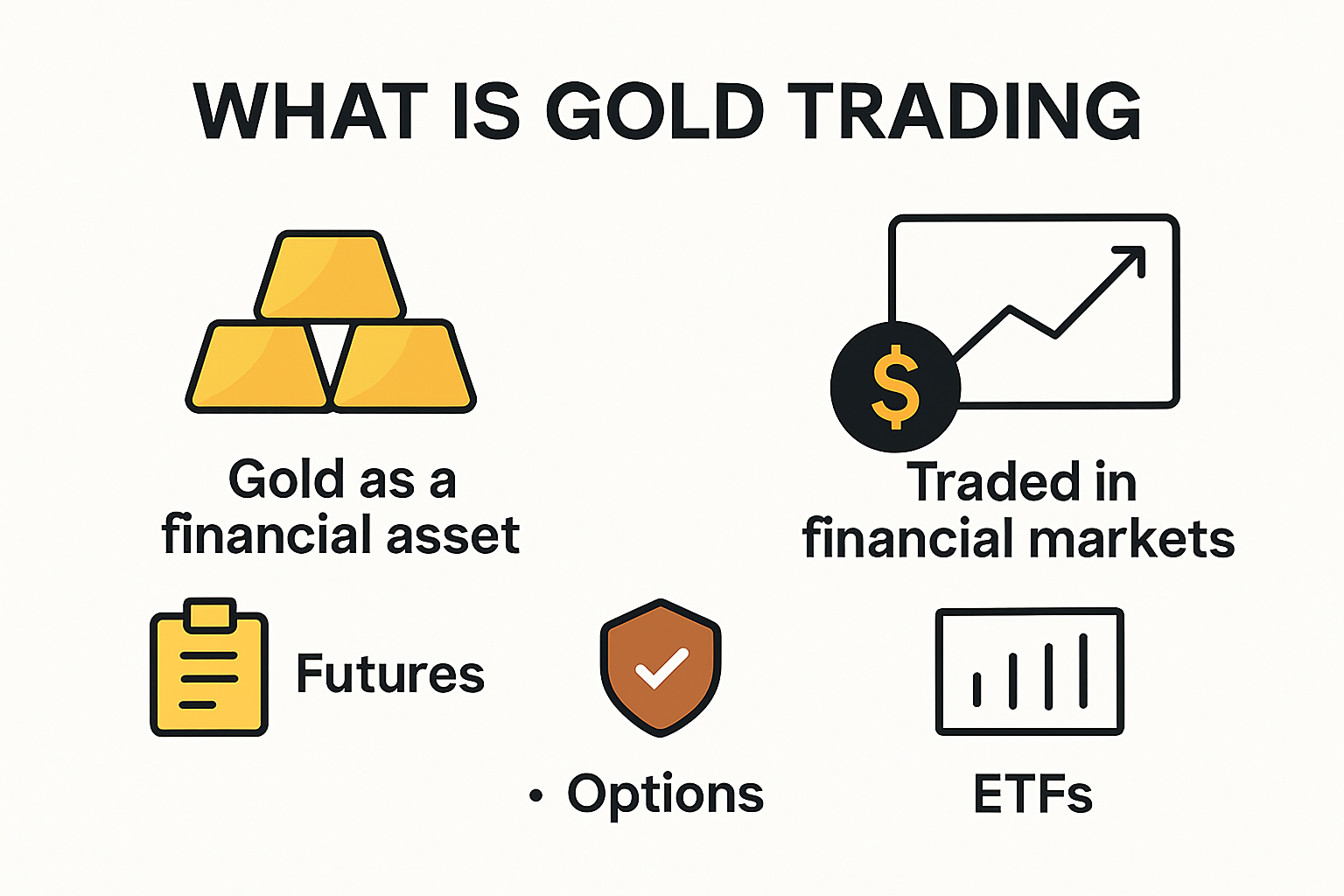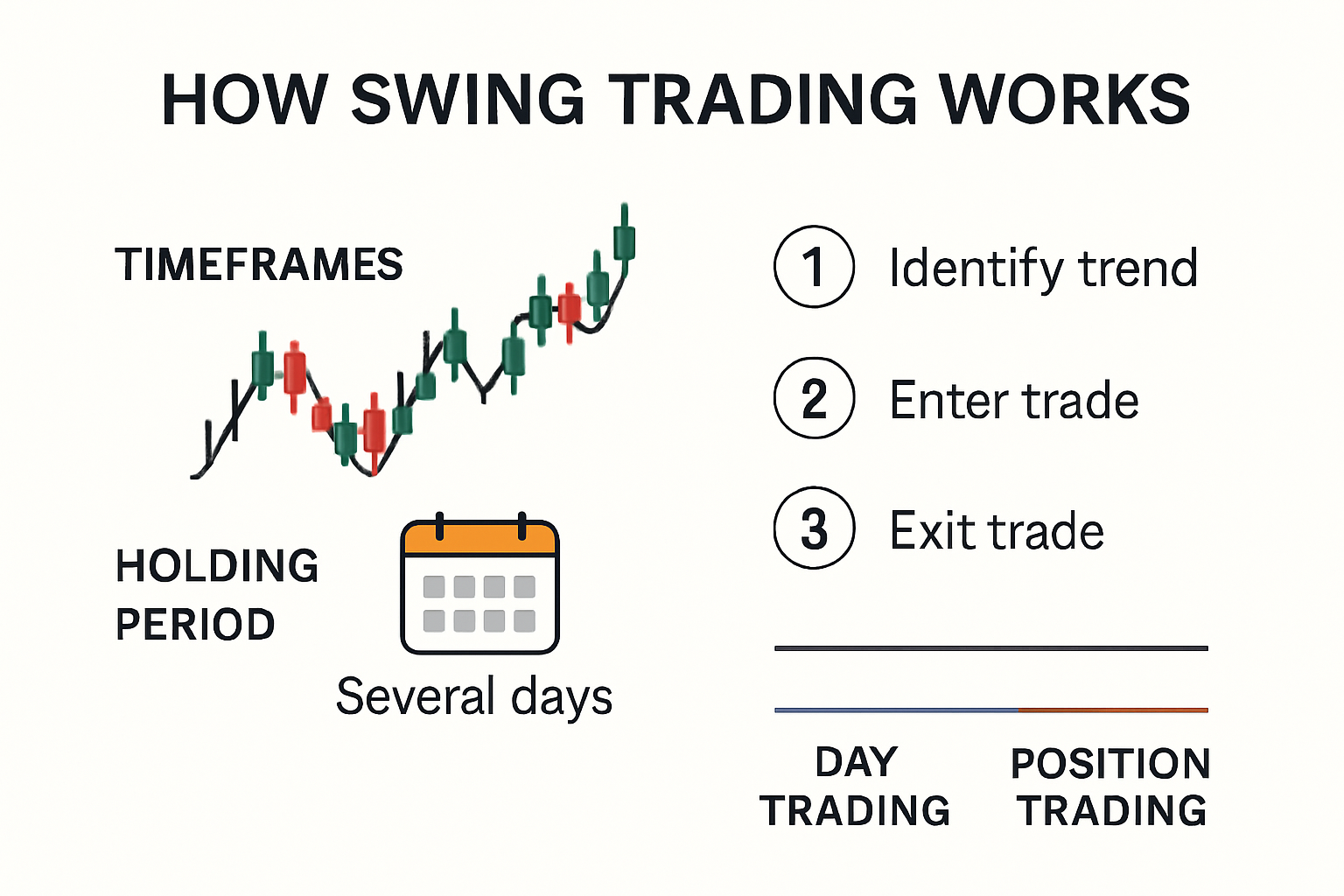

Gold trading has exploded in complexity, with traders now relying on powerful visual analysis to predict price swings. But here is the real eye-opener. A hybrid model combining machine learning and advanced chart analysis hit nearly 76 percent directional accuracy in a recent study. That sounds unbeatable, right? Actually, the best traders are not just following signals. They are reading the raw behavior of price itself and seeing patterns no ordinary chart could ever reveal.
Table of Contents
- Understanding Gold Price Action In Trading
- Essential Gold Price Action Strategies Explained
- Effective Tools And Indicators For Gold Signals
- Tips For Maximizing Profits With Gold Price Action
Quick Summary
| Takeaway | Explanation |
|---|---|
| Understanding Price Action | Gold price action trading focuses on analyzing market movements through direct price behavior, avoiding reliance solely on complex indicators. Traders should observe price charts and interpret patterns to make informed decisions. |
| Advanced Strategies | Mastering advanced techniques, such as identifying key reversal patterns and support/resistance levels, enhances trading effectiveness. Continuous adaptation to market conditions is crucial for successful trading. |
| Risk Management | Implementing sophisticated risk management strategies, such as position sizing and dynamic stop loss mechanisms, protects capital and optimizes returns. Effective risk management is essential for long-term profitability. |
| Algorithmic Trading Optimization | Utilizing algorithmic approaches can significantly enhance trading performance. Employing methods like linear regression models and Bollinger Band optimization helps identify high-probability trading opportunities. |
| Continuous Learning | Committing to continuous learning and periodic strategy refinement is vital for success. Traders should analyze market trends, backtest strategies, and invest in skill development to improve trading outcomes. |
Understanding Gold Price Action in Trading
Gold price action trading represents a sophisticated approach to analyzing market movements through direct price behavior rather than relying exclusively on complex indicators. Traders utilizing price action strategies focus on understanding the raw price movements of gold, interpreting visual patterns, and making informed trading decisions based on price dynamics.
The Core Principles of Price Action Analysis
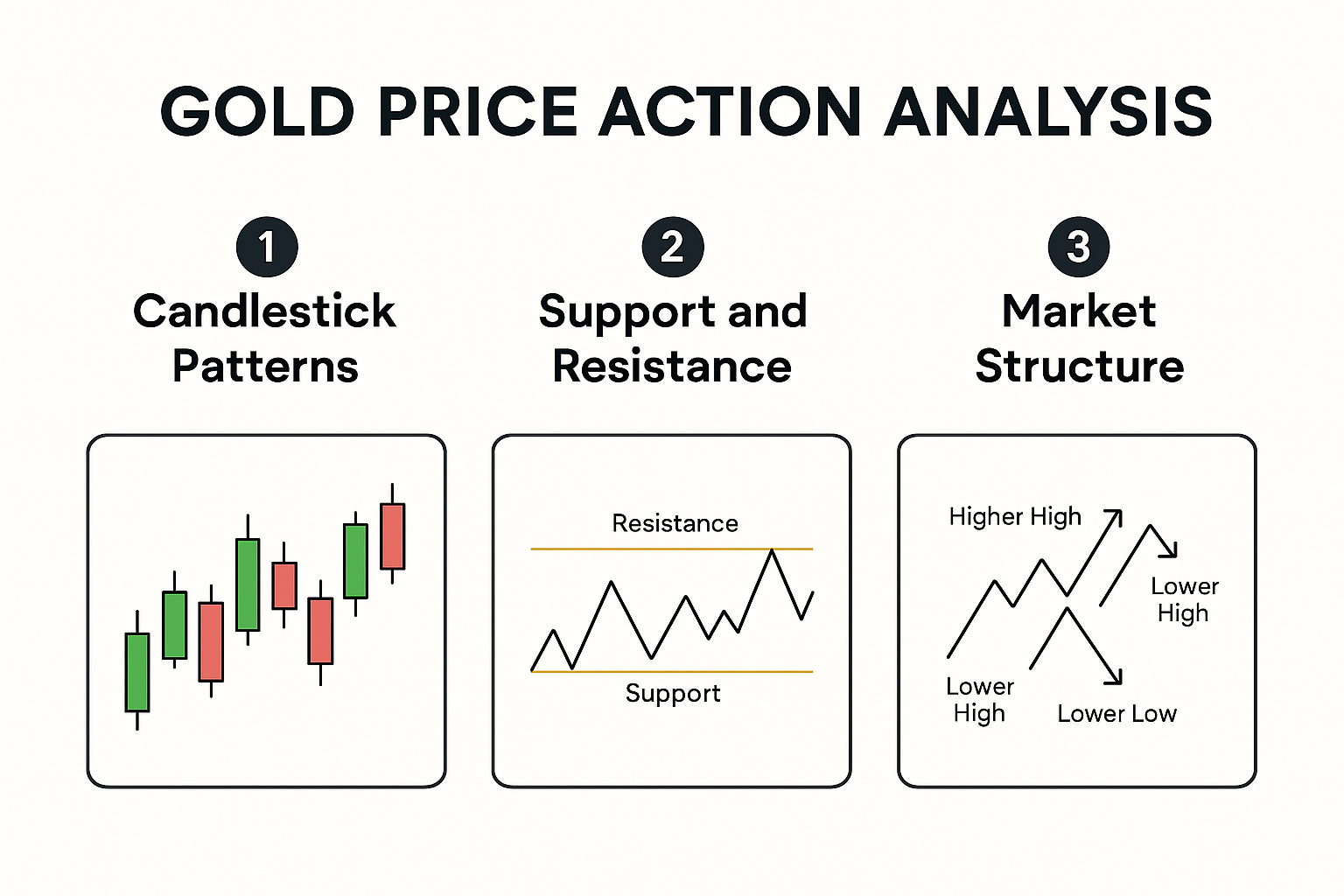
Price action analysis in gold trading centers on interpreting price charts without extensive technical indicators. Traders observe candlestick patterns, support and resistance levels, and market structure to predict potential future movements. Learn more about price action fundamentals to develop a comprehensive understanding of this trading methodology.
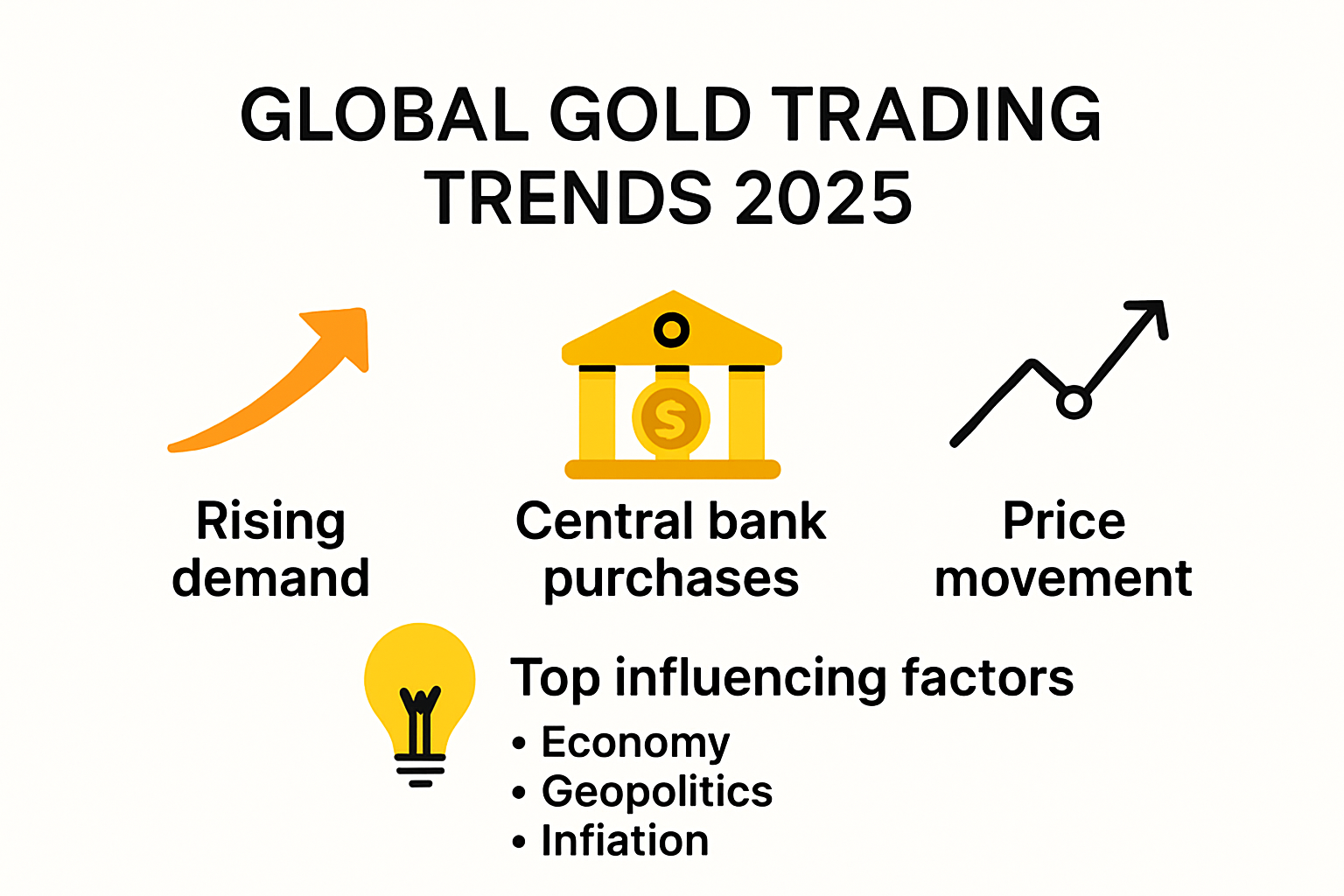
Traders recognize that gold prices are influenced by multiple complex factors including global economic conditions, geopolitical tensions, currency fluctuations, and market sentiment. A 2018 comprehensive research study analyzing over 4,000 trading strategies revealed that technical approaches responding to prolonged negative trends can significantly outperform passive investment strategies. According to Quantpedia’s market timing research, adaptive price action strategies demonstrate remarkable potential in navigating gold market volatility.
Advanced Price Action Techniques for Gold Trading
Successful gold price action trading involves mastering several advanced techniques. These include identifying key reversal patterns, understanding market psychology through candlestick formations, and recognizing critical support and resistance zones. A 2023 scientific study introduced an innovative trading strategy utilizing fractals and Triangular Moving Average Centered Bands, which demonstrated a higher ratio of winning trades compared to losing trades.
The most effective gold price action traders develop a nuanced understanding of market context. They analyze historical price movements, understand global economic indicators, and remain adaptable to changing market conditions. By combining visual chart analysis with strategic insights, traders can develop robust trading approaches that capitalize on gold’s inherent market dynamics.
A hybrid predictive model proposed in a 2020 research paper combining wavelet denoising, Attention-based Recurrent Neural Networks, and Autoregressive Integrated Moving Average achieved approximately 76% directional accuracy. This advanced research underscores the potential of sophisticated analytical techniques in predicting gold price movements.
Traders must recognize that price action trading is not about predicting exact price points but understanding probabilistic market behaviors. Success requires continuous learning, disciplined risk management, and the ability to interpret complex market signals with clarity and precision.
Essential Gold Price Action Strategies Explained
Gold price action strategies represent critical tools for forex traders seeking to navigate the complex and dynamic gold market. These strategies provide traders with systematic approaches to interpreting market movements, identifying potential trading opportunities, and managing risk effectively.

Candlestick Pattern Recognition Strategies
Candlestick pattern recognition stands as a foundational gold price action strategy. Traders analyze specific candlestick formations to understand market sentiment and potential trend reversals. Explore advanced support and resistance techniques to complement these pattern recognition skills.
According to a study published in the Journal of Management Science and Engineering, gold price returns are significantly influenced by external market factors such as crude oil returns and the VIX index. This research underscores the importance of understanding comprehensive market dynamics when interpreting candlestick patterns.
Key candlestick patterns in gold trading include:
- Hammer Pattern: Indicates potential bullish reversal after a downtrend
- Shooting Star: Suggests possible bearish trend reversal
- Doji: Represents market indecision and potential trend change
Technical Indicator Integration Strategies
Advanced gold traders integrate technical indicators with price action analysis to enhance trading precision. A 2023 study published in Mathematics demonstrated that algorithmic trading systems utilizing Bollinger Bands can effectively predict price movements in precious metals. According to research from MDPI, these technical indicators provide valuable insights into market volatility and potential trading signals.
Effective technical indicator strategies include:
- Moving Average Crossovers
- Relative Strength Index (RSI)
- Bollinger Bands Trend Analysis
Research from the International Review of Financial Analysis highlighted periods of explosive price behavior in the gold market between 2002 and 2012, emphasizing the critical need for traders to develop sophisticated analytical approaches. This historical context reinforces the importance of combining multiple technical analysis methods.
Market Structure and Trend Analysis Strategies
Understanding market structure and identifying trend dynamics are crucial components of successful gold price action trading. Traders must develop skills in:
- Identifying key support and resistance levels
- Recognizing trend continuation and reversal patterns
- Analyzing market structure across different timeframes
Successful gold price action trading requires a holistic approach that combines technical analysis, market sentiment understanding, and disciplined risk management. Traders must remain adaptable, continuously learning and refining their strategies to navigate the complex gold market effectively.
By mastering these essential gold price action strategies, forex traders can develop a more nuanced and probabilistic approach to trading, transforming market observations into calculated trading decisions.
To help you compare key gold price action strategies and their fundamentals, the table below summarizes the major strategy categories, main techniques, and typical signals they generate.
| Strategy Category | Main Techniques/Tools | Typical Signals Generated |
|---|---|---|
| Candlestick Pattern Recognition | Hammer, Shooting Star, Doji formation analysis | Trend reversals, indecision, confirmation |
| Technical Indicator Integration | Moving Averages, RSI, Bollinger Bands | Overbought/Oversold, trend changes |
| Market Structure & Trend Analysis | Support/Resistance, trend lines, multiple timeframes | Trend continuation/reversal |
Effective Tools and Indicators for Gold Signals
Forex traders navigating the gold market require sophisticated tools and indicators to generate accurate trading signals and make informed decisions. These technical instruments provide critical insights into market trends, momentum, and potential price movements, enabling traders to develop robust trading strategies.
Momentum Oscillators for Gold Trading
Momentum oscillators play a crucial role in identifying potential trend reversals and market sentiment. The Relative Strength Index (RSI) stands out as a powerful tool for gold traders. Learn about advanced gold trading signal strategies to complement your technical analysis.
According to Investopedia’s technical analysis resource, the RSI ranges from 0 to 100, with specific key levels providing critical trading insights:
- Readings above 70: Indicate potential overbought conditions
- Readings below 30: Suggest potential oversold conditions
- Centerline (50): Represents neutral market momentum
The Commodity Channel Index (CCI) offers another sophisticated approach to measuring price deviation. Wikipedia’s technical analysis overview explains that the CCI helps traders identify price reversals and market extremes, with readings above +100 indicating overbought conditions and below -100 indicating oversold scenarios.
Advanced Moving Average Indicators
Moving Average indicators provide traders with powerful tools for understanding trend dynamics and potential trading signals. The Moving Average Convergence Divergence (MACD) emerges as a particularly effective indicator for gold trading. Research published on ResearchGate demonstrates that MACD outperforms simple moving averages in generating buy and sell signals, especially during periods of high market volatility.
Key moving average strategies include:
- MACD Crossover Signals: Identifying trend changes
- Exponential Moving Average (EMA): Highlighting short-term price trends
- Simple Moving Average (SMA): Tracking long-term price movements
Comprehensive Signal Generation Techniques
Successful gold trading requires a holistic approach that combines multiple indicators and analytical techniques. Traders should develop a multi-layered strategy that incorporates:
- Momentum oscillators
- Moving average indicators
- Support and resistance analysis
- Market sentiment evaluation
Advanced traders understand that no single indicator provides a guaranteed trading signal. Instead, they create robust trading systems by cross-referencing multiple technical tools and maintaining a disciplined approach to risk management.
The most effective gold traders continuously refine their analytical toolkit, staying adaptable to changing market conditions. By mastering these advanced tools and indicators, forex traders can develop more nuanced and probabilistic approaches to gold trading, transforming technical analysis into strategic market insights.
For quick reference, the table below highlights and compares the most important momentum and moving average tools for gold trading, along with the key signals/triggers they provide.
| Tool/Indicator | Main Use in Gold Trading | Key Trigger/Signal |
|---|---|---|
| Relative Strength Index (RSI) | Identifying overbought/oversold | Above 70: Overbought; Below 30: Oversold |
| Commodity Channel Index (CCI) | Spotting price reversals/extremes | Above +100: Overbought; Below -100: Oversold |
| MACD | Trend changes/volatility analysis | Line crossovers/Histogram shift |
| EMA/SMA | Short/long-term trend direction | Price crossing MA line |
Tips for Maximizing Profits with Gold Price Action
Maximizing profits in gold trading requires a strategic approach that combines technical analysis, risk management, and continuous learning. Successful traders develop comprehensive strategies that go beyond basic trading techniques, focusing on nuanced market understanding and disciplined execution.
Advanced Risk Management Techniques
Risk management stands as the cornerstone of profitable gold trading. Traders must implement sophisticated strategies to protect their capital and optimize potential returns. Explore advanced scalping techniques to enhance your trading precision.
Research from arXiv demonstrates that deep reinforcement learning algorithms can significantly improve trading strategies by dynamically scaling positions based on market volatility. Key risk management principles include:
- Position Sizing: Limiting individual trade risk to 1-2% of total capital
- Stop Loss Strategies: Implementing dynamic stop loss mechanisms
- Portfolio Diversification: Spreading risk across multiple trading instruments
According to ResearchGate research, technical analysis indicators provide critical insights for maximizing trading profitability. The study highlights the effectiveness of indicators like RSI, Money Flow Index, and MACD in developing robust trading strategies.
Algorithmic Optimization Strategies
Advanced traders leverage algorithmic approaches to enhance trading performance. ResearchGate research reveals that sophisticated algorithmic trading systems can optimize net profit and profit factors through advanced technical tools such as:
- Linear Regression Models
- Darvas Box Techniques
- Bollinger Band Optimization
These algorithmic strategies allow traders to:
- Identify high-probability trading opportunities
- Minimize emotional decision-making
- Execute trades with greater precision and consistency
Continuous Learning and Adaptation
Successful gold price action trading requires a commitment to continuous learning and market adaptation. Traders must:
- Stay updated on global economic indicators
- Analyze market sentiment
- Continuously refine trading strategies
- Maintain a disciplined psychological approach
The most successful traders view trading as a skill that requires constant development. They maintain detailed trading journals, analyze their performance meticulously, and remain open to adjusting their strategies based on market dynamics.
Key elements of continuous improvement include:
- Regular performance review
- Backtesting trading strategies
- Studying market trends and economic indicators
- Investing in personal skill development
By combining advanced technical analysis, sophisticated risk management, and a commitment to continuous learning, gold traders can develop a robust approach to maximizing profits in the complex and dynamic gold market.
Frequently Asked Questions
What are gold price action strategies?
Gold price action strategies focus on analyzing price movements directly rather than relying on complex indicators. Traders observe patterns in price charts to make informed decisions about buying and selling gold in the forex market.
How can I identify key reversal patterns in gold trading?
Identifying key reversal patterns involves analyzing candlestick formations, such as the Hammer, Shooting Star, and Doji. Recognizing these patterns can help traders anticipate potential trend reversals in the gold market.
What technical indicators should I use for gold trading?
Effective technical indicators for gold trading include the Relative Strength Index (RSI), Moving Average Convergence Divergence (MACD), and Bollinger Bands. These tools help traders understand market momentum, trend changes, and potential trading signals.
How important is risk management in gold trading?
Risk management is crucial in gold trading as it helps protect capital and optimize returns. This includes strategies like position sizing, dynamic stop loss mechanisms, and portfolio diversification to mitigate potential losses.
Transform Gold Price Action Insights Into Real Profits
Reading complex gold charts is tough. The article on the best gold price action strategies underscores a constant struggle: how do you turn advanced techniques like candlestick analysis and market structure into actual wins, especially under real-time market pressure? Knowing the theory is one thing. Applying it quickly and profitably is another. If you want to close the gap between knowledge and steady results, you need proven, actionable support. You deserve trading signals that fuse expert strategies and live price action insights, guiding you when the market moves fast. If you want more step-by-step help on turning these ideas into actions, check out our How To Guides.
Are you ready to see your own results improve with trusted XAU/USD signals and professional analysis designed for price action traders? Join our Private Telegram Group today and access high-accuracy gold trading signals built around the exact strategies discussed here. Visit https://xau-gold-signals.com now and get ahead of the market before the next breakout. Get started instantly and turn education into profit.
Recommended
- What Is Price Action Trading & How It Works
- Blog | XAU/USDT Gold Trading Signals
- News & Updates | XAU/USDT Gold Trading Signals
- Unlocking The Power Of Support & Resistance In Gold Trading
- Master Gold Scalping: Strategies For Rapid Gains
- Free Vs. Paid Gold Trading Signals: Which One Should You Choose?