

Gold trading is more popular than ever, with global demand for gold investment skyrocketing by 78% year-on-year in Q2 2025. Most people think gold prices are only about shiny jewelry and old-school safe havens. In reality, today’s gold traders are tapping into advanced signals, AI-powered strategies, and risk management methods that would shock even seasoned Wall Street pros.
Table of Contents
- Key Factors Affecting Gold Prices
- How To Start Trading Gold Safely
- Understanding Gold Trading Signals And Strategies
- Managing Risks In Gold Trading
Quick Summary
| Takeaway | Explanation |
|---|---|
| Understand key factors affecting gold prices. | Gold prices are influenced by economic indicators, geopolitical tensions, and supply-demand dynamics; traders must stay informed of these elements. |
| Implement effective risk management strategies. | Protect investments by limiting risk to 1-2% per trade and using stop-loss orders to mitigate potential losses. |
| Choose the right trading platform. | Select platforms that are regulated, affordable, and offer essential trading tools to support informed trading decisions. |
| Engage in continuous learning and market analysis. | Stay updated on global events and market trends to enhance trading strategies and improve decision-making skills. |
| Utilize multiple trading signals for informed decisions. | Combine technical, fundamental, and algorithmic signals to explore diverse insights and better predict market movements. |
Key Factors Affecting Gold Prices
Gold trading requires a deep understanding of the complex dynamics that drive price movements. Successful traders recognize that gold prices are influenced by a multifaceted set of global economic, political, and market factors that interact in intricate ways.
Global Economic Indicators and Monetary Policy
Monetary policy represents a critical driver of gold prices. Learn more about gold market dynamics reveals that central bank decisions significantly impact investor sentiment. According to the World Gold Council, interest rates play a pivotal role in determining gold’s attractiveness as an investment.
When interest rates are low, gold becomes more appealing because the opportunity cost of holding the asset decreases. Investors find gold more attractive compared to low-yielding bonds or savings accounts. Conversely, when central banks like the Federal Reserve raise interest rates, gold prices typically experience downward pressure as alternative investments become more lucrative.
The US dollar’s strength also directly correlates with gold prices. A stronger dollar typically makes gold more expensive for international investors, potentially reducing demand and driving prices lower. Traders must constantly monitor currency exchange rates and monetary policy announcements to anticipate potential price movements.
Geopolitical Tensions and Market Uncertainty
Geopolitical instability represents another crucial factor influencing gold prices. Research from the Royal Mint highlights that political uncertainties can dramatically shift investor behavior towards safe-haven assets like gold.
International conflicts, trade disputes, and economic sanctions create market uncertainty. During such periods, investors typically seek refuge in gold as a store of value. The World Gold Council reported that investment demand for gold increased by 78% year-on-year in the second quarter of 2025, primarily driven by geopolitical tensions and declining trust in traditional currency markets.
Emerging markets, particularly China, have shown increased gold investment during periods of global economic uncertainty. These macro trends demonstrate how complex geopolitical landscapes can rapidly transform gold’s investment appeal.
Supply and Demand Dynamics
The fundamental economic principle of supply and demand fundamentally drives gold prices. Gold production, mining capabilities, industrial demand, and jewelry consumption all contribute to price fluctuations. Gold mining output, technological innovations in extraction, and global production costs create intricate supply-side pressures.
On the demand side, industries like electronics, aerospace, and medical technologies require gold for various applications. Jewelry markets in countries like India and China also significantly influence global demand. Seasonal variations, cultural events, and economic conditions in these major markets can cause substantial price movements.
Traders must develop a comprehensive understanding of these interconnected factors. Successful gold trading requires continuous learning, staying informed about global economic trends, and maintaining a flexible, adaptive trading strategy that can respond to rapidly changing market conditions.
By understanding these key factors affecting gold prices, traders can make more informed decisions and potentially capitalize on market movements with greater precision and confidence.
To help clarify key influences on gold prices, the following table summarizes the main factors and their respective impacts as discussed above:
| Factor | Description | Typical Impact on Gold Price |
|---|---|---|
| Interest Rates | Central bank policies influencing borrowing costs | Lower rates increase, higher rates decrease |
| US Dollar Strength | Value of USD compared to other currencies | Strong dollar lowers, weak dollar raises |
| Geopolitical Tensions | International conflicts and uncertainties | Tensions drive prices up |
| Industrial & Jewelry Demand | Demand from tech, medical, and jewelry sectors (India, China, etc.) | Higher demand pushes prices up |
| Mining Output & Production Costs | Global gold mining and supply factors | Lower output/costlier extraction raises price |
| Seasonal & Cultural Trends | Festivals and wedding seasons in key countries | Demand spikes can cause price surges |
How to Start Trading Gold Safely
Trading gold requires strategic planning, comprehensive knowledge, and a disciplined approach to risk management. For aspiring traders, understanding the fundamental steps to enter the gold trading market safely is crucial for long-term success.
Understanding Trading Platforms and Account Setup
Explore our beginner trading guide to start your gold trading journey effectively. Selecting the right trading platform is your first critical decision. According to Investopedia, traders should evaluate platforms based on several key criteria:
- Regulation: Ensure the platform is licensed by recognized financial authorities like the SEC, FCA, or CFTC.
- Transaction Costs: Compare spreads, commissions, and overnight funding rates.
- Trading Tools: Look for platforms offering advanced charting, real-time analysis, and risk management features.
Beginners should prioritize platforms that offer demo accounts. These simulate real trading environments without financial risk, allowing traders to practice strategies, understand market dynamics, and build confidence before committing real capital.
Risk Management Strategies
Risk management is the cornerstone of safe gold trading. Professional traders recommend never risking more than 1-2% of your total trading capital on a single trade. This approach protects your investment from significant losses during market volatility.
Implement stop-loss orders to automatically exit trades when prices move against your position. CMC Markets recommends using a comprehensive risk management framework that includes:
- Defining maximum acceptable loss per trade
- Setting precise entry and exit points
- Diversifying trading positions
- Using leverage cautiously
Understanding leverage is crucial. While it can amplify potential profits, it equally magnifies potential losses. New traders should start with lower leverage ratios and gradually increase complexity as they gain experience.
Continuous Learning and Market Analysis
Successful gold trading demands ongoing education and market analysis. Stay informed about global economic indicators, geopolitical events, and monetary policies that influence gold prices. Subscribe to reputable financial news sources, follow market analysts, and participate in trading communities.
Develop a robust trading plan that includes:
- Clear investment goals
- Defined risk tolerance
- Specific entry and exit strategies
- Regular performance review mechanisms
Utilize both technical and fundamental analysis. Technical analysis involves studying price charts and statistical trends, while fundamental analysis examines broader economic factors affecting gold prices.
Remember that consistent, disciplined trading trumps sporadic, high-risk approaches. Start small, learn continuously, and gradually build your trading skills. Gold trading is a journey of constant learning and strategic adaptation.
By following these guidelines, you can establish a solid foundation for safe and potentially profitable gold trading in 2025 and beyond.
Understanding Gold Trading Signals and Strategies
Gold trading signals represent sophisticated analytical tools that help traders make informed decisions in the complex and dynamic precious metals market. Learn more about advanced signal interpretation to enhance your trading precision and understand the nuanced mechanics of market analysis.
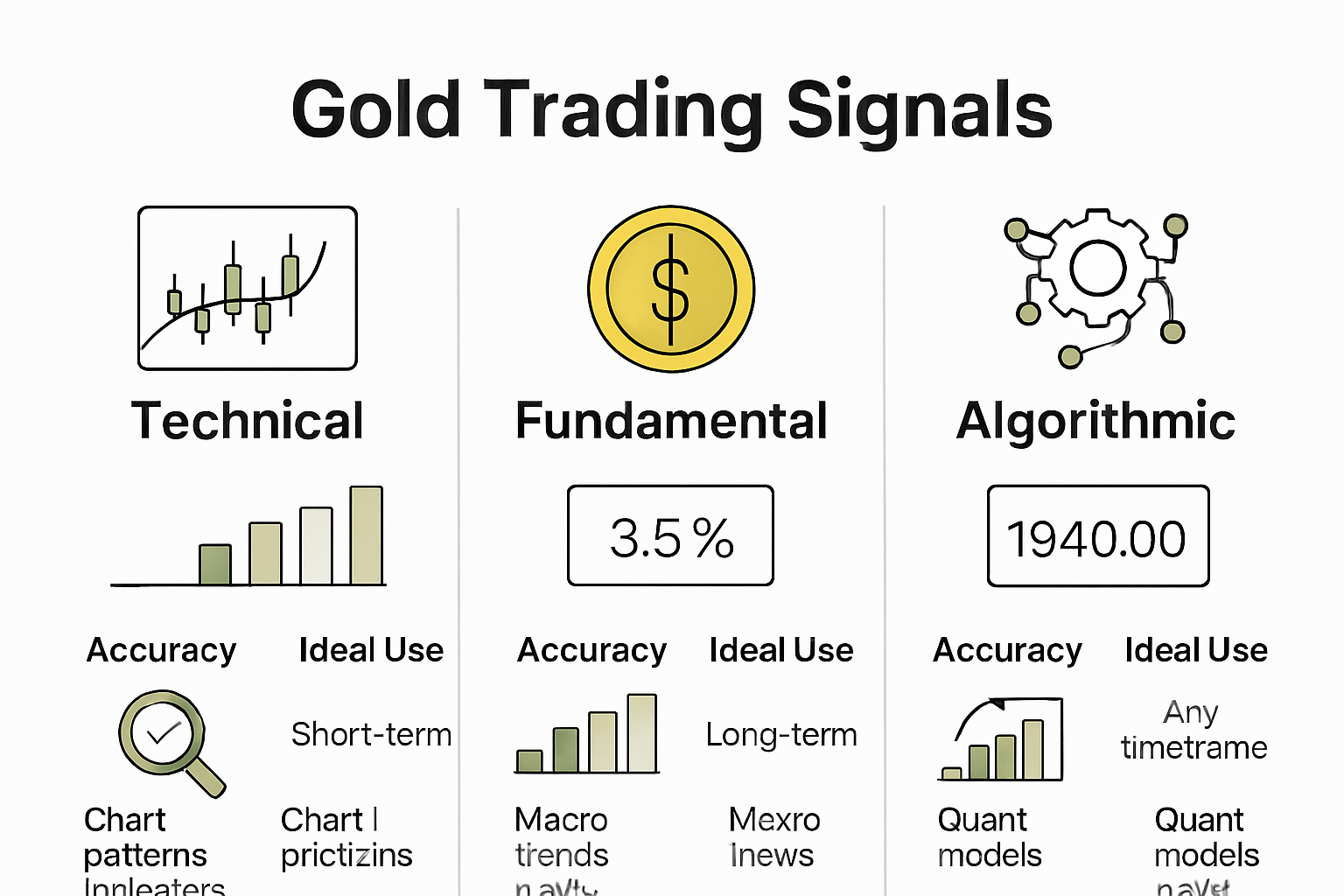
Types of Gold Trading Signals
Trading signals are generated through multiple analytical approaches, each offering unique insights into potential market movements. According to research from machine learning studies, three primary signal generation methods dominate contemporary gold trading strategies:
- Technical Signals: Generated by analyzing historical price charts, moving averages, and statistical trends
- Fundamental Signals: Derived from macroeconomic indicators, geopolitical events, and monetary policy changes
- Algorithmic Signals: Created using advanced machine learning and artificial intelligence techniques
Research indicates that sophisticated machine learning algorithms can achieve remarkable prediction accuracies. A comprehensive study demonstrated that tree-based classifiers can predict gold price movements with accuracy exceeding 85% for forecast horizons between 10 to 20 days.
The table below provides a comparison of the main types of gold trading signals, their sources, and typical advantages as described above:
| Signal Type | Main Source/Method | Key Advantage |
|---|---|---|
| Technical Signals | Price charts, moving averages, statistical trends | Identifies patterns and trends |
| Fundamental Signals | Economic indicators, geopolitics, monetary policy | Captures macroeconomic influences |
| Algorithmic Signals | Machine learning, AI, advanced analytics | High accuracy, ability to process vast data |
Advanced Trading Strategies
Successful gold traders employ multiple strategic approaches to maximize potential returns. Deep reinforcement learning research suggests that modern trading strategies extend beyond traditional momentum-based approaches.
Key strategic considerations include:
- Trend Following: Identifying and capitalizing on sustained price movement directions
- Mean Reversion: Trading based on the assumption that prices will return to historical average levels
- Swing Trading: Capturing gains from short to medium-term price fluctuations
Traders must recognize that no single strategy guarantees consistent success. Adaptability, continuous learning, and a comprehensive understanding of market dynamics are crucial. Developing a robust trading strategy requires integrating multiple signal types, understanding risk management principles, and maintaining emotional discipline.
Signal Interpretation and Risk Management
Effective signal interpretation goes beyond merely identifying potential trade opportunities. Traders must develop a nuanced approach that considers multiple factors, including signal reliability, market context, and individual risk tolerance.
Key considerations for signal interpretation include:
- Verifying signals across multiple analytical frameworks
- Understanding the statistical confidence of generated signals
- Implementing strict risk management protocols
- Avoiding over-reliance on any single signal or strategy
The most successful gold traders view signals as informative tools rather than absolute predictors. They combine technological insights with personal judgment, maintaining a balanced and disciplined approach to trading.
By developing a comprehensive understanding of gold trading signals and strategies, traders can enhance their decision-making processes and potentially improve their trading performance in the complex and dynamic precious metals market.
Managing Risks in Gold Trading
Risk management represents the cornerstone of successful gold trading, determining the difference between sustainable long-term performance and potential financial catastrophe. Explore comprehensive risk management strategies to protect your investments and develop a robust trading approach.
Identifying Primary Trading Risks
Gold trading involves multiple layers of risk that traders must understand and strategically mitigate. According to research from the National Bureau of Economic Research, these risks can be categorized into several critical domains:
- Market Volatility Risk: Sudden price fluctuations caused by global economic events
- Leverage Risk: Potential for amplified losses when using margin trading
- Liquidity Risk: Challenges in executing trades during market disruptions
- Counterparty Risk: Potential failures in trade settlement or broker reliability
Understanding these risks requires continuous monitoring and adaptive strategies. Professional traders recognize that risk is not about elimination but strategic management. Each identified risk presents both a potential threat and an opportunity for informed decision-making.
The following table outlines the main trading risks in gold trading and their descriptions as presented in this section:
| Risk Type | Description |
|---|---|
| Market Volatility Risk | Rapid price changes due to global economic events |
| Leverage Risk | Amplification of losses when using borrowed capital |
| Liquidity Risk | Difficulty executing trades in fast-moving/disrupted markets |
| Counterparty Risk | Failure of trade settlement or unreliable broker |
Risk Mitigation Techniques
Effective risk management involves implementing multiple protective strategies simultaneously. Key techniques include:
- Position Sizing: Limiting individual trade exposure to 1-2% of total trading capital
- Stop-Loss Orders: Automatically closing positions to prevent catastrophic losses
- Portfolio Diversification: Spreading investments across multiple asset classes
- Hedging Strategies: Using derivative instruments to offset potential negative price movements
Traders should develop a comprehensive risk management framework that goes beyond simple monetary calculations. This involves understanding psychological factors, maintaining emotional discipline, and creating predetermined trading rules that remove impulsive decision-making.
Advanced Risk Assessment Approaches
Modern gold trading demands sophisticated risk assessment techniques. Sophisticated traders employ advanced analytical methods to evaluate potential risks:
- Conducting regular stress tests on trading strategies
- Utilizing advanced statistical modeling
- Implementing machine learning algorithms for predictive risk analysis
- Maintaining detailed trading journals to track performance and identify potential systemic risks
The most successful traders view risk management as a dynamic, evolving process. They continuously refine their strategies, adapting to changing market conditions and technological advancements. Regular education, staying informed about global economic trends, and maintaining a disciplined approach are crucial.
Ultimately, managing risks in gold trading is not about achieving zero risk but about creating a strategic approach that balances potential rewards with measured, calculated risk. By developing a comprehensive understanding of risk factors and implementing robust mitigation strategies, traders can navigate the complex gold trading landscape with greater confidence and potential for sustainable success.

Frequently Asked Questions
What are the key factors that affect gold prices in 2025?
Gold prices in 2025 are influenced by several key factors including global economic indicators, such as interest rates, geopolitical tensions, and supply-and-demand dynamics. Low interest rates generally make gold more attractive, while conflicts and uncertainties can drive demand higher.
How can I start trading gold safely?
To start trading gold safely, choose a regulated trading platform, implement strong risk management strategies like limiting your risk to 1-2% per trade, and engage in continuous learning to keep up with market trends and economic indicators that affect gold prices.
What types of trading signals should I consider for gold trading?
For gold trading, you should consider three main types of trading signals: technical signals, which analyze historical price charts; fundamental signals, which evaluate macroeconomic indicators; and algorithmic signals, which utilize advanced machine learning techniques for predictions.
What are some common risk management techniques in gold trading?
Common risk management techniques in gold trading include position sizing, which limits exposure to 1-2% of your total capital, using stop-loss orders to prevent large losses, diversifying your portfolio across asset classes, and employing hedging strategies to offset potential losses.
Take Your Gold Trading from Uncertainty to Consistent Wins in 2025
Are you tired of chasing gold price trends only to get caught by sudden market swings or unreliable signals? The biggest challenge highlighted in this article is decoding complex gold market drivers and turning knowledge into steady profits. Whether you struggle with overwhelming risk, confusing trading signals, or lack the confidence to act on market analysis, there is a better way to trade gold in 2025. Start by exploring our How To Guides for actionable steps and expert insights that empower you to avoid costly mistakes and trade with clarity.
Why keep guessing when you can join a proven trading community that delivers over 90% accuracy on daily signals? Secure your spot in our Private Telegram Group and receive real-time XAU/USD strategies straight from market experts. Take control of your trading future today. Visit XAU Gold Signals now and transform every gold move into a winning decision.
Recommended
- What Is Gold Trading? Essential Guide For Forex & Gold Traders 2025 | XAU/USDT Gold Trading Signals
- Gold Trading For Beginners 2025: Smart Strategies And Signals | XAU/USDT Gold Trading Signals
- Why Trade Gold Forex In 2025? Key Benefits For Traders | XAU/USDT Gold Trading Signals
- Is Gold Trading Profitable In 2025? Real Insights For Forex Traders | XAU/USDT Gold Trading Signals
