

Gold prices are never just about shiny bars and coins. Over $12 trillion worth of gold is traded worldwide each year, which is more than most countries’ GDP. Yet even with all of this activity, it is not inflation or even stock markets that move gold the most. The real surprises come from quick shifts in global politics, sudden decisions by central banks, and wild swings in market sentiment—leaving even expert traders racing to keep up.
Table of Contents
- Global Economic And Political Factors
- Central Banks And Interest Rate Impact
- Trading Signals And Market Sentiment
- Gold Price Movements In Forex Trading
Quick Summary
| Takeaway | Explanation |
|---|---|
| Monitor global economic conditions closely | Economic stability strongly influences gold prices, especially during uncertainties. Keep an eye on indicators like inflation and interest rates. |
| Understand central banks’ roles | Central banks affect gold prices through interest rate changes and gold purchases, impacting investor confidence and market dynamics. |
| Analyze market sentiment and signals | Use sentiment analysis to gauge market psychology, and combine technical and fundamental signals for more informed trading decisions. |
| Recognize the influence of geopolitical tensions | Political instability usually drives investors toward gold as a safe haven, impacting its market valuation significantly. |
| Implement robust risk management strategies | Successful trading requires a comprehensive risk management approach, considering macroeconomic trends and market dynamics for effective positioning. |
Global Economic and Political Factors
Traders seeking to understand the intricate dynamics of gold pricing must recognize the profound impact of global economic and political factors. Gold remains a critical asset that responds dramatically to worldwide economic shifts and geopolitical tensions.
Macroeconomic Indicators and Global Stability
Global economic conditions play a pivotal role in determining gold prices. According to the International Monetary Fund, gold is perceived as a safe haven asset during periods of financial uncertainty. When traditional financial markets experience volatility, investors typically pivot towards gold as a store of value.
Interest rates represent a crucial driver of gold price movements. When central banks like the Federal Reserve adjust monetary policies, gold prices can fluctuate significantly. Lower interest rates tend to make gold more attractive, as the opportunity cost of holding non-yielding assets decreases. Conversely, rising interest rates can make alternative investments more appealing, potentially reducing gold’s attractiveness.
Geopolitical Tensions and Market Sentiment
Political instability and international conflicts can dramatically influence gold prices. Traders must monitor global geopolitical developments that create economic uncertainty. Regions experiencing political tensions often see increased gold demand as investors seek protection against potential economic disruptions.
For instance, conflicts, trade disputes, and significant political transitions can trigger rapid shifts in gold valuation. Investors typically view gold as a hedge against systemic risks, meaning that periods of international tension can drive substantial price increases. World Gold Council research consistently demonstrates how geopolitical uncertainty correlates with increased gold investment.
Currency Dynamics and Global Economic Pressures
Currency fluctuations significantly impact gold pricing. The US dollar’s strength or weakness plays a critical role in determining gold’s global value. When the dollar weakens, gold typically becomes more affordable for international investors, potentially increasing demand and driving prices upward.
Inflation expectations also create substantial pressure on gold prices. During periods of high inflation or anticipated economic instability, investors often turn to gold as a protective financial instrument. Learn more about our gold trading strategies to navigate these complex market dynamics effectively.
Understanding these global economic and political factors requires continuous monitoring and sophisticated analysis. Successful gold traders must develop a nuanced perspective that integrates macroeconomic trends, geopolitical developments, and intricate market sentiments to make informed trading decisions.
To summarize the global economic and political factors influencing gold prices, the following table organizes key elements and their impact on gold:
| Factor | Description | Impact on Gold Price |
|---|---|---|
| Macroeconomic Indicators | Includes inflation, interest rates, and market volatility | Higher uncertainty boosts gold |
| Geopolitical Tensions | Wars, conflicts, trade disputes, and political instability | Drives demand as safe haven |
| Currency Fluctuations | US dollar strength/weakness | Weaker dollar lifts gold |
| Inflation Expectations | Periods of high or anticipated inflation | Increases gold’s attractiveness |
| Central Bank Policies | Actions/communication from Federal Reserve and global banks | Signals influence demand |
Central Banks and Interest Rate Impact
Central banks wield significant influence over gold prices through their monetary policies and interest rate decisions. Understanding these complex interactions becomes crucial for traders aiming to predict and navigate gold market movements.
Monetary Policy and Gold Price Correlation
Interest rates represent a critical mechanism through which central banks impact gold pricing. According to the Congressional Budget Office, monetary policy decisions can dramatically alter gold’s investment attractiveness. When central banks lower interest rates, the opportunity cost of holding gold decreases, making the precious metal more appealing to investors.
The Federal Reserve Bank of St. Louis research reveals that investor expectations about future monetary policy play an equally significant role in gold price movements. Traders closely monitor central bank communications, looking for hints about potential interest rate adjustments that could impact gold valuations.
Gold Reserves and Strategic Purchasing
Central banks do not merely influence gold prices through interest rates they also directly impact the market through their gold purchasing strategies. Some nations view gold reserves as a critical component of financial stability, using strategic acquisitions to diversify their monetary holdings.
Countries like Russia, China, and Turkey have historically been significant gold purchasers, using these acquisitions to reduce dependence on the US dollar and strengthen their financial resilience. These large-scale purchases can create substantial demand pressures, potentially driving global gold prices upward.
Global Economic Signaling and Investor Confidence
Central bank actions serve as powerful economic indicators that extend beyond immediate interest rate changes. Their decisions communicate broader economic perspectives, influencing investor sentiment and risk perception. When central banks signal economic uncertainty or potential instability, investors often interpret this as a signal to increase gold holdings.
For instance, during periods of economic stress or anticipated inflationary pressures, central banks might adopt more accommodative monetary policies. Learn more about trading gold during economic transitions to understand how these complex dynamics impact trading strategies.
Successful gold traders must develop a sophisticated understanding of central bank behaviors. This requires continuous monitoring of global monetary policies, understanding nuanced economic signals, and anticipating potential market reactions to central bank decisions. By maintaining a comprehensive perspective on these intricate financial mechanisms, traders can position themselves more effectively in the dynamic gold market.
The table below provides an overview of central banks’ main influences on gold and their typical impacts, helping traders understand the key mechanisms at play:
| Central Bank Action | Description | Typical Effect on Gold Price |
|---|---|---|
| Interest Rate Changes | Adjustments to policy rates (e.g., cuts or hikes) | Lower rates usually boost gold |
| Gold Reserve Purchases | Acquisition of gold by nations | Creates large demand, lifts price |
| Policy Communication & Signaling | Announcing or hinting at policy shifts | Shapes investor sentiment |
| Response to Economic Uncertainty | Accommodative stances during instability or crisis | Increases safe haven demand |
| Strategic Diversification | Reducing US dollar exposure via gold holdings | Strengthens gold’s role |
Trading Signals and Market Sentiment
Trading gold requires a sophisticated understanding of market sentiment and precise trading signals. Professional traders recognize that successful gold trading extends far beyond simple price tracking, involving complex psychological and analytical approaches.
Sentiment Analysis and Trading Dynamics
Market sentiment plays a pivotal role in gold price movements. According to research from the International University of Exchange, investor psychology significantly influences gold trading. Traders must interpret nuanced signals that reflect broader market perceptions, including risk tolerance, economic expectations, and global financial trends.
A groundbreaking study from arxiv.org highlights how advanced sentiment analysis techniques can generate more accurate trading signals. By aggregating data from news sources, social media, and financial platforms, traders can develop a more comprehensive understanding of potential market movements.
Technical and Fundamental Signal Generation
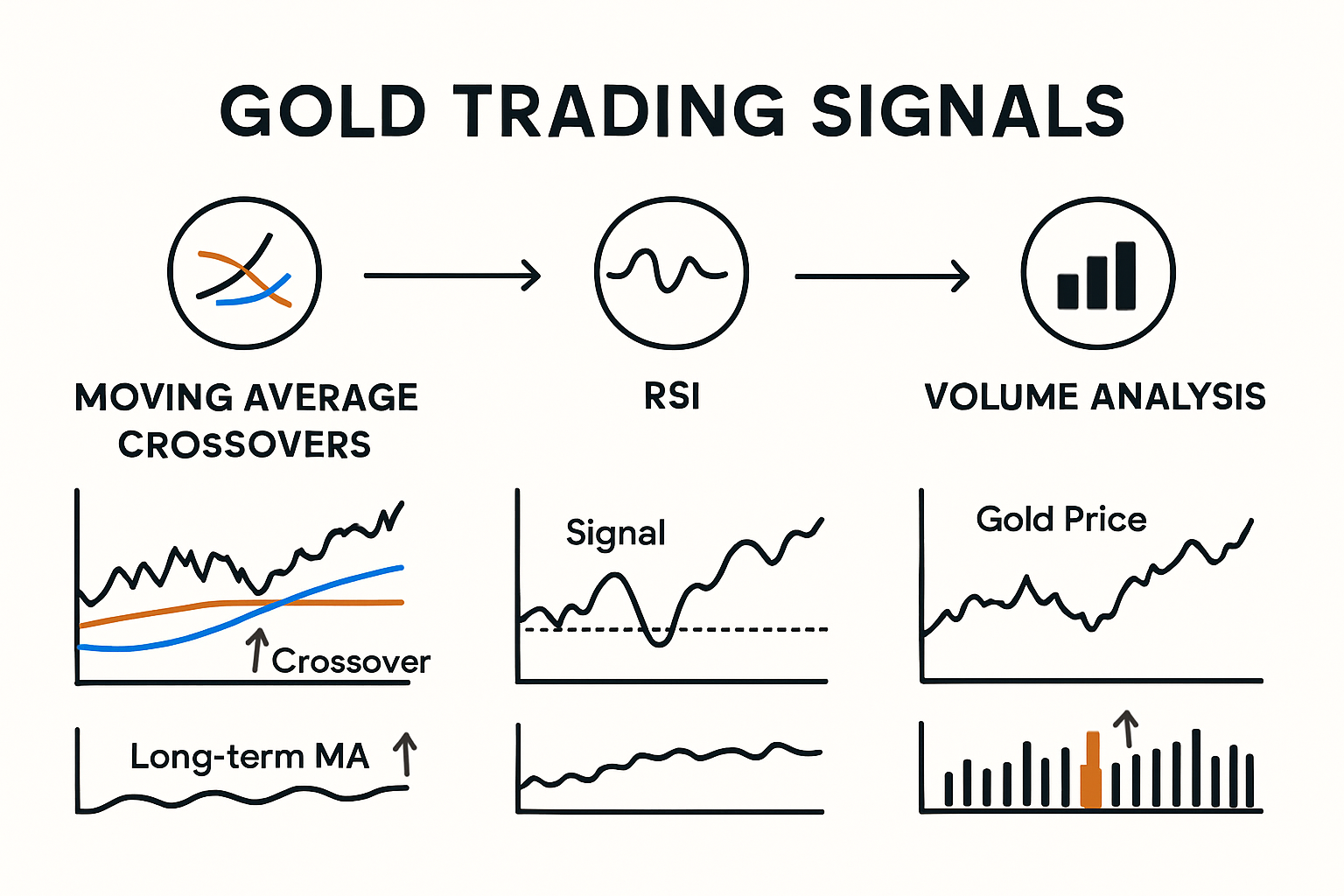
Effective gold trading relies on a combination of technical indicators and fundamental analysis. Investopedia research demonstrates that successful traders integrate multiple signal generation methods to increase prediction accuracy.
Key signal generation techniques include:
- Moving Average Crossovers: Identifying trend reversals and momentum shifts
- Relative Strength Index (RSI): Measuring market momentum and potential overbought or oversold conditions
- Volume Analysis: Understanding market participation and potential price movements
Risk Management and Signal Interpretation
Interpreting trading signals requires more than mechanical analysis. Traders must develop a nuanced approach that considers global economic contexts, geopolitical tensions, and market volatility. Learn more about our advanced trading signal strategies to refine your trading approach.
Successful gold traders understand that no single signal provides a guaranteed outcome. Instead, they develop comprehensive strategies that combine multiple indicators, maintain robust risk management protocols, and remain adaptable to rapidly changing market conditions.
The most effective traders continuously educate themselves, stay informed about global economic trends, and maintain a disciplined approach to interpreting market signals. By combining technical expertise, fundamental analysis, and a deep understanding of market sentiment, traders can navigate the complex world of gold trading with increased confidence and potential for success.
Gold Price Movements in Forex Trading
Forex traders recognize gold as a complex and dynamic trading instrument with unique characteristics that distinguish it from traditional currency pairs. Understanding the intricate mechanisms driving gold price movements requires a sophisticated approach that integrates multiple analytical perspectives.
Macroeconomic Indicators and Price Dynamics
Gold price movements in forex trading are influenced by a complex array of macroeconomic indicators. Research published in Resources Policy reveals critical factors that significantly impact gold pricing, including the U.S. dollar index, federal funds rate, consumer price index, exchange rates, oil prices, and broader market indices like the S&P 500.
Traders must carefully analyze these interconnected variables. For instance, the U.S. dollar’s strength typically exhibits an inverse relationship with gold prices. When the dollar weakens, gold becomes more attractive to international investors, potentially driving prices upward. Conversely, a strong dollar can create downward pressure on gold valuations.
Structural Analysis and Trading Strategies
Advanced forex traders employ sophisticated structural analysis to understand gold price movements. The Journal of Economic Structures emphasizes the importance of examining structural breaks in time series data to accurately predict gold price dynamics.
Key analytical approaches include:
- Technical Pattern Recognition: Identifying support and resistance levels
- Trend Analysis: Tracking long-term and short-term price movements
- Volatility Assessment: Understanding potential price fluctuation ranges
Risk Management and Strategic Positioning
Successful gold trading in the forex market demands robust risk management strategies. Traders must develop a nuanced understanding of global economic conditions, geopolitical tensions, and market sentiment. Learn more about advanced trading techniques to enhance your forex trading approach.
Effective traders recognize that gold represents more than a simple commodity or currency pair. It serves as a complex financial instrument reflecting broader economic narratives. By integrating fundamental analysis, technical indicators, and a deep understanding of global economic trends, traders can develop more sophisticated and potentially profitable trading strategies.
The most successful forex traders approach gold trading with flexibility, continuous learning, and a comprehensive understanding of the multifaceted factors driving price movements. Maintaining an adaptive mindset and leveraging advanced analytical tools can provide traders with a competitive edge in the dynamic world of gold forex trading.

Frequently Asked Questions
What factors influence the price of gold?
Gold prices are influenced by macroeconomic indicators such as inflation and interest rates, geopolitical tensions, currency dynamics, and central bank policies. These elements affect market sentiment and investor behavior, leading to price fluctuations.
How do central banks impact gold prices?
Central banks influence gold prices primarily through interest rate adjustments and gold purchasing strategies. Lower interest rates tend to increase gold’s attractiveness as a non-yielding asset, while significant gold purchases by central banks can drive demand and elevate prices.
Why is gold considered a safe haven asset?
Gold is regarded as a safe haven asset during times of economic uncertainty or geopolitical tensions. Investors tend to flock to gold to preserve their value and hedge against systemic risks, leading to increased demand and higher prices in such scenarios.
How can sentiment analysis help in gold trading?
Sentiment analysis helps traders gauge market psychology by analyzing news, social media, and financial trends. By understanding investor sentiment, traders can make more informed decisions on when to buy or sell gold based on market conditions.
Turn Your Gold Price Knowledge into Profitable Trades
Tracking global economics and gold price signals is not enough if you want to consistently profit from market movements. This article highlights how sudden policy shifts, volatile sentiment, and fast-changing conditions can leave traders exposed or missing out. Many traders struggle to act quickly on these factors or to filter the noise into clear buy or sell decisions.
Stay updated with the latest insights and actionable strategies in our News & Updates section to see how professionals react to real market events every week.
Join our private Telegram group now with XAU Gold Signals for high-accuracy, real-time gold trading opportunities. Our expert team delivers lightning-fast XAU/USD trading signals, combining technical and fundamental analysis just like you learned about in this guide. Do not let confusion or uncertainty hold you back. Take action today to secure reliable trade setups and start building real growth from your gold trading knowledge.
