


Gold trading has become one of the most dynamic financial markets on the planet, attracting both seasoned professionals and ambitious newcomers. Here is something most people miss. Central banks around the globe hold over 35,000 metric tons of gold as reserves, not just as shiny assets, but as vital insurance against global uncertainty. Forget the stereotype of gold as a dusty relic. The real power lies in how traders use advanced analytics and rapid-fire strategies to spot opportunities before the rest of the market even blinks.
Table of Contents
- Understanding Gold Trading And Its Role
- Key Methods To Trade Gold In Forex
- Analyzing Gold Market Trends And Signals
- Tips For Success In Gold Trading 2025
Quick Summary
| Takeaway | Explanation |
|---|---|
| Gold trading is a sophisticated practice | It involves speculative transactions where traders aim to profit from price fluctuations using instruments like futures, options, and ETFs. |
| Understanding market dynamics is crucial | Factors such as global economic conditions, currency fluctuations, and geopolitical tensions significantly impact gold prices and trading strategies. |
| Leverage advanced analytical techniques | Successful traders utilize both technical and fundamental analysis to interpret market trends, employing indicators like RSI and MACD for better decision-making. |
| Effective risk management is essential | Traders should implement strategic stop-loss orders, position sizing, and diversify across different gold trading instruments to protect against market volatility. |
| Continuous learning and adaptability | Traders should stay informed about market trends and technological advances, refining their strategies through education and participation in trading communities. |
Understanding Gold Trading and Its Role
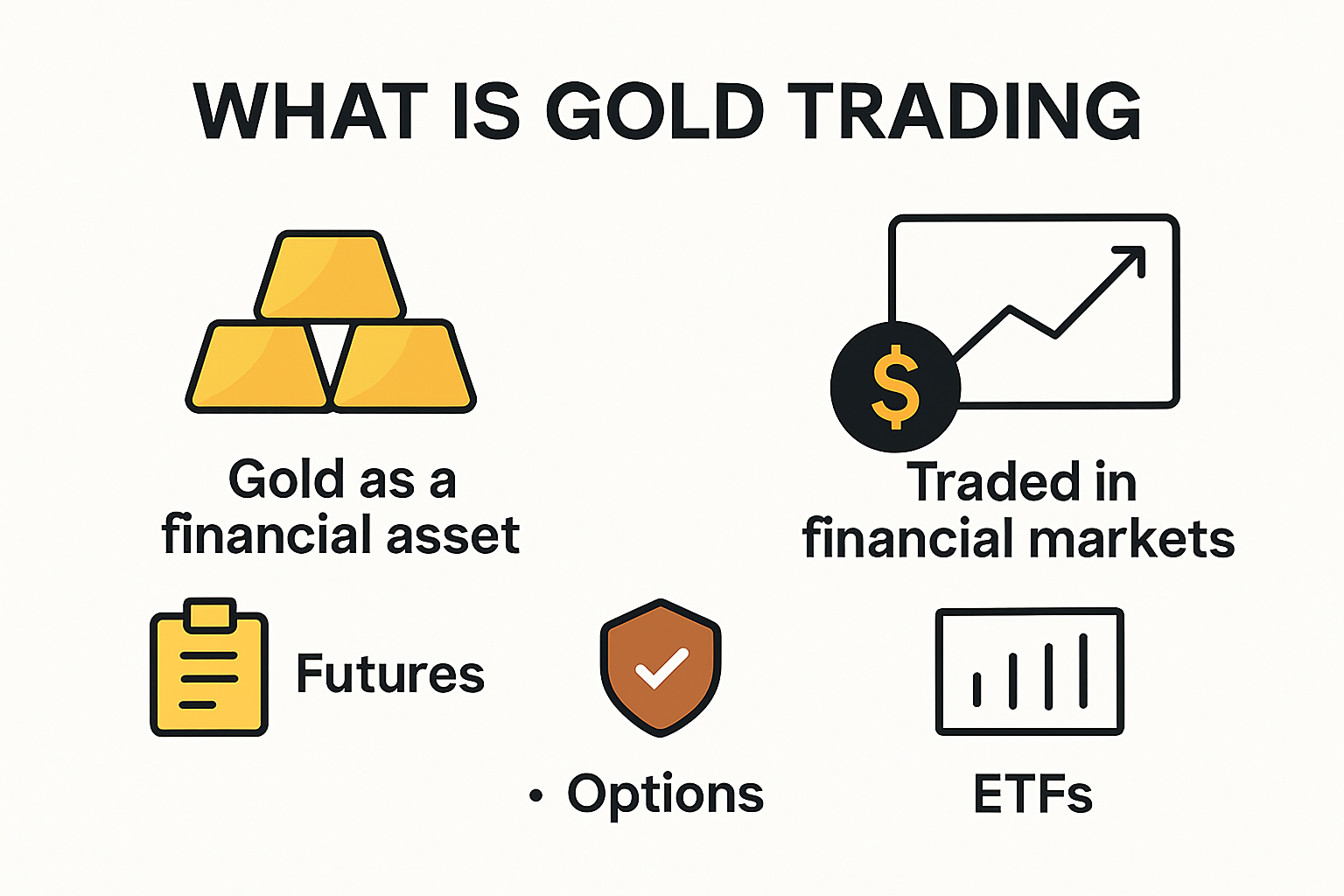
Gold trading represents a sophisticated financial practice that goes far beyond simple buying and selling of the precious metal. At its core, gold trading involves speculative transactions where traders aim to profit from price fluctuations in gold markets, utilizing various financial instruments such as futures contracts, options, exchange traded funds (ETFs), and physical gold purchases.
The Strategic Importance of Gold in Global Markets
Gold occupies a unique position in the global financial ecosystem. Learn more about gold market dynamics reveals that central banks and institutional investors view gold as a critical strategic asset. According to research from the European Central Bank, central banks predominantly hold gold for three fundamental reasons: portfolio diversification, geopolitical risk hedging, and maintaining financial system stability.
The metal’s intrinsic value stems from its historical role as a store of wealth and its performance during economic uncertainties. Accounting Insights research demonstrates that gold consistently acts as a safe-haven asset, retaining value when traditional financial markets experience significant volatility. This characteristic makes gold trading an attractive strategy for investors seeking to mitigate portfolio risks.
Trading Mechanisms and Market Dynamics
Gold trading encompasses multiple approaches, each with distinct characteristics and risk profiles. Traders can engage through spot markets, where immediate physical or digital gold transactions occur, or through derivative markets that allow speculation without physically owning the metal. Futures contracts enable traders to agree on gold prices for future delivery, providing opportunities for hedging and speculative investments.
The global gold market operates as an interconnected network, with trading centers linked through complex arbitrage activities. Research from the World Gold Council highlights that while the market is fundamentally global, variations in trade restrictions and differing bar standards prevent complete market integration. These nuances create unique opportunities and challenges for gold traders, requiring sophisticated understanding of international market mechanisms.
Traders must consider multiple factors influencing gold prices, including global economic conditions, currency fluctuations, geopolitical tensions, and monetary policies. The interplay of these elements creates a dynamic trading environment where informed decision making becomes crucial for successful gold trading strategies. Understanding these complex interactions allows traders to develop robust approaches that capitalize on market movements while managing potential risks effectively.
Key Methods to Trade Gold in Forex
Gold trading in the forex market offers multiple sophisticated approaches for traders seeking to capitalize on precious metal price movements. Unlike traditional stock or commodity trading, forex gold trading provides unique mechanisms that allow traders to speculate on gold prices with remarkable flexibility and strategic depth.
Spot Gold Trading: The Direct Market Approach
Spot gold trading represents the most straightforward method of engaging with gold markets. Traders interact directly with the XAU/USD currency pair, which represents the price of gold measured in U.S. dollars. Explore advanced trading signal strategies can help traders understand the nuanced dynamics of this trading method. According to Forex.com, spot trading allows immediate execution of trades at current market prices, enabling quick responses to global economic shifts and geopolitical events.
This method requires traders to understand real-time price movements, utilizing technical analysis, chart patterns, and market sentiment indicators. Successful spot gold traders monitor multiple factors including global economic indicators, currency strength, and geopolitical tensions that might influence gold prices. The ability to go long or short provides traders flexibility in different market conditions.
Derivative Instruments: Futures and Options Trading
Derivative trading offers more complex strategies for sophisticated gold traders. Futures contracts enable traders to agree on a specific gold price for future delivery, providing opportunities for hedging and speculative investments. CME Group research indicates that gold futures contracts allow traders to manage risk and potentially profit from anticipated price movements without physically owning the metal.
Options trading introduces another layer of strategic complexity. Traders can purchase call or put options on gold, giving them the right but not the obligation to buy or sell at a predetermined price. This approach provides built-in risk management mechanisms, allowing traders to limit potential losses while maintaining exposure to potential market gains. Unlocking advanced trading techniques can help traders understand the intricate mechanics of options strategies.
Gold Exchange-Traded Funds: Accessible Market Entry
Gold Exchange-Traded Funds (ETFs) provide an alternative trading method that offers broader market exposure with lower entry barriers. According to BlackRock, these financial instruments track gold prices, allowing traders to invest without directly managing physical gold or complex derivative contracts. ETFs trade like stocks, providing liquidity and ease of transaction that appeals to both novice and experienced traders.
Each trading method carries unique advantages and risks. Successful gold traders develop comprehensive strategies that leverage these different approaches based on market conditions, personal risk tolerance, and investment objectives. Understanding the nuanced characteristics of spot trading, futures, options, and ETFs enables traders to construct robust, adaptive trading approaches that maximize potential returns while managing potential market volatilities.
To help clarify the characteristics, benefits, and risks of each gold trading method discussed, the following table presents a concise side-by-side comparison:
| Trading Method | Key Characteristics | Benefits | Risks |
|---|---|---|---|
| Spot Trading | Direct trade on XAU/USD at current market price | Immediate execution; flexibility (long/short) | Exposure to rapid price fluctuations |
| Futures | Contract for gold delivery at a future date | Hedging and speculation; leverage | Leverage increases loss risk; expiration |
| Options | Right (not obligation) to buy/sell at set price/date | Limited downside; strategic flexibility | Premium paid can expire worthless |
| Gold ETFs | Shares representing exposure to gold price | Easy market entry; liquidity; diversified | Management fees; price can diverge from spot |
Analyzing Gold Market Trends and Signals
Successful gold trading hinges on sophisticated market analysis and interpreting complex trading signals that reveal potential price movements. Traders must develop a comprehensive approach that integrates multiple analytical techniques to navigate the intricate gold market landscape effectively.
Technical Analysis: Decoding Price Patterns
Technical analysis forms the cornerstone of gold market trend identification. Explore advanced trading signal strategies reveals the critical importance of understanding chart patterns, moving averages, and momentum indicators. According to TradingView research, traders utilize various technical tools to predict potential price movements.
Key technical indicators include relative strength index (RSI), moving average convergence divergence (MACD), and Bollinger Bands. These tools help traders identify potential entry and exit points by analyzing price momentum, volatility, and trend strength. Arxiv’s computational finance research demonstrates how advanced machine learning techniques like Conditional Generative Adversarial Networks (cGANs) can enhance trading strategy calibration, providing traders with more sophisticated analytical approaches.
Fundamental Analysis: Economic Drivers of Gold Prices
Fundamental analysis examines broader economic factors that influence gold prices. Traders must monitor global economic indicators, including inflation rates, currency valuations, geopolitical tensions, and central bank policies. Bloomberg’s economic analysis highlights how these macroeconomic factors create complex interactions that drive gold market dynamics.
Key fundamental indicators include U.S. dollar strength, interest rates, global economic uncertainty, and geopolitical events. For instance, economic instability typically increases gold’s appeal as a safe-haven asset, while rising interest rates might reduce its attractiveness. Successful traders develop a nuanced understanding of these interconnected economic factors to make informed trading decisions.
Advanced Signal Generation and Risk Management
Modern gold trading increasingly relies on sophisticated signal generation techniques that combine technical and fundamental analysis. Algorithmic trading systems and machine learning models help traders identify high-probability trading opportunities. CMT Association’s market analysis emphasizes the importance of developing robust signal generation methodologies that can adapt to changing market conditions.
Risk management remains crucial in gold trading. Traders must implement strategic stop-loss orders, position sizing techniques, and diversification strategies to protect against potential market volatilities. By combining advanced analytical techniques with disciplined risk management, traders can develop more resilient and potentially profitable gold trading approaches.
Ultimately, successful gold market analysis requires a holistic approach that integrates multiple analytical techniques, continuous learning, and adaptive strategies. Traders who develop comprehensive understanding of market dynamics and leverage advanced analytical tools position themselves for more informed and potentially successful trading experiences.
To summarize the main technical and fundamental indicators traders use to analyze the gold market, here is an organized table:
| Analysis Type | Key Indicators / Tools | Role in Gold Trading |
|---|---|---|
| Technical Analysis | RSI, MACD, Bollinger Bands, Moving Averages | Identify price trends, entry/exit points |
| Technical Analysis | Chart Patterns (candlestick, trendlines) | Predict breakout or reversal |
| Technical Analysis | Machine Learning Models (e.g. cGANs) | Advanced strategy optimization |
| Fundamental Analysis | USD Strength, Interest Rates | Macro impact on gold price |
| Fundamental Analysis | Inflation, Economic Uncertainty | Gauge safe-haven demand |
| Fundamental Analysis | Central Bank Policy, Geopolitical Events | Predict shifts in gold market sentiment |
Tips for Success in Gold Trading 2025
Successful gold trading in 2025 demands a sophisticated approach that combines technological innovation, strategic thinking, and robust risk management. Traders must evolve beyond traditional methods and embrace cutting-edge techniques that leverage advanced analytical tools and comprehensive market understanding.
Technological Integration and Advanced Analytical Strategies
Master gold scalping techniques reveals the increasing importance of technological integration in modern trading. According to research from ArXiv, implementing deep reinforcement learning algorithms like deep Q-networks (DQN) can significantly enhance trading strategies by effectively managing complex long-short positions in futures contracts.
Traders should focus on developing a technological edge by utilizing advanced machine learning models, algorithmic trading systems, and real-time data analysis tools. Research from Fullerton Markets emphasizes the critical role of sophisticated risk management techniques, including precise position sizing and strategic stop-loss implementations that protect trading capital while maximizing potential returns.
Strategic Risk Management and Portfolio Diversification
Effective gold trading requires a multifaceted approach to risk management. According to Market Gazette research, successful traders utilize a combination of technical analysis tools such as moving averages, Relative Strength Index (RSI), and Fibonacci retracement levels to identify potential market trends and entry points.
Diversification remains a crucial strategy for managing risk in gold trading. Traders should consider spreading investments across different gold trading instruments, including spot trading, futures contracts, options, and gold ETFs. This approach helps mitigate potential losses by reducing dependency on a single trading method or market condition. Understanding the correlations between different gold trading instruments and other financial assets can provide additional layers of risk protection.
Continuous Learning and Adaptive Trading Strategies
The gold trading landscape in 2025 demands continuous education and adaptability. Traders must stay informed about global economic trends, geopolitical developments, and emerging technological innovations that can impact gold prices. News and market updates can provide crucial insights into evolving market dynamics.
Successful traders will develop a growth mindset, continuously refining their strategies through backtesting, analyzing historical data, and remaining open to new analytical approaches. This might involve participating in advanced trading workshops, utilizing simulation platforms, and engaging with professional trading communities to exchange insights and strategies.
Ultimately, success in gold trading requires a holistic approach that combines technological sophistication, strategic risk management, and an unwavering commitment to continuous learning. Traders who can integrate advanced analytical tools, maintain disciplined risk management, and remain adaptable to changing market conditions will be best positioned to navigate the complex gold trading landscape of 2025.
Frequently Asked Questions
What is gold trading?
Gold trading involves the buying and selling of gold as a commodity in financial markets. It can be done through various instruments such as spot trading, futures contracts, options, and gold ETFs, allowing traders to profit from price fluctuations.
Why is gold considered a strategic asset in the global market?
Gold is viewed as a critical strategic asset by central banks and institutional investors due to its ability to diversify portfolios, hedge against geopolitical risks, and maintain financial system stability during economic uncertainties.
What are the key methods to trade gold in Forex?
The key methods for trading gold in Forex include spot gold trading, which involves direct transactions of the gold currency pair XAU/USD, trading gold futures for future delivery at predetermined prices, and utilizing options for flexible trading strategies without direct ownership of gold.
How do traders analyze gold market trends?
Traders analyze gold market trends using a combination of technical analysis, which involves price patterns and indicators like RSI and MACD, and fundamental analysis that focuses on economic indicators, geopolitical events, and monetary policies impacting gold prices.
Turn Gold Market Complexity Into Confident Trading Results
Struggling to keep up with fast-moving gold prices, complex analysis, and the fear of missing out on profitable trades? Many traders dive into gold trading hoping for stability and growth, yet often become overwhelmed by conflicting indicators and sudden market shifts. If you want to move beyond uncertainty and actually leverage the technical and fundamental strategies discussed in our News & Updates section, you need a clear, reliable edge.
Stop guessing in the gold market and start making informed, confident moves. At xau-gold-signals.com, our XAU/USD signals and expert-driven guidance empower you to trade gold using proven methods. Join our private Telegram group today to receive daily, real-time gold trading signals designed for the strategies explained in this guide. Don’t wait—the next profitable signal is just a click away.
Recommended
- News & Updates | XAU/USDT Gold Trading Signals
- Unlocking The Power Of Support & Resistance In Gold Trading
- Free Vs. Paid Gold Trading Signals: Which One Should You Choose?
- How To Guides | XAU/USDT Gold Trading Signals
- Forex & Gold Trading Risk: Proven Strategies To Manage It
- Blog | XAU/USDT Gold Trading Signals
