

Gold trading draws attention year after year, especially as traders look for smarter ways to amplify their gains. Did you know that professional traders often limit their risk to just 1-2% of their capital per trade and use dynamic leverage to stay ahead? Most people obsess over picking the right moment to buy. The truth is, the real edge for 2025 comes from how you manage leverage, not just when you enter the market. Get ready to rethink everything you thought you knew about gold trading strategies.
Table of Contents
- Understanding Leverage In Gold Trading
- Top Risk Management Techniques For Gold Traders
- Best Strategies For Leveraging Gold Trades
- Analyzing Gold Market Signals For Smart Trades
Quick Summary
| Takeaway | Explanation |
|---|---|
| Use Leverage Wisely to Balance Gains and Risks | Leverage allows for controlling larger positions but increases potential losses; disciplined management is essential. |
| Implement Strict Risk Management Techniques | Apply strategies like stop losses and position sizing to protect your capital and minimize downside. |
| Analyze Market Signals Thoroughly | Employ multiple technical indicators for better trade accuracy, integrating them with broader market insights. |
| Adopt Dynamic Leverage Optimization | Use adaptive position sizing and periodic adjustments to leverage based on market conditions for effective trading. |
| Continuous Learning is Key to Success | Mastering gold trading requires ongoing education and adaptation, enhancing your ability to navigate complex market dynamics. |
Understanding Leverage in Gold Trading
Leveraging gold trades requires a sophisticated approach that balances potential gains with calculated risk management. Traders seeking to maximize their gold trading strategies must develop a deep understanding of how leverage fundamentally transforms investment dynamics.
The Mechanics of Leverage in Gold Markets
Leverage represents a powerful financial tool that allows traders to control larger trading positions with a relatively small amount of capital. In gold trading, leverage can amplify both potential profits and potential losses. Research analyzing leveraged gold ETFs reveals critical insights into how these financial instruments perform over time, demonstrating that leveraged products often underperform their benchmarks, especially during extended holding periods.
Traders must recognize that leverage is not a guaranteed path to success. A comprehensive study on financial markets indicates that leveraged asset purchases can lead to heavy-tailed price fluctuations and clustered volatility. This means traders using high leverage might experience dramatic price swings that can quickly erode their trading capital.
Risk Management Strategies for Leveraged Gold Trading
Successful gold traders understand that effective leverage management is more about strategic control than maximum exposure. The key is to implement a disciplined approach that protects your investment while creating opportunities for growth. Learn more about gold trading fundamentals to develop a comprehensive understanding of market dynamics.
Consider these critical risk management principles:
- Capital Preservation: Never risk more than 1-2% of your total trading capital on a single trade
- Margin Requirements: Understand the specific margin requirements for gold trading instruments
- Stop Loss Strategies: Implement strict stop loss orders to limit potential downside
Professional traders recognize that leverage is a double-edged sword. While it can magnify potential returns, it can equally amplify losses. The most successful gold traders approach leverage with mathematical precision and emotional discipline.
Advanced Leverage Considerations
Understanding the nuanced relationship between leverage and gold market behavior requires continuous learning. Futures market research demonstrates that leveraged gold products can deviate significantly from spot prices due to complex factors like storage costs, interest charges, and market supply and demand expectations.
Tradition financial wisdom suggests starting with lower leverage ratios and gradually increasing exposure as your understanding and skill set improve. Most professional traders recommend beginning with 2:1 or 3:1 leverage ratios, allowing room for learning and adaptation without risking catastrophic losses.
The path to mastering leveraged gold trading is not about taking massive risks but about developing a systematic, disciplined approach that respects market complexity and your individual risk tolerance. By combining technical knowledge, continuous education, and strategic risk management, traders can transform leverage from a potential threat into a powerful trading tool.
To clarify and compare commonly used leverage ratios in gold trading, the following table outlines common approaches and their characteristics:
| Leverage Ratio | Typical Use Case | Benefits | Risks |
|---|---|---|---|
| 1:1 | Beginners and long-term investors | Minimized risk, simple management | Lower potential returns |
| 2:1 – 3:1 | Learning/training, early stage pros | Moderate risk/reward balance | Manageable loss exposure |
| 5:1 – 10:1 | Experienced, short-term traders | Higher return potential | Amplified losses, greater volatility |
| Over 10:1 | High-frequency/advanced traders | Maximum exposure possible | Catastrophic loss potential, very high risk |
Top Risk Management Techniques for Gold Traders
Risk management stands as the cornerstone of successful gold trading, separating professional traders from amateur speculators. Gold traders must develop a comprehensive strategy that protects capital while maximizing potential returns through systematic approaches and intelligent decision-making.
Statistical Risk Assessment and Modeling
Research on stochastic processes reveals sophisticated techniques for understanding and modeling financial risk. Gold traders can leverage advanced statistical methods to predict potential market volatilities and develop more robust trading strategies. The key lies in recognizing statistical features like fat tails and mean reversion, which can significantly impact trading outcomes.
Understanding these complex risk factors requires more than intuition. Reinforcement learning models offer innovative approaches to dynamic risk assessment, allowing traders to optimize strategies that adapt to changing market conditions. By implementing model-free learning techniques, gold traders can develop more responsive and resilient trading approaches.
Dynamic Risk Management Strategies
Successful risk management goes beyond simple stop-loss orders. Explore advanced trading risk strategies to develop a more comprehensive approach to protecting your investment. Professional traders employ multiple risk mitigation techniques:
- Position Sizing: Limiting individual trade exposure to 1-2% of total trading capital
- Diversification: Spreading risk across multiple gold trading instruments
- Continuous Monitoring: Implementing real-time risk assessment protocols
To provide a quick reference, the table below summarizes key risk management techniques for gold trading:
| Technique | Description | Primary Purpose |
|---|---|---|
| Position Sizing | Limit trade size to 1-2% of capital per trade | Control loss exposure |
| Stop-Loss Orders | Predetermined sell triggers to cap downside risk | Prevent large losses |
| Diversification | Spread investments across different gold instruments | Reduce unsystematic risk |
| Margin Monitoring | Track margin usage and requirements closely | Avoid forced liquidation |
| Psychological Rules | Emotion control, avoid impulsive trading | Maintain discipline |
| Continuous Monitoring | Real-time risk assessment, response to market changes | Respond to volatility |
Behavioral Risk Analysis
Deep learning research on financial risk behaviors provides critical insights into trader decision-making patterns. Understanding psychological factors can help traders identify and mitigate potential risk-taking behaviors that could lead to significant losses.
The most effective risk management approach combines quantitative analysis with psychological awareness. Traders must develop emotional discipline, creating systematic rules that prevent impulsive decision-making during market volatility.
Advanced traders recognize that risk management is not about eliminating risk entirely but about understanding, measuring, and controlling potential downside. This requires a multifaceted approach that combines statistical modeling, technological tools, and personal discipline.
Ultimately, successful gold trading demands a holistic risk management strategy. By integrating sophisticated analytical techniques, adaptive learning models, and strong psychological awareness, traders can navigate the complex gold market with greater confidence and consistency. The goal is not to avoid risk completely but to transform it into a manageable and potentially profitable aspect of your trading journey.
Best Strategies for Leveraging Gold Trades
Leveraging gold trades requires a strategic approach that balances potential returns with calculated risk management. Professional traders understand that successful leveraging goes beyond simple financial mechanics, demanding a nuanced understanding of market dynamics and sophisticated trading techniques.
Analyzing Leveraged Gold Investment Instruments
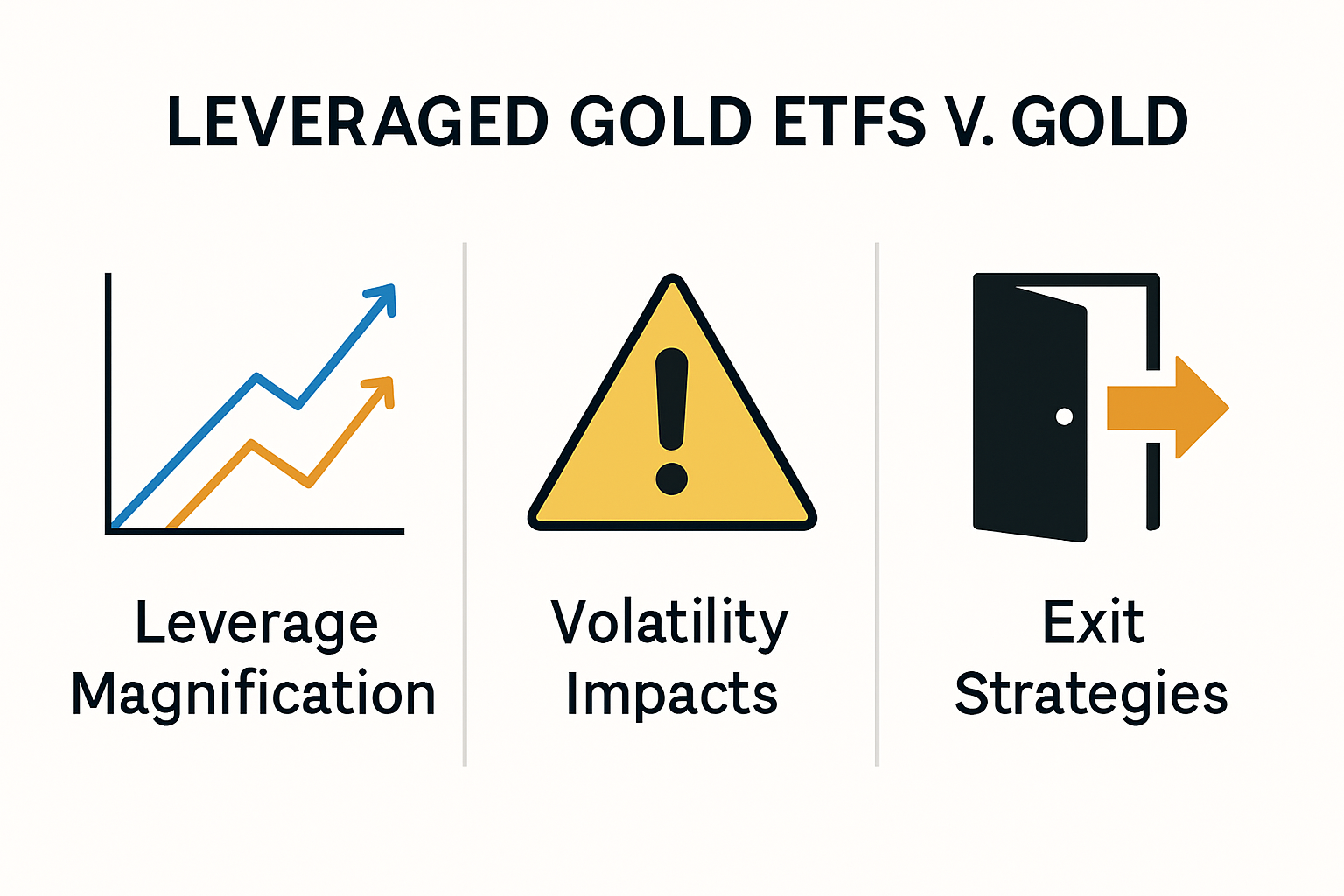
Research examining leveraged gold ETFs reveals critical insights into performance characteristics. These studies demonstrate that leveraged ETFs often underperform their benchmarks, particularly during extended holding periods. Traders must carefully evaluate the tracking performance of different gold investment instruments.
A comprehensive academic analysis suggests dynamic replication methods using spot gold ETFs and market equity portfolios can provide more consistent returns. This approach requires traders to move beyond static investment strategies and develop more adaptive trading mechanisms.
Dynamic Leverage Optimization Techniques
Explore advanced gold trading strategies to refine your approach to leveraged trading. Professional traders employ sophisticated techniques to manage leverage effectively:
- Adaptive Position Sizing: Dynamically adjust leverage based on market volatility
- Multi-Instrument Diversification: Spread leverage across different gold trading instruments
- Periodic Rebalancing: Regularly reassess and adjust leverage ratios
Risk-Controlled Leverage Implementation
Regulatory insights on leverage management emphasize the critical importance of prudent leverage use. The most successful traders view leverage as a precision tool, not a blunt instrument for speculation.
Advanced traders recognize that effective leverage is about quality, not quantity. This means carefully selecting trading opportunities, maintaining strict risk management protocols, and avoiding overexposure. The goal is to create a leveraged trading approach that provides controlled amplification of potential returns.
Implementing a successful leveraged gold trading strategy requires continuous learning and adaptation. Traders must develop a deep understanding of market dynamics, technological tools, and personal risk tolerance. This holistic approach transforms leverage from a potential threat into a powerful trading mechanism.
The most sophisticated gold traders view leverage as a dynamic tool that requires constant refinement. By combining statistical analysis, adaptive strategies, and disciplined risk management, traders can develop a nuanced approach to leveraged gold trading that maximizes potential while protecting capital.
Analyzing Gold Market Signals for Smart Trades
Smart gold trading demands sophisticated signal analysis that goes beyond superficial market observations. Professional traders develop comprehensive strategies that integrate multiple analytical techniques to identify high-probability trading opportunities in the complex gold market landscape.
Technical Indicator Strategies
Trading experts recommend using technical indicators like the Relative Strength Indicator (RSI) to evaluate market conditions precisely. The RSI provides critical insights into potential overbought or oversold scenarios. Specifically, an RSI value below 30 signals potential oversold conditions, while values above 70 suggest potential overbought market states.
Explore advanced trend analysis techniques to enhance your trading precision. Professional traders typically employ multiple technical indicators simultaneously, creating a more robust signal verification process. This multi-indicator approach helps reduce false signal risks and improves overall trade accuracy.
To illustrate the application of technical indicators in signal analysis, the following table summarizes common indicators and their typical usage in gold trading:
| Indicator | Typical Use | Oversold/Overbought Thresholds |
|---|---|---|
| RSI (Relative Strength Index) | Identifying overbought/oversold conditions | <30 (Oversold), >70 (Overbought) |
| Moving Average | Determining market trend direction | n/a |
| MACD | Confirming trend momentum | n/a |
| Bollinger Bands | Identifying volatility and price extremes | n/a |
Moving Average Crossover Analysis
Forex trading research highlights the moving average crossover strategy as a powerful trend identification method. This technique involves tracking interactions between short-term and long-term moving averages to detect potential market trend shifts.
Traders typically utilize two primary moving averages:
- Short-term Moving Average: Often a 20-period indicator
- Long-term Moving Average: Commonly a 50-period indicator
A bullish crossover occurs when the short-term moving average crosses above the long-term moving average, signaling a potential upward trend. Conversely, a bearish crossover happens when the short-term average drops below the long-term average, indicating a potential downward trend.
Comprehensive Signal Interpretation
Successful gold trading requires more than mechanical signal reading. Traders must develop a holistic approach that combines technical analysis with broader market understanding. This means integrating technical indicators with fundamental economic factors, geopolitical events, and global market sentiment.
Advanced traders recognize that no single indicator provides a guaranteed trading signal. Instead, they create a comprehensive framework that cross-references multiple analytical tools. This approach involves:
- Validating technical signals against broader market trends
- Considering macroeconomic indicators
- Monitoring global economic and geopolitical developments
- Maintaining flexibility in signal interpretation
The most effective gold traders treat market signals as probabilistic insights rather than absolute predictions. They understand that signal analysis is an art form requiring continuous learning, adaptation, and disciplined risk management.
Ultimately, mastering gold market signal analysis demands a combination of technical expertise, strategic thinking, and emotional discipline. By developing a nuanced, multi-dimensional approach to signal interpretation, traders can transform raw market data into intelligent, high-probability trading decisions.

Frequently Asked Questions
What are the risks associated with leveraging gold trades?
Leveraging gold trades can amplify both potential profits and potential losses. Traders must manage risk carefully by employing strategies such as limiting capital exposure to 1-2% per trade and using stop-loss orders to protect their investment.
How can I effectively manage leverage when trading gold?
To manage leverage effectively, traders should start with lower leverage ratios, implement strict risk management techniques, and continuously monitor their position sizes based on market conditions. Continuous education about market dynamics is also crucial.
What are the benefits of using technical indicators in gold trading?
Technical indicators help traders evaluate market conditions, identify trends, and signal potential entry and exit points. Using a combination of indicators improves trade accuracy by reducing the likelihood of false signals.
How does dynamic leverage optimization work in gold trading?
Dynamic leverage optimization involves adjusting leverage levels based on market volatility and trading conditions. Traders can spread their leverage across different gold instruments and periodically reassess their strategies to ensure effective risk management.
Take Control of Your Gold Trading in 2025
Are you tired of unpredictable results and struggling to manage risks when leveraging your gold trades? If you want to apply the precise strategies covered in this article and truly master smart leverage and risk management, you need reliable, real-time support. We specialize in actionable How To Guides and proven signal strategies that help you avoid costly mistakes, so you no longer have to rely on guesswork.

Make your next gold trade your smartest move yet. Join our private Telegram group and tap into the expertise behind our industry-leading XAU/USD signals. Gain access to daily insights and profit-focused strategies from https://xau-gold-signals.com. Don’t wait. Start using the same techniques that top traders rely on for consistent results.
Recommended
- Maximizing Gold Trading Profits In 2025: Top Strategies For Traders | XAU/USDT Gold Trading Signals
- Gold Trading For Beginners 2025: Smart Strategies And Signals | XAU/USDT Gold Trading Signals
- Is Gold Trading Profitable In 2025? Real Insights For Forex Traders | XAU/USDT Gold Trading Signals
- Long Term Gold Investing Strategies For 2025: A Guide For Forex Traders | XAU/USDT Gold Trading Signals
