
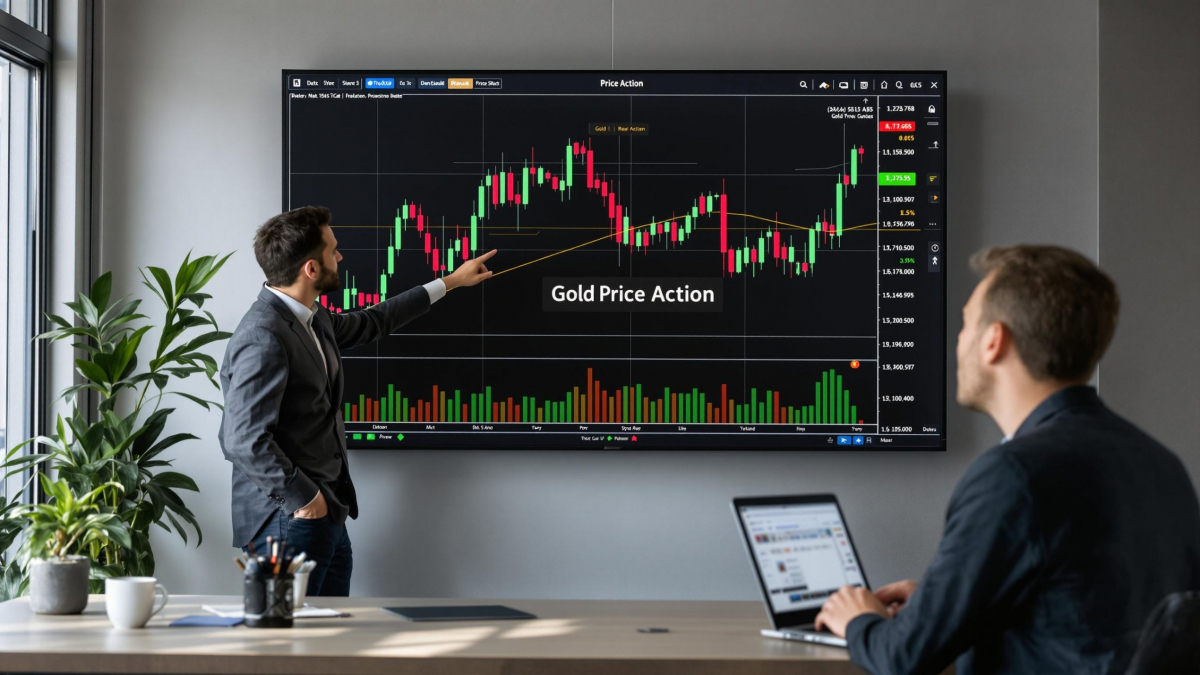
Gold and forex traders keep searching for reliable ways to predict market moves. Some still chase the newest indicator or complex system, hoping for an edge. Yet statistics reveal that over 70 percent of successful traders rely mainly on raw price action instead of complicated tools. That single shift alone changes the game and clears out much of the noise.
Table of Contents
- What Price Action In Trading Means
- Core Price Action Strategies For Gold And Forex
- Using Price Action For Reliable Trading Signals
- Common Mistakes To Avoid With Price Action
Quick Summary
| Takeaway | Explanation |
|---|---|
| Focus on Price Movement Alone | Price action trading emphasizes raw price changes, minimizing reliance on complex indicators for market analysis. |
| Utilize Candlestick Patterns | Recognizing specific candlestick patterns can indicate potential market reversals or continuations, aiding in trading decisions. |
| Implement Multi-Timeframe Analysis | Analyzing price movements across different timeframes helps discern overall trends versus short-term fluctuations for better trading insights. |
| Establish Clear Risk Management | Effective trading requires implementing stop-loss and take-profit levels to secure gains and limit losses based on market signals. |
| Avoid Emotional Trading | Maintaining discipline and sticking to a trading plan can greatly enhance one’s success and mitigate poor decision-making under pressure. |
What Price Action in Trading Means
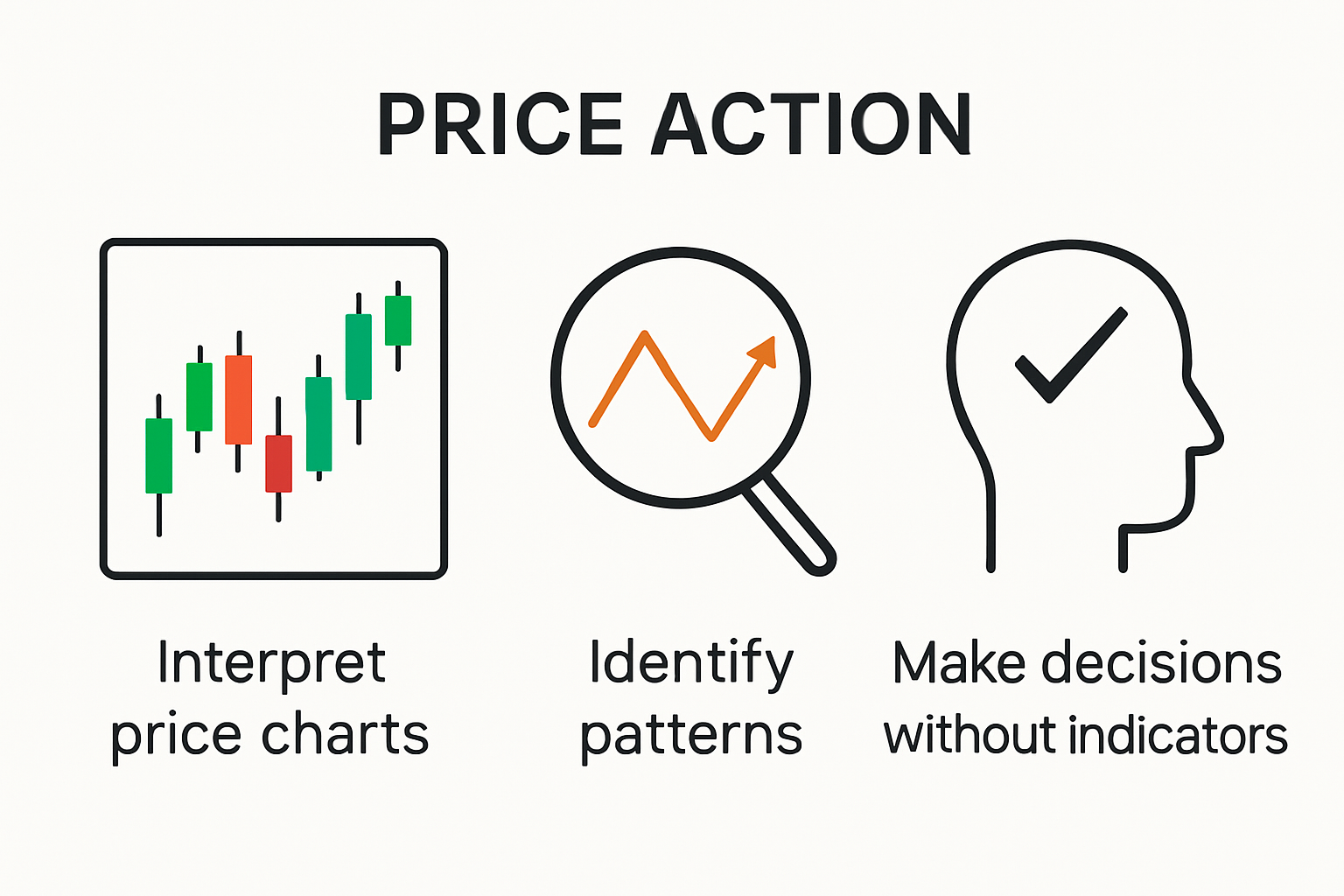
Price action trading represents a dynamic approach to understanding financial markets through the lens of price movement. Unlike complex trading strategies that rely heavily on multiple technical indicators, price action focuses exclusively on the raw price changes of a financial instrument over time. Our comprehensive guide on price action trading provides deeper insights into this powerful trading methodology.
Understanding Price Movement Fundamentals
At its core, price action trading is about interpreting market psychology through price charts. According to Investopedia, price action is defined as the movement of a security’s price plotted over time, forming the basis for all technical analyses. Traders who practice price action trading observe how prices move, identifying patterns, trends, and potential future market directions without relying on complex technical indicators.
In gold and forex markets, price action becomes particularly crucial. Traders analyze historical price movements, looking for repetitive patterns that might indicate potential market behavior. These patterns could include specific candlestick formations, support and resistance levels, trend reversals, and consolidation zones. By understanding these nuanced price movements, traders can make more informed decisions about entry and exit points.
Key Principles of Price Action Analysis
Successful price action trading requires a deep understanding of market dynamics. According to Britannica’s financial resources, traders focus on several critical principles. First, they recognize that price reflects all available market information. This means that every historical and current price movement encapsulates trader sentiments, economic conditions, and market expectations.
Traders analyze multiple timeframes to get a comprehensive view of price movements. Short-term charts might reveal immediate market sentiment, while longer-term charts provide context about broader market trends. This multi-timeframe analysis helps traders distinguish between temporary price fluctuations and more significant market movements.
Another essential principle is understanding market context. Price action traders don’t just look at raw price movements but consider the broader economic environment, geopolitical events, and market psychology. They use price charts as a window into collective market behavior, interpreting how different market participants react to various economic stimuli.
Price action trading demands discipline, patience, and continuous learning. Traders must develop a keen eye for recognizing patterns, understanding market psychology, and making calculated decisions based on price movements. While it might seem straightforward, mastering price action requires extensive practice, emotional control, and a systematic approach to market analysis.
Core Price Action Strategies for Gold and Forex
Price action strategies in gold and forex trading represent sophisticated techniques for interpreting market movements without relying extensively on complex technical indicators. Learn advanced trading signals on our expert blog for deeper insights into these powerful strategies.
Candlestick Pattern Recognition
Candlestick patterns form the cornerstone of price action trading for gold and forex markets. According to a comprehensive study from Universitas Atma Jaya Yogyakarta, technical analysis strategies focusing on candlestick formations can yield profitable trading outcomes. Traders identify specific patterns like hammer, shooting star, doji, and engulfing patterns that signal potential market reversals or continuations.
In gold trading, these candlestick patterns become particularly significant. A hammer pattern near a support level might indicate a potential bullish reversal, while a shooting star at resistance could signal an upcoming bearish trend. Traders must combine pattern recognition with broader market context to improve their decision making.

Multi-Timeframe Analysis Strategy
Multi-timeframe analysis is crucial for developing robust price action strategies. According to research published in Mathematics journal, integrating advanced mathematical models with price action analysis can significantly enhance forecasting accuracy. Traders examine price movements across different timeframes weekly, daily, and hourly charts to develop a comprehensive market perspective.
This approach allows traders to distinguish between short-term fluctuations and long-term trends. For instance, a trader might identify a bullish trend on a weekly chart while simultaneously recognizing potential short-term pullback opportunities on a daily or hourly chart. By understanding these interconnected price movements, traders can make more informed entry and exit decisions.
Support and Resistance Tracking
Support and resistance levels represent critical elements in price action strategies for gold and forex markets. According to research from Columbia University, commodities like gold exhibit predictable behavioral patterns around these key price levels. Traders track historical price points where assets have consistently reversed or consolidated, using these zones as strategic trading regions.
In gold trading, support levels represent price points where buying pressure historically prevents further decline, while resistance levels indicate zones where selling pressure typically emerges. Traders watch for price action signals near these levels such as bullish or bearish engulfing candles, pin bars, or inside bars to make trading decisions. These signals provide insights into potential trend continuations or reversals.
Successful price action trading requires continuous learning, disciplined practice, and a deep understanding of market psychology. Traders must remain adaptable, recognizing that no single strategy guarantees success in the dynamic gold and forex markets.
Here is a summary table of the primary price action strategies and their key features for gold and forex trading:
| Strategy | Description | Example Patterns/Methods |
|---|---|---|
| Candlestick Pattern Recognition | Identifies specific candlestick formations that signal reversals or continuations | Hammer, Shooting Star, Doji, Engulfing |
| Multi-Timeframe Analysis | Analyzes price movement across weekly, daily, and hourly charts for broad and short-term trends | Weekly trend vs. Daily pullbacks |
| Support & Resistance Tracking | Tracks key price levels where reversals or consolidations are likely to occur | Trading at Support/Resistance Zones |
Using Price Action for Reliable Trading Signals
Price action trading provides traders with a sophisticated approach to generating reliable trading signals by interpreting market movements through precise price behavior analysis. Explore our comprehensive trading signal strategies to enhance your understanding of these advanced techniques.
Identifying High-Probability Entry Signals
Generating reliable trading signals using price action requires a nuanced understanding of market psychology and price movement patterns. According to research from the University of St. Thomas, systematic price-based strategies can provide statistically significant trading signals, particularly when focused on key psychological price levels.
In gold and forex markets, traders look for specific price action signals that indicate potential market entry points. These signals include pin bars, engulfing patterns, and inside bars that demonstrate clear market sentiment shifts. A bullish pin bar at a support level, for instance, might signal a potential upward price movement, while a bearish engulfing pattern near a resistance zone could indicate an impending downward trend.
Confirmation and Risk Management Techniques
Successful price action signal generation goes beyond simple pattern recognition. Traders must implement robust confirmation and risk management strategies to validate potential trading opportunities. This involves analyzing multiple timeframes, considering market context, and establishing clear entry, stop-loss, and take-profit levels.
For gold trading, confirmation might involve comparing price action signals across different timeframes. A bullish signal on an hourly chart should ideally align with broader trends visible on daily or weekly charts. Traders also examine volume, market sentiment, and external economic factors to increase the reliability of their trading signals.
Advanced Signal Filtering Strategies
Advanced price action traders develop sophisticated signal filtering techniques to minimize false positives and improve trade accuracy. This approach involves creating a comprehensive trading framework that combines multiple confirmation criteria. Traders might look for confluence between price action patterns, support and resistance levels, and broader market trends.
In forex and gold markets, signal filtering can include examining the quality of candlestick formations, the strength of trend momentum, and the overall market structure. Traders might reject signals that do not meet strict criteria, such as those lacking clear market context or showing weak price momentum.
Trading success with price action signals requires continuous learning, disciplined practice, and an adaptive approach. No single strategy guarantees consistent profits, and traders must remain flexible, continuously refining their approach based on market conditions and personal trading experience. Developing a deep understanding of market psychology and price movement dynamics is crucial for transforming price action signals into profitable trading opportunities.
Common Mistakes to Avoid with Price Action
Mastering price action trading requires not just understanding successful strategies, but also recognizing and avoiding critical errors that can undermine trading performance. Learn more about advanced trading techniques to refine your approach and minimize potential pitfalls.
Below is a table summarizing the most common mistakes traders make with price action, along with a brief description and solution for each:
| Mistake | Description | Solution/Best Practice |
|---|---|---|
| Overcomplicating Technical Analysis | Adding too many indicators, creating unnecessary complexity and signal noise | Keep charts clean; focus on price, core patterns, and market structure |
| Emotional Trading & Lack of Discipline | Making decisions based on fear, impulse, or deviating from the trading plan | Stick to a plan; apply strict risk management and entry/exit rules |
| Ignoring Multiple Timeframe Contexts | Trading without considering longer- and shorter-term market trends and context | Analyze signals on several timeframes for a holistic market perspective |
Overcomplicating Technical Analysis
One of the most prevalent mistakes in price action trading is overcomplicating technical analysis. According to Charles Schwab’s trading guidelines, traders often fall into the trap of adding unnecessary complexity to their trading strategies. Price action trading fundamentally relies on simplicity and clear market interpretation.
Traders frequently make the error of incorporating too many technical indicators, which can create signal noise and confusion. The core principle of price action trading is to understand market movements through pure price behavior, not by drowning in a sea of complex indicators. Successful traders learn to read price charts cleanly, focusing on key patterns, support and resistance levels, and market structure.
Emotional Trading and Lack of Discipline
Emotional trading represents a critical mistake that can devastate trading performance. Investing.com highlights that selling out of fear or trading against overall market trends are significant errors that undermine trading success. Price action traders must develop emotional discipline and stick to their predefined trading plans.
This discipline involves several key practices: maintaining consistent risk management, avoiding impulsive trades based on temporary market fluctuations, and maintaining a systematic approach to market analysis. Traders should establish clear entry and exit rules before entering any trade and have the mental fortitude to follow these rules regardless of short-term market movements.
Ignoring Multiple Timeframe Contexts
Another common mistake in price action trading is failing to analyze price movements across multiple timeframes. Yahoo Finance reports that traders often make the critical error of ignoring longer time frames and trading based on limited perspectives.
Effective price action trading requires a holistic view of market movements. A signal that appears promising on a short-term chart might look entirely different when viewed in the context of daily or weekly trends. Traders must develop the skill of analyzing price action across different time horizons to understand true market dynamics.
Successful price action trading demands continuous learning, self-awareness, and the ability to adapt. Traders must recognize that mistakes are part of the learning process and approach each trade with a growth mindset. By understanding and avoiding these common pitfalls, traders can develop more robust and consistent trading strategies in gold and forex markets.
Frequently Asked Questions
What is price action trading?
Price action trading focuses on analyzing the raw movements of price over time, using price charts to identify patterns and market trends without relying on complex indicators.
How can candlestick patterns improve trading decisions?
Candlestick patterns can signal potential market reversals or continuations, helping traders identify entry and exit points based on clear price behavior.
What is multi-timeframe analysis in price action trading?
Multi-timeframe analysis involves examining price movements across different timeframes to gain a comprehensive understanding of market trends and to distinguish between short-term fluctuations and long-term trends.
How can I avoid common mistakes in price action trading?
To avoid mistakes, focus on simplicity in your analysis, maintain emotional discipline, and consider multiple timeframes to gain a complete view of the market.
Turn Price Action Insights Into Consistent Trading Profits
If you have ever felt stuck using complex indicators or missing winning trades because of overloaded charts, you are not alone. The path to mastering gold and forex often comes down to reading pure price movement and taking action with confidence. Our How To Guides will show you how to put price action strategies to work right away, so you never have to second guess your entry or exit again.
It is the perfect time to stop feeling uncertain and start getting reliable trade setups from proven experts. Join our Private Telegram group for daily, real-time XAU/USD gold signals and see how our actionable strategies help you avoid emotional trading and achieve steady growth. Take control of your trades today and experience the accuracy and risk management that make winning with gold signals possible.
