
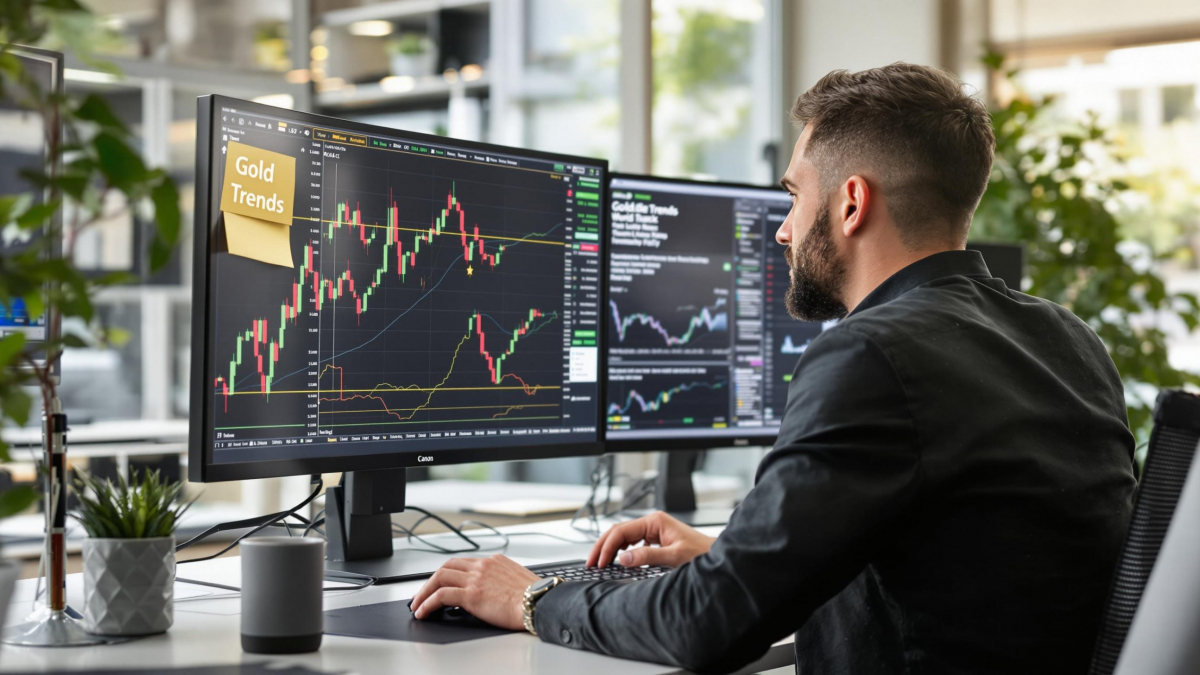
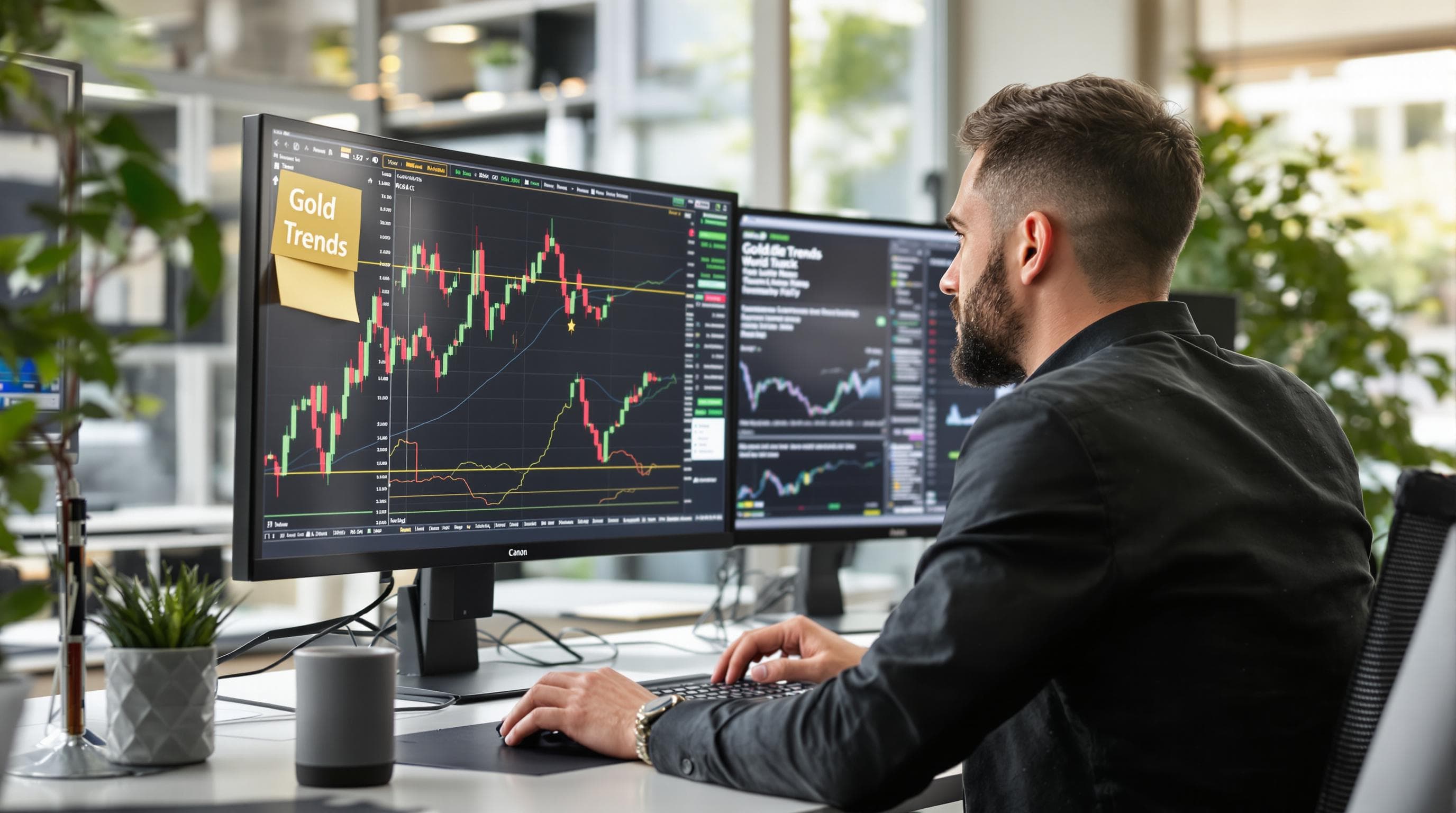
Gold prices are anything but steady and the factors influencing them are surprisingly complex. Most people think gold simply tracks inflation or reacts to global crises and that is part of the story. Yet, according to researchers, the U.S. dollar index, interest rates, and even oil prices all act as primary predictors for gold’s next move. This means the smartest gold traders in 2025 will blend economic indicators, technical tricks, and even machine learning to spot profit-winning trends before everyone else.
Table of Contents
- Understanding Key Factors In Gold Price Movements
- Technical Analysis Tools For Gold Trends
- Fundamental Analysis Strategies For Gold Traders
- Applying Trend Analysis To Gold Trading Signals
Quick Summary
| Takeaway | Explanation |
|---|---|
| Monitor Global Economic Indicators | Key indicators like the U.S. dollar index, interest rates, and GDP growth significantly influence gold prices, so stay updated on these metrics to anticipate market movements. |
| Utilize Technical Analysis Tools | Employ essential tools such as the Relative Strength Index (RSI) and Moving Averages, and combine them with trend analysis techniques for more informed trading decisions. |
| Assess Geopolitical Risks | Understanding global tensions and economic policies can help predict gold price fluctuations, thus maintaining awareness of international news is crucial for traders. |
| Incorporate Advanced Forecasting Techniques | Utilize machine learning models and advanced algorithms to enhance trend predictions and identify potential price shifts with higher accuracy. |
| Implement Strong Risk Management | Develop comprehensive risk management strategies, including stop-loss mechanisms and position sizing, to ensure disciplined trading and validate trend signals effectively. |
Understanding Key Factors in Gold Price Movements
Gold trading requires a comprehensive understanding of the complex dynamics that influence price movements. Successful traders recognize that gold is not just a commodity but a sophisticated financial instrument affected by multiple interconnected factors. By dissecting these key influences, traders can develop more nuanced strategies for analyzing and predicting gold trends.
Global Economic Indicators and Macroeconomic Forces
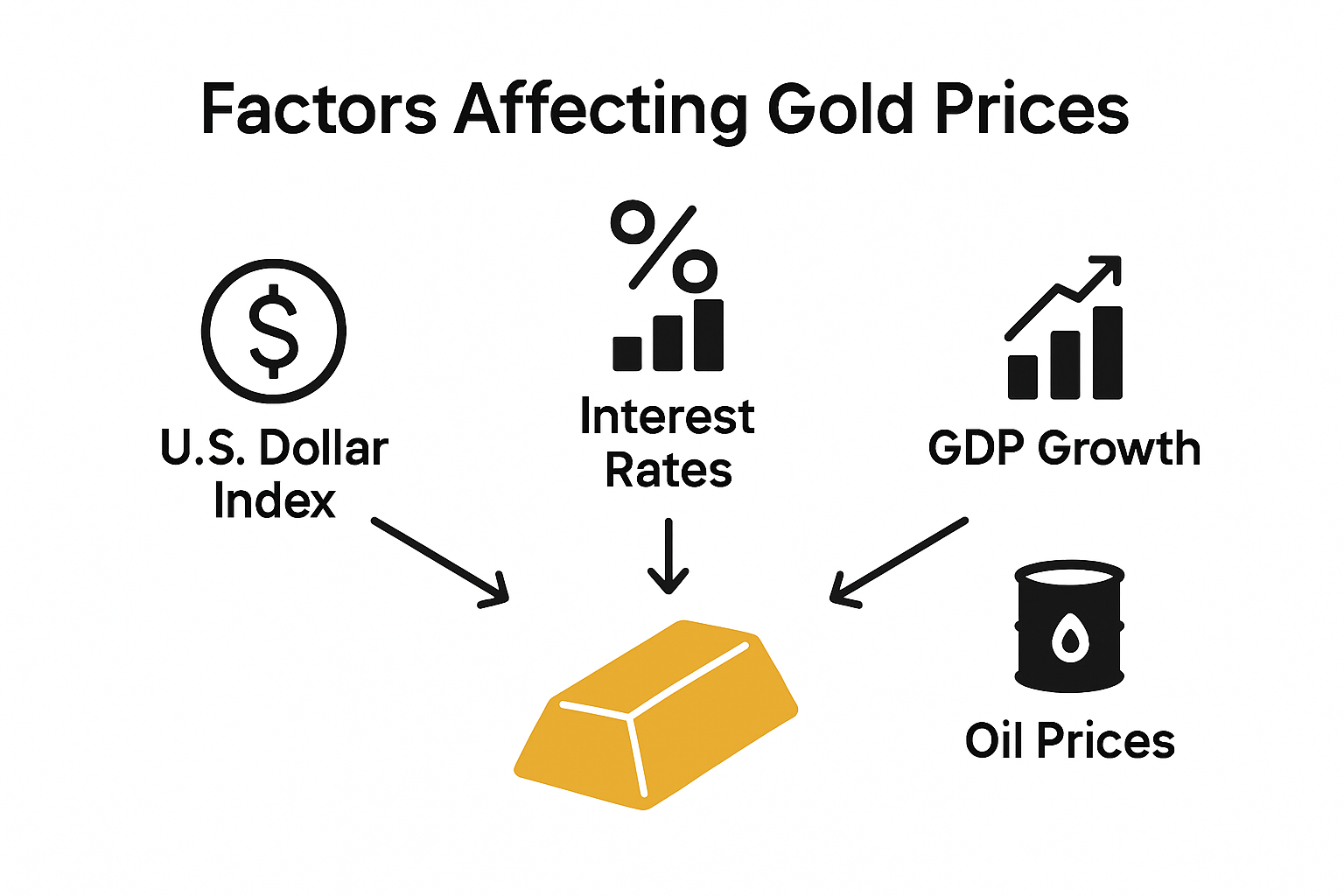
Economic indicators play a critical role in determining gold price trajectories. According to a 2024 study by Xiong and Zhang, several macroeconomic factors significantly impact gold prices. The research reveals that the U.S. dollar index, interest rates, GDP growth, and oil prices are primary predictors of gold market movements.
The inverse relationship between the U.S. dollar and gold is particularly noteworthy. When the dollar weakens, gold typically becomes more attractive as an alternative investment, driving prices upward. Conversely, a strong dollar can suppress gold prices. Traders must continuously monitor currency fluctuations and central bank policies to understand potential gold price shifts.
Interest rates also exert substantial influence. Lower interest rates reduce the opportunity cost of holding gold, making it more appealing to investors. When traditional savings and bond yields decrease, investors often pivot towards gold as a store of value.
Market Sentiment and Geopolitical Dynamics
Geopolitical tensions and global uncertainties dramatically impact gold prices. Investors frequently view gold as a safe-haven asset during periods of economic instability, political conflict, or financial market volatility. This perception drives demand and subsequently influences pricing.
According to a research analysis by Coronado and Rojas, there exists a complex, nonlinear causal relationship between crude oil markets, gold markets, and stock markets. This interconnectedness means that disruptions in one sector can create ripple effects across others, presenting both challenges and opportunities for gold traders.
For instance, global events such as trade disputes, regional conflicts, or significant economic policy changes can trigger rapid shifts in gold prices. Traders must develop a keen awareness of international news and maintain a global perspective when analyzing potential gold trend movements.
Technical Analysis and Market Psychology
Beyond macroeconomic factors, technical analysis provides crucial insights into gold price trends. Traders use historical price data, trading volume, and statistical indicators to predict future market behavior. Learn more about advanced price action techniques to enhance your trading strategy.
Market psychology plays an equally important role. Collective investor sentiment, speculative trading activities, and crowd behavior can create momentum that drives gold prices. Understanding these psychological dynamics requires continuous learning and adaptability.
Successful gold trading in 2025 demands a multifaceted approach. By integrating economic indicators, geopolitical awareness, technical analysis, and psychological insights, traders can develop more robust strategies for navigating the complex gold market landscape.
To help you quickly review the macroeconomic and geopolitical factors influencing gold prices, here is a summary table:
| Factor | Gold Price Relationship | Key Considerations |
|---|---|---|
| U.S. Dollar Index | Inverse | Weakening dollar increases gold attractiveness; strong dollar suppresses prices |
| Interest Rates | Inverse | Lower rates increase gold appeal as opportunity cost drops |
| GDP Growth | Mixed | Strong growth can dampen gold demand; recession often boosts gold demand |
| Oil Prices | Correlated | Rising oil often leads to higher gold due to inflationary pressures |
| Geopolitical Tensions | Direct | Conflicts/instability tend to push gold prices higher as a safe-haven |
| Central Bank Policies | Direct/Indirect | Policy shifts (especially Fed) impact rates & currency, influencing gold |
Technical Analysis Tools for Gold Trends
Technical analysis provides gold traders with sophisticated tools to interpret market behavior and predict potential price movements. By leveraging advanced indicators and analytical techniques, traders can develop more strategic and informed trading approaches in the complex gold market.
Essential Technical Indicators for Gold Trading
Technical indicators serve as critical instruments for understanding gold price dynamics. According to research examining technical analysis indicators, several key oscillators and momentum tools can significantly enhance trading decisions.
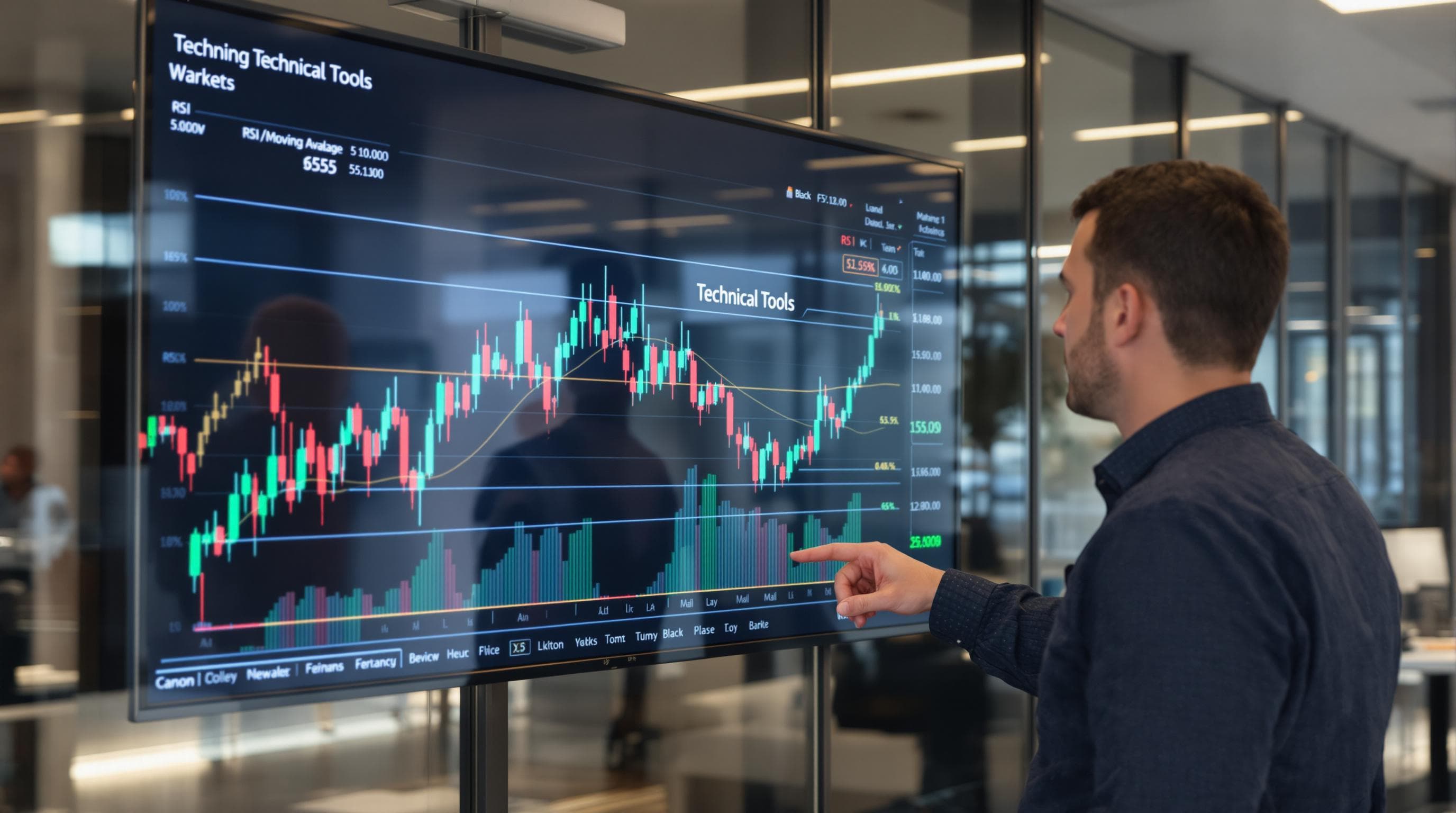
The Relative Strength Index (RSI) helps traders identify potential overbought or oversold conditions. When the RSI moves above 70, it suggests the gold market might be overbought and due for a potential price correction. Conversely, an RSI below 30 indicates possible oversold conditions, signaling a potential buying opportunity.
The Commodity Channel Index (CCI) offers another powerful analytical tool. According to technical analysis research, the CCI measures a security’s variation from its statistical mean, helping traders spot cyclical trends and potential price reversals in gold markets.
Below is a table summarizing essential technical analysis tools and how they are used in gold trading:
| Indicator | What It Measures | Common Trading Use |
|---|---|---|
| RSI (Relative Strength Index) | Overbought/oversold levels | Identifies potential entry/exit points |
| CCI (Commodity Channel Index) | Deviation from mean price | Detects cyclical trends and reversals |
| Moving Averages (50/200-day) | Trend direction | Bullish/bearish crossovers and trend confirmation |
| MACD | Momentum shifts | Spots trend reversals and momentum changes |
| Chart Patterns | Price formation | Anticipates reversals/continuations (e.g., head & shoulders) |
Advanced Trend Confirmation Strategies
Successful gold trading requires more than single-indicator analysis. Unlock advanced trading insights by understanding support and resistance levels to enhance your technical analysis approach.
Technical market analysis from Investopedia suggests an innovative approach to trend confirmation by analyzing gold mining stocks alongside gold prices. Traders can use ratios comparing miners’ indices to gold prices to validate potential uptrends or downtrends.
Moving averages provide another critical trend confirmation mechanism. The 50-day and 200-day moving averages help traders identify long-term market trends. When the shorter-term moving average crosses above the longer-term average, it often signals a bullish trend, while the opposite suggests a bearish market sentiment.
Combining Multiple Analysis Techniques
No single technical indicator provides a complete market picture. Experienced traders combine multiple tools to develop robust trading strategies. The Moving Average Convergence Divergence (MACD) indicator, for instance, helps identify momentum shifts by comparing short-term and long-term moving averages.
Chart patterns like head and shoulders, double tops, and triangles offer additional insights into potential price movements. These visual representations help traders anticipate potential trend reversals or continuations.
The most effective gold trading strategies integrate multiple technical analysis tools, fundamental economic insights, and risk management techniques. Continuous learning, practice, and adaptability remain key to navigating the dynamic gold market landscape in 2025 and beyond.
Fundamental Analysis Strategies for Gold Traders
Fundamental analysis represents a critical approach for gold traders seeking to understand the deeper economic forces driving market movements. By examining macroeconomic indicators, global economic trends, and geopolitical dynamics, traders can develop more comprehensive and strategic trading perspectives.
Global Economic Indicators and Monetary Policy
According to the International Monetary Fund research, gold serves as a sophisticated economic indicator with complex relationships to global financial systems. The IMF study highlights gold’s unique position as an inflation hedge, emphasizing its sensitivity to macroeconomic variables such as inflation rates, exchange rates, and real interest rates.
Central bank policies play a pivotal role in gold price dynamics. Traders must closely monitor decisions by major central banks, particularly the Federal Reserve, as interest rate adjustments directly impact gold’s attractiveness as an investment. When interest rates decline, gold becomes more appealing, as the opportunity cost of holding non-yielding assets decreases.
Inflation represents another critical fundamental factor. During periods of high inflation or economic uncertainty, investors often pivot towards gold as a store of value. This flight to safety can drive significant price movements, making inflation tracking essential for sophisticated gold traders.
Geopolitical Risk Assessment
Geopolitical tensions and global economic uncertainties dramatically influence gold prices. International conflicts, trade disputes, and systemic economic challenges can trigger rapid shifts in gold market sentiment. Traders must develop a nuanced understanding of global political landscapes to anticipate potential market reactions.
Currency market dynamics, especially U.S. dollar strength, represent another crucial fundamental analysis component. Gold prices typically exhibit an inverse relationship with the dollar, meaning a weakening dollar often corresponds with rising gold prices. Stay updated with the latest market developments to refine your trading strategy.
Emerging market economic conditions also provide valuable insights. Changes in economic policies, industrial demand, and purchasing power in countries like China and India can significantly impact global gold markets, given their substantial gold consumption and investment patterns.
Comprehensive Economic Ecosystem Analysis
Successful fundamental analysis extends beyond isolated indicators. Traders must consider the interconnected nature of global economic systems. This involves examining relationships between gold prices and other asset classes, including commodities, equities, and fixed-income investments.
Sector-specific research adds another layer of sophistication. Analyzing gold mining company performance, exploration investments, production costs, and global supply chain dynamics can provide additional context for understanding potential price movements.
Risk management remains paramount. While fundamental analysis offers profound insights, traders must combine these strategies with robust technical analysis and disciplined risk assessment. Continuous learning, adaptability, and a holistic view of global economic trends will be crucial for navigating the complex gold trading landscape in 2025 and beyond.
The following table summarizes the fundamental factors and their typical impact on gold prices:
| Fundamental Factor | Typical Gold Price Impact | Notes |
|---|---|---|
| Inflation Rates | Positive | Higher inflation encourages gold buying as hedge |
| Central Bank Policy | Positive/Negative | Rate cuts increase gold appeal; rate hikes reduce it |
| USD Strength | Negative | Weak dollar boosts gold; strong dollar pressures gold |
| Global Economic Crisis | Positive | Instability drives investors to safe-haven assets |
| Emerging Market Demand | Positive | More buying from China/India lifts prices |
| Oil Prices | Positive | Higher oil can boost gold via inflationary pressures |
Applying Trend Analysis to Gold Trading Signals
Trend analysis represents a sophisticated approach to interpreting gold market movements, enabling traders to develop more strategic and predictive trading methodologies. By leveraging advanced analytical techniques and innovative technological tools, traders can transform raw market data into actionable trading insights.
Machine Learning and Advanced Trend Forecasting
Research published in mathematical modeling journals demonstrates the power of machine learning algorithms in predicting gold price trends. The study reveals that linear regression techniques can effectively forecast gold price movements by analyzing extensive historical price data.
Modern trend analysis goes beyond traditional charting methods. Comprehensive scientific research explores dynamic relationships between gold price returns and critical economic indicators like crude oil prices, the US dollar index, and market volatility indices. By employing advanced forecasting models such as neural networks and Bayesian structural time series, traders can develop more nuanced trend prediction strategies.
Quantitative approaches enable traders to move beyond subjective interpretations. Sophisticated algorithms can process vast amounts of historical data, identifying complex patterns that human analysts might overlook. These computational techniques help traders recognize potential trend reversals and momentum shifts with greater precision.
Innovative Trend Interpretation Techniques
Beyond computational methods, unique research utilizing fuzzy techniques offers intriguing insights into trend analysis. By applying higher-degree fuzzy transforms and fuzzy natural logic, researchers can generate linguistic descriptions of gold price trend-cycles, providing traders with more contextual market understanding.
Traders can enhance their trend analysis by integrating multiple indicators and cross-referencing different analytical approaches. Bollinger bands, moving averages, and momentum oscillators offer complementary perspectives on market trends. Explore advanced trading signal strategies to refine your analytical toolkit.
Volatility analysis plays a crucial role in trend interpretation. By measuring price fluctuations and understanding their potential causes, traders can develop more robust trading strategies. This involves monitoring not just price movements, but also the speed and intensity of those changes.
Risk Management and Trend Validation
Successful trend analysis requires more than identifying potential market directions. Traders must implement rigorous risk management protocols to validate and act upon trend signals. This means developing comprehensive strategies that include stop-loss mechanisms, position sizing, and continuous trend confirmation.
Cross-referencing trend signals across multiple timeframes provides additional confirmation. A trend identified on daily charts might look different when examined through weekly or monthly perspectives. Experienced traders synthesize information from various timeframes to develop a more holistic market view.
Technology continues to revolutionize trend analysis. Advanced trading platforms now offer real-time data processing, machine learning integrations, and predictive modeling tools that were unimaginable just a few years ago. Traders who embrace these technological advances can gain significant competitive advantages in the rapidly evolving gold trading landscape.
ultimately, successful trend analysis is both an art and a science. It requires technical proficiency, continuous learning, and the ability to adapt to changing market conditions. By combining sophisticated analytical techniques with disciplined risk management, traders can transform trend analysis into a powerful strategic tool for gold trading in 2025 and beyond.
Frequently Asked Questions
What are the key factors influencing gold prices in 2025?
Gold prices are influenced by several factors, including the U.S. dollar index, interest rates, inflation, geopolitical tensions, and global economic indicators. Monitoring these factors is crucial for effective gold trading strategies.
How can technical analysis tools help in gold trading?
Technical analysis tools, like the Relative Strength Index (RSI) and Moving Averages, assist traders in identifying market trends, potential entry and exit points, and overbought or oversold conditions, leading to more informed trading decisions.
What is the importance of fundamental analysis in gold trend analysis?
Fundamental analysis is essential because it allows traders to understand the economic and geopolitical factors that drive gold prices. Key aspects include monitoring inflation rates, central bank policies, and global demand, which can help predict price movements effectively.
How can machine learning be utilized for gold trend forecasting?
Machine learning algorithms analyze vast amounts of historical price data and economic indicators to detect patterns and forecast future gold price trends. This technology enables more precise and data-driven trading strategies.
Ready to Turn Gold Market Insights Into Real Profits?
You just explored the complexities of analyzing gold trends for smarter trading in 2025. The article covered tough challenges: making sense of ever-shifting factors like the U.S. dollar index, interest rates, and technical chart patterns. If you are tired of struggling to time entries or worry about missing crucial moves, our expert strategies offer an edge. Get practical steps and daily best practices in our How To Guides section and elevate your gold trading game.
Stop second-guessing your trades. With our industry-leading XAU/USD signals, you receive real-time, high-accuracy alerts tailored to shifting economic trends and price action. Join now to move beyond uncertainty and act on proven opportunities. Visit xau-gold-signals.com to claim your spot and start making informed trades today.
Recommended
- News & Updates | XAU/USDT Gold Trading Signals
- Unlocking The Power Of Support & Resistance In Gold Trading
- Blog | XAU/USDT Gold Trading Signals
- Free Vs. Paid Gold Trading Signals: Which One Should You Choose?
- Best Trend Trading Strategies for South Africa and Botswana 2025 – SA’s Best Forex Trading Course & Coaching Classes
- Research & Publications – Blockware Solutions
