


Swing trading is attracting an army of new gold and forex traders aiming to outpace the markets in 2025. Most expect quick wins by chasing obvious trends and signals. However, here is the real shocker. Digital search patterns have shown a stunning 0.82 correlation with gold price movements, and the savviest traders are quietly using this to inform their strategies. The next big swing might not even show up on your chart—but it could show up in your search bar.
Table of Contents
- How Swing Trading Works In Gold And Forex
- Key Strategies For Profitable Swing Trades
- Using Trading Signals And Market Analysis
- Best Practices For Beginner And Pro Traders
Quick Summary
| Takeaway | Explanation |
|---|---|
| Swing Trading Bridges Short and Long-Term Strategies | Swing trading captures price movements over days to weeks, allowing traders to analyze market trends more comprehensively compared to day trading. |
| Risk Management is Essential | Traders should limit risk to 1-2% of their capital per trade and utilize stop-loss orders to protect against significant losses. |
| Momentum and Advanced Technical Analysis Enhance Strategies | Employ momentum indicators like MACD and leverage advanced techniques, such as Fibonacci retracements and candlestick patterns, for effective trading decisions. |
| Continuous Learning and Adaptability are Key | Traders must engage in ongoing education and refine their strategies to adapt to evolving market conditions, maintaining performance in the gold and forex markets. |
| Sentiment Analysis Can Inform Trading Signals | Utilize sentiment analysis and digital behavior patterns to forecast market movements, integrating various signal sources for informed decision-making. |
How Swing Trading Works in Gold and Forex
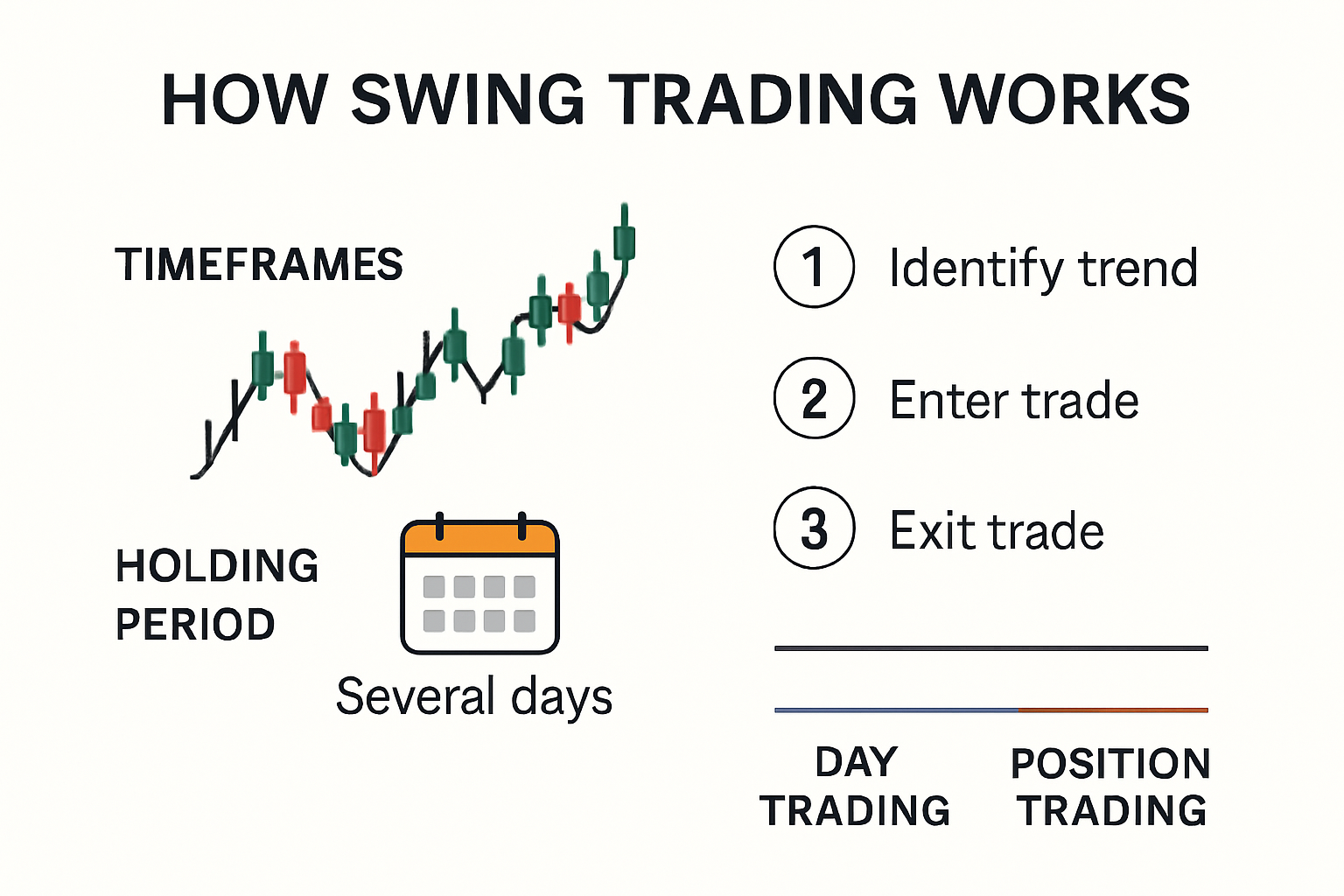
Swing trading represents a strategic approach to gold and forex markets that bridges the gap between short-term day trading and long-term investment strategies. Traders utilizing this method aim to capture gains from price movements that typically unfold over days to weeks, capitalizing on market momentum and trend shifts.
Technical Analysis and Market Momentum
Successful swing trading hinges on precise technical analysis and understanding market dynamics. Traders leverage specific indicators to identify potential entry and exit points, with tools like the Relative Strength Index (RSI) playing a critical role in assessing market conditions. In gold trading, techniques such as the Golden Cross—where short-term moving averages cross above long-term moving averages—provide powerful signals for potential trend reversals.
Traders meticulously analyze price charts, looking for patterns that suggest momentum shifts. This involves studying candlestick formations, trend lines, and key support and resistance levels. For instance, in forex markets, a swing trader might identify a currency pair showing consistent upward movement and enter a position to ride that momentum for several trading sessions.
Risk Management Strategies
Risk management stands as the cornerstone of effective swing trading in both gold and forex markets. Experienced traders implement strict position sizing rules, typically risking no more than 1-2% of their total trading capital on any single trade. This approach helps protect against significant losses while allowing for potential substantial gains.
Stop-loss orders become crucial tools in a swing trader’s arsenal. By setting predetermined exit points, traders can automatically limit potential downside while providing room for trades to develop. In gold trading, understanding support and resistance levels becomes paramount for establishing these protective mechanisms.
The key difference between swing trading and other trading approaches lies in its time horizon and analytical depth. Unlike day traders who close positions within a single trading session, swing traders hold positions from several days to weeks. This method allows for a more comprehensive analysis of market trends, reducing the impact of short-term market noise while still capturing meaningful price movements.
Forex and gold markets present unique characteristics that make them particularly suitable for swing trading. Gold, as a commodity with global economic significance, experiences price movements influenced by geopolitical events, currency fluctuations, and broader economic trends. Forex markets, with their 24-hour trading cycle and significant global liquidity, offer numerous opportunities for identifying and executing swing trading strategies.
Traders looking to excel in swing trading must develop a robust understanding of both technical and fundamental analysis. This means not only reading price charts but also comprehending broader economic indicators, central bank policies, and global events that might impact currency or gold prices.
While swing trading offers potentially lucrative opportunities, it requires discipline, continuous learning, and a structured approach to market analysis. Successful traders consistently refine their strategies, maintain detailed trading journals, and remain adaptable to changing market conditions.
To help you differentiate between swing trading and other trading approaches, the following table summarizes key distinctions discussed in this section:
| Trading Approach | Typical Position Duration | Analytical Depth | Capital Risked per Trade | Response to Market Noise |
|---|---|---|---|---|
| Swing Trading | Days to Weeks | High (both TA & FA) | 1-2% | Reduced |
| Day Trading | Minutes to Hours | Technical Focused | Varies | Highly Sensitive |
| Long-Term Investing | Months to Years | Fundamental Focused | Small per position | Minimal |
Key Strategies for Profitable Swing Trades
Profitable swing trading demands a sophisticated approach that combines multiple analytical techniques and strategic considerations. Successful traders develop comprehensive strategies that go beyond simple price tracking, integrating complex market insights and adaptive methodologies.
Momentum and Trend Following Techniques
Research on foreign exchange trading strategies reveals that momentum strategies are particularly effective over medium-term horizons, typically spanning 3 to 12 months. In gold and forex markets, momentum trading involves identifying and riding strong price trends, using indicators that signal sustained directional movement.
Traders employ multiple momentum indicators to confirm potential trades. The Moving Average Convergence Divergence (MACD) indicator becomes crucial in detecting trend strength and potential reversals. By analyzing the relationship between different moving averages, traders can identify when market momentum is building or potentially losing steam.
Advanced Technical Analysis Approaches
Complex swing trading strategies leverage advanced technical analysis techniques that go beyond basic trend identification. Exploring gold trading signal opportunities requires understanding intricate chart patterns and statistical probabilistic models.
Genetic Programming research demonstrates that integrating price series from multiple financial instruments can significantly enhance trading strategy performance. This approach suggests traders should not view gold or forex markets in isolation but as interconnected systems influenced by global economic dynamics.
Key technical analysis approaches include:
- Fibonacci retracement levels for identifying potential support and resistance zones
- Ichimoku Cloud analysis for comprehensive trend and momentum assessment
- Candlestick pattern recognition to predict potential price reversals
Risk Optimization and Portfolio Management
Successful swing trading transcends individual trade selection, requiring robust risk management and portfolio diversification strategies. Time series analysis of trading strategies underscores the importance of a systematic approach to trade selection and risk mitigation.
Effective portfolio management involves:
- Implementing strict position sizing rules
- Maintaining a balanced mix of gold and forex positions
- Using correlation analysis to reduce overall portfolio risk
- Regularly rebalancing portfolio allocations based on market conditions
Traders must develop a disciplined approach that combines quantitative analysis with adaptive decision-making. This involves continuous learning, maintaining detailed trading journals, and remaining flexible in response to changing market dynamics.
The most successful swing traders recognize that strategies are not static but evolving frameworks. They consistently backtest their approaches, incorporate new analytical techniques, and remain attuned to global economic shifts that could impact gold and forex markets.
Ultimately, profitable swing trading requires a holistic understanding of market mechanics, advanced analytical skills, and the psychological discipline to execute strategies consistently and objectively.
Using Trading Signals and Market Analysis
Trading signals and comprehensive market analysis form the backbone of successful swing trading strategies in gold and forex markets. These tools provide traders with critical insights, helping them make informed decisions in complex and dynamic financial landscapes.
Advanced Signal Generation Techniques
Recent research demonstrates that sophisticated signal generation now extends beyond traditional technical indicators. Modern traders leverage advanced methodologies including sentiment analysis of news and social media platforms to forecast market movements with unprecedented accuracy.
A groundbreaking approach involves integrating machine learning techniques with technical indicators. Research from computational finance studies shows that combining tools like the Triple Exponential Moving Average (TEMA) and Moving Average Convergence/Divergence (MACD) with artificial neural networks can significantly enhance trading signal precision.
Exploring effective signal strategies reveals that successful traders do not rely on a single signal source but create a comprehensive ecosystem of information gathering and analysis.

Sentiment and Search Behavior Analysis
Interestingly, computational studies have uncovered remarkable correlations between digital behavior and market movements. Research discovered up to 0.82 correlation between Google search volumes and gold prices, highlighting how online search patterns can provide predictive insights into potential market trends.
Key sentiment analysis techniques include:
- Monitoring social media discussions about economic policies
- Tracking global news sentiment related to geopolitical events
- Analyzing search trend volumes for specific financial instruments
- Evaluating investor confidence indices
To clarify the various types of signal sources and analytical tools mentioned in this section, here is a summary table:
| Trading Signal/Analysis Source | Description/Example | Purpose |
|---|---|---|
| Technical Indicators (e.g., MACD) | Chart-based, price/volume derived signals | Detect momentum, trend reversals |
| Machine Learning Models | Neural networks, pattern recognition | Enhance signal precision |
| News/Social Media Sentiment | Media/news headlines, social trends | Assess broad market mood |
| Search Trend Volume Correlation | Google search patterns, digital search data | Predict potential price movements |
| Econometric/Statistical Analysis | Probabilistic models, correlation studies | Quantify relationships, validate signals |
Risk Mitigation Through Comprehensive Analysis
Effective trading signal utilization goes beyond mere interpretation. Traders must develop a nuanced approach that considers multiple analytical dimensions. This involves creating a robust framework that integrates various signal sources while maintaining a critical perspective on potential market influences.
Risk management strategies when using trading signals include:
- Cross-referencing signals from multiple independent sources
- Implementing strict verification protocols
- Developing probabilistic models that account for signal reliability
- Maintaining flexibility in trade execution
The evolution of trading signals represents a convergence of technological innovation and financial expertise. Machine learning algorithms, natural language processing, and advanced statistical modeling are transforming how traders interpret market data.
Successful traders recognize that trading signals are tools for informed decision-making, not guaranteed predictors. They maintain a disciplined approach, understanding that even the most sophisticated signal requires careful interpretation and contextual understanding.
Ultimately, mastering trading signals demands continuous learning, technological adaptability, and a deep understanding of global economic dynamics. Traders who invest in developing comprehensive analytical skills will be best positioned to navigate the complex gold and forex markets of 2025 and beyond.
Best Practices for Beginner and Pro Traders
Swing trading in gold and forex markets demands a strategic approach that balances technical expertise, psychological discipline, and continuous learning. Whether you are a novice trader or an experienced professional, adopting proven best practices can significantly enhance your trading performance and long-term success.
Foundational Learning and Skill Development
Beginning traders must invest substantial time in comprehensive market education. Learn strategic trading techniques that go beyond basic technical analysis, focusing on developing a holistic understanding of market dynamics. This involves studying market structures, understanding economic indicators, and mastering technical analysis tools.
Key learning priorities include:
- Understanding market psychology
- Developing robust risk management skills
- Learning to read and interpret complex chart patterns
- Studying historical market trends and behaviors
Professional traders continuously refine their skills through advanced courses, attending industry conferences, and engaging with trading communities. The most successful traders view learning as an ongoing process, constantly adapting their strategies to evolving market conditions.
Advanced Risk Management Techniques
Risk management separates successful traders from those who consistently lose capital. Expert scalping strategies emphasize the critical importance of protecting your trading capital through disciplined approaches.
Comprehensive risk management involves:
- Implementing strict position sizing rules
- Using stop-loss orders effectively
- Diversifying trading portfolios across different instruments
- Maintaining emotional control during volatile market conditions
Professional traders typically risk no more than 1-2% of their total trading capital on any single trade. This conservative approach ensures long-term sustainability and protects against significant drawdowns.
The following checklist summarizes the fundamental risk management practices for swing trading mentioned above. It can be used by traders to review their routine for best practices:
| Risk Management Practice | Implemented? |
|---|---|
| Strict position sizing (1-2% rule) | |
| Consistent use of stop-loss orders | |
| Portfolio diversification | |
| Emotional control under volatility | |
| Maintaining a trading journal | |
| Regular review of strategies |
Psychological Preparation and Performance Optimization
Trading success extends far beyond technical skills. Psychological preparation plays a crucial role in maintaining consistent performance. Top traders develop mental frameworks that help them navigate the emotional challenges inherent in financial markets.
Essential psychological practices include:
- Maintaining a detailed trading journal
- Practicing mindfulness and emotional regulation
- Developing a disciplined trading routine
- Creating and adhering to predefined trading plans
- Managing expectations and avoiding emotional decision-making
Both beginner and professional traders benefit from understanding their psychological triggers. Recognizing personal biases, managing stress, and maintaining emotional neutrality are critical skills that distinguish successful traders.
Technology now offers advanced tools for performance tracking and psychological assessment. Traders can leverage data analytics and machine learning algorithms to gain insights into their trading behaviors, identifying patterns of success and areas for improvement.
Ultimately, successful swing trading in gold and forex markets requires a multifaceted approach. It demands technical proficiency, rigorous risk management, continuous learning, and robust psychological preparation. Traders who integrate these elements create a comprehensive framework for long-term trading success.
Remember that no strategy guarantees consistent profits. The most successful traders remain adaptable, continuously learn, and approach the markets with a disciplined, strategic mindset.
Frequently Asked Questions
What is swing trading in the gold and forex markets?
Swing trading is a trading strategy that aims to capture gains in financial instruments over a period of days to weeks. It blends short-term and long-term trading methods, focusing on market momentum and trend shifts.
How do I manage risk when swing trading?
Effective risk management involves limiting risk to 1-2% of your total capital per trade and utilizing stop-loss orders to protect against significant losses. This conservative approach helps maintain long-term sustainability in your trading.
What indicators are important for swing trading?
Key indicators for swing trading include the Moving Average Convergence Divergence (MACD), Relative Strength Index (RSI), and Fibonacci retracement levels. These tools help identify entry and exit points and assess market momentum.
How can sentiment analysis aid swing trading decisions?
Sentiment analysis involves evaluating market mood through news, social media, and search trends. Understanding digital behavior patterns can provide valuable insights into potential market movements, enhancing trading strategies.
Achieve Consistent Swing Trading Success with Expert Gold Signals
Are you struggling to turn your swing trading insights into real, consistent profits? This article reveals how mastering risk management, momentum strategies, and signal interpretation can transform your results, but applying them in live markets is never easy. Many traders know how quickly charts and emotions can undermine even the best strategies, especially when trading gold. You deserve a clear edge that helps you act with confidence.
Get step-by-step strategies and actionable solutions by exploring our How To Guides. These guides connect practical learning with expert-driven methods that simplify your trading decisions.
Unlock daily, high-accuracy XAU/USD trading signals by joining our private Telegram group at xau-gold-signals.com. You will receive real-time alerts and disciplined strategies based on the same technical and sentiment analysis discussed in this article. Sign up today to maximize your swing trading results and gain the confidence to profit in volatile gold and forex markets.
Recommended
- Blog | XAU/USDT Gold Trading Signals
- Master Gold Scalping: Strategies For Rapid Gains
- News & Updates | XAU/USDT Gold Trading Signals
- Free Vs. Paid Gold Trading Signals: Which One Should You Choose?
- Unlocking The Power Of Support & Resistance In Gold Trading
- Best XAU/USD Gold Trading Signals For Consistent Profits
